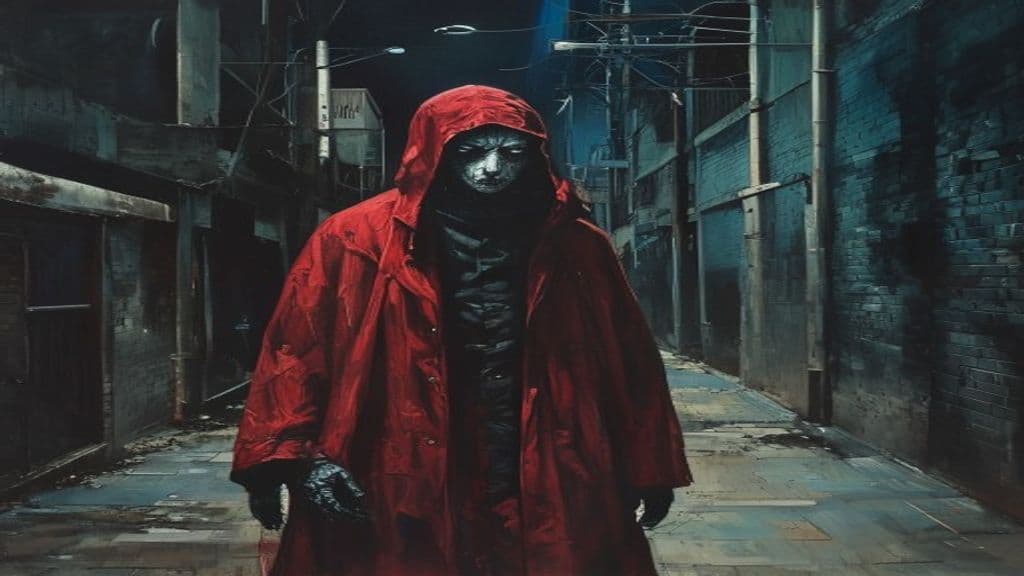
Aka Manto appears in twentieth-century Japanese schoolyard rumor and urban-legend repertoires; scholars and compilers record versions of the tale from the 1930s onward. The figure's imagery has shifted over generations (the older meaning of manto as a sleeveless kimono-style jacket appears in earlier tellings, while modern accounts present a red cloak or cape). The story functions as oral peer-culture lore rather than part of formal religious cosmology.
Accounts consistently depict a figure associated with a red outer garment (manto) and with concealment of the face in many versions (a mask). Variants describe him as a masked, cloaked man (sometimes handsome beneath the mask in some tellings, or as a tall man with a sickly bluish-white face in others). An alternative variant casts Aka Manto as a hairy yōkai called a kainade who lives in the toilet; in that telling bodily form and behavior differ markedly from the masked-man motif.
Aka Manto's characteristic behavior is to appear to a person occupying a toilet stall (often late at night) and ask a forced-choice question about colored toilet paper (commonly red or blue). Reported consequences vary by version: choosing red results in laceration/stabbing/flaying so the victim is soaked in blood; choosing blue results in strangulation or a draining of blood leaving a blue face; choosing yellow (in some tellings) causes drowning by being held head-down in the toilet; choosing another color may lead to being dragged to the underworld. Other reported abilities include making brought toilet paper vanish before use (in some accounts) and, in the kainade variant, producing a hairy arm of the chosen color from the toilet. Trick responses such as refusing both options or ignoring the question are reported survival tactics in many versions.
Weaknesses
- conditionRefusal or ignoring the question
- conditionStating one wants neither option (refuse both)
- conditionRejecting both options and fleeing (in some accounts)
Wards
- conditionIgnore the spirit
- conditionTell the spirit you want neither kind of paper (refuse both)
- conditionAfter refusing both options, run away (reported in some versions)
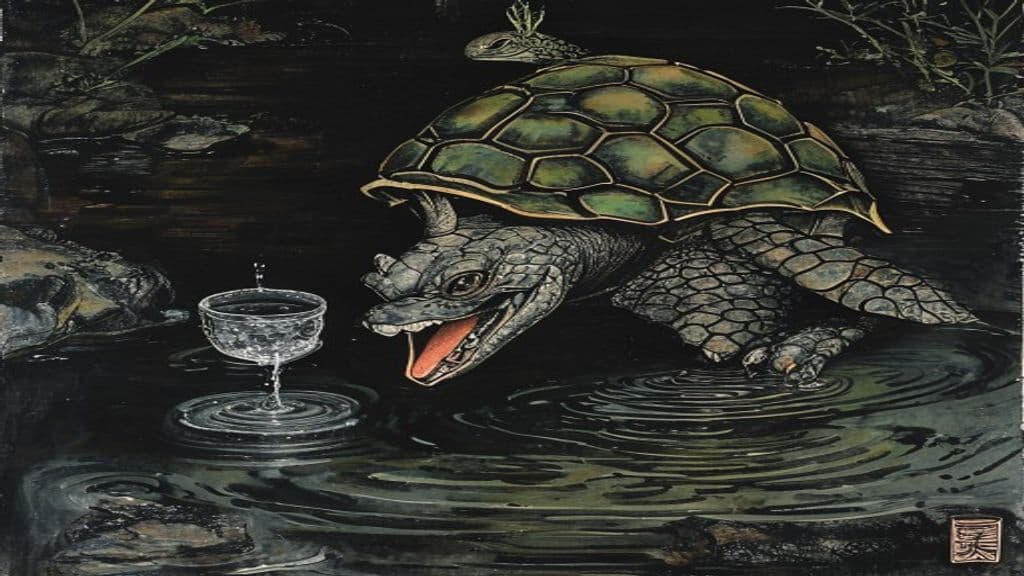
Kappa
A water-dwelling imp of Japanese folklore with a bowl of water on its head. Mischievous but bound by strict codes of politeness; dangerous near rivers.
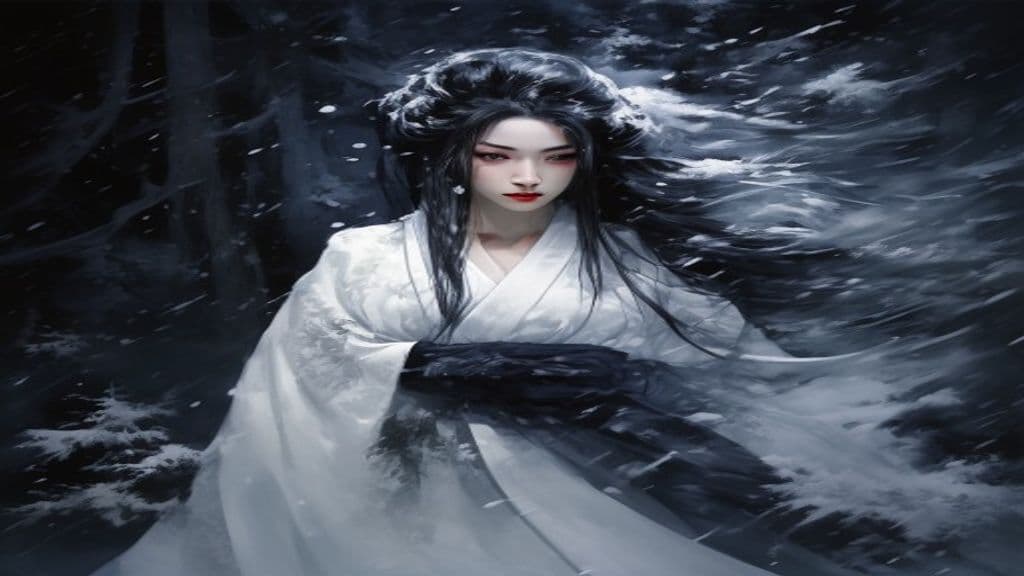
Yuki-onna
The Snow Woman of Japanese folklore — a spirit born of blizzards who appears to travelers lost in snowstorms. Beautiful and lethal, she can show mercy or bring death depending on her mood.
Kuchisake-onna
Kuchisake-onna (口裂け女, "mouth-slit woman") is a Japanese urban-legend figure and modern folkloric yōkai/onryō: a mutilated woman who asks victims whether she is beautiful and whose revealed slit mouth leads to killing or mutilation in variant accounts. The legend emerged in the late 1970s and circulates with multiple survival tactics reported in popular sources.
Madam Koi Koi
Madam Koi Koi is a Nigerian urban-legend apparition — a vengeful, site-bound female ghost associated with boarding schools, known for the distinctive clicking of red high heels. Tales present her as a punitive presence that haunts dormitories, hallways and toilets at night and as a cultural warning about nocturnal transgressions and unresolved injustice.
Teke Teke
A Japanese urban-legend onryō of a young woman split in half by a train; she moves by dragging her upper body and produces a scratching 'teke teke' sound while attacking victims, often by slicing them in half to mirror her own injury. A named variant, Kashima Reiko, haunts bathroom stalls and questions occupants about her missing legs.
Ajisukitakahikone
Ajisukitakahikone is a kami in Japanese mythic literature (Kojiki/Nihon Shoki). He appears in the transfer-of-rule cycle between heaven and earth, is described as a son of Ōkuninushi, associated with the Kamo cult (called Kamo no ōmikami in some modern museum/catalog entries), and features in narratives that explain landscape formation and meteorological genealogy.
Ajitanātha
Ajitanātha is the second tirthankara of the current cosmic age in Jainism: an enlightened spiritual teacher who renounced worldly life, attained omniscience (kevalajñāna), and achieved liberation (moksha), and who is credited with establishing a large four-part monastic order in the tradition's hagiography.
Ajogun
Ajogun are a class of malevolent spiritual forces in the Yoruba religious worldview that regularly interfere with human lives, responsible for death, disease, curses, loss, conflict and related misfortunes. They are described as the polar opposite of the benevolent Oriṣa, led by Iku (Death), and can be warded off or appeased through intercession by Eṣu and by observing Ifá divinatory counsel.
Ak Ana
Ak Ana (also Ağ Ana, Ak Ene) is the primordial water-mother of Turkic and some Siberian (Khanty, Mansi) traditions: a holy maternal creator principle associated with the pre-earth expanse of water, fertility of the land, and the threshold to the spirit world.
Aka Manah
Aka Manah (Akem manah; Middle Persian Akoman, New Persian Akvan) is the personification of 'evil mind' in Zoroastrian literature. Originating as a Gathic term for corrupt thought, the figure is later reified in the Younger Avesta and Pahlavi texts as a high-ranking demonic opponent of Vohu Manah and ally of Angra Mainyu, whose activity is to pervert human thought and moral discrimination.
Akaname
Akaname is a Japanese yōkai associated with baths, bathtubs, toilets, and other places where scum and filth accumulate. Traditionally depicted as a child-like creature that licks grime, it functions in folklore as a cautionary figure tied to cleanliness; a few narrative variants cast it as dangerously predatory.
Akar Kessel
No documentation for an entity named Akar Kessel appears in the supplied source materials. The available corpus contains no primary or secondary information that defines the name, its attributes, cultural provenance, or associated practices.
Akashaguma
Akashaguma is presented in the available sources as a child-like house guardian spirit in the Japanese yokai tradition, closely comparable to the regional zashiki-warashi. It is associated with domestic interiors (parlors or storage rooms) and with bringing prosperity to households where it dwells.
Akashita
Akashita (赤舌, lit. “red tongue”) is an Edo-period pictorial yōkai commonly represented as a hairy, clawed face emerging from dark clouds with a wide open mouth and a conspicuous red tongue. The figure appears in yōkai emaki and Toriyama Sekien’s Gazu Hyakki Yagyō; Sekien’s plate shows it atop a sluice, but the original pictorial tradition provides no explanatory caption. Later folklorists and popular writers (Shōwa and later) have variously interpreted the image as a punitive spirit linked to irrigation/floodgate justice or as a kidnapper in evening skies, though these narrative roles are post-hoc.
Community Record
- [1]Aka Manto. Wikipedia: Aka Mantowiki
- [2]Wikidata: Aka Manto. Wikidata entry for Aka Mantoother
- [3]Pocky 2: Kaijin Aka Manteau no Chousen manual (archive item). Archive: Pocky 2 manual referencing Aka Mantoother
- [4]LAS LEYENDAS URBANAS JAPONESAS (archive collection). Archive compilation listing Japanese urban legends including Aka Mantoother