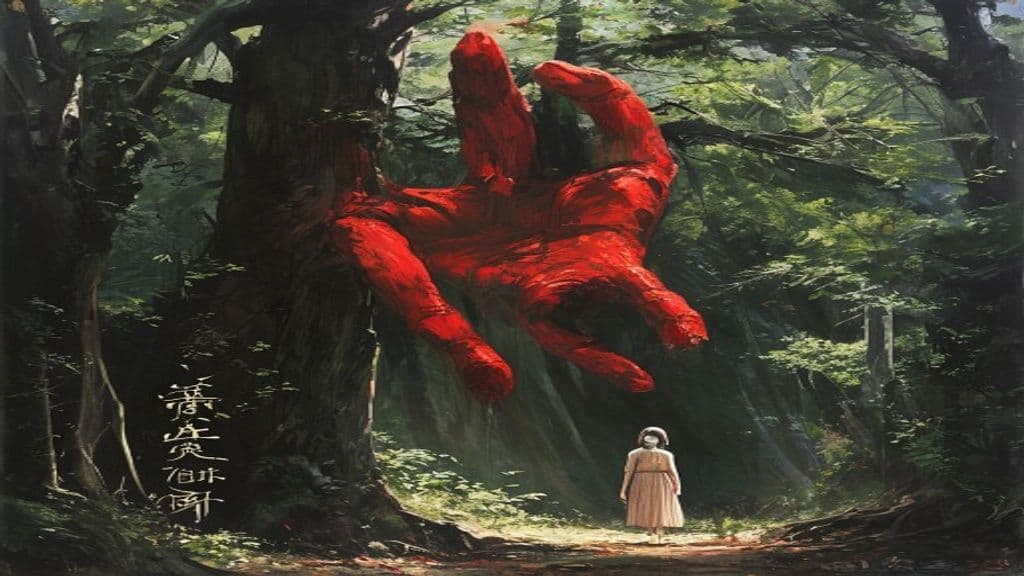
There is no single canonical origin myth for the akateko in the provided sources. It is presented as a localized yōkai tradition, most frequently attested in Aomori Prefecture (city of Hachinohe) and also reported in Kagawa and Fukushima prefectures. Some summaries treat the akateko as an independent minor apparition tied to a particular tree (commonly the Japanese honey locust), while interpretive notes in the sources propose that many akateko sightings may be illusions produced by other shapeshifting yōkai such as kitsune or tanuki. Thus origin explanations in the material range from the akateko as a discrete local spirit to an effect or illusion created by other trickster entities; no older ritual or textual origin narrative is provided in the available summaries.
The akateko is commonly described as a red, disembodied hand the size of a small child's hand that descends from a Japanese honey locust tree. Regional variants add other visual elements: some tellings describe a specter of a young woman standing at the base of the tree who accompanies the hand, while Kagawa and Fukushima variants may describe paired moving feet or leg-like apparitions rather than a single hand. Sources emphasize the hand's red coloration, small (child-sized) scale, and lack of any attached body.
Most source accounts portray the akateko as essentially a startling apparition: it waves or reaches and primarily frightens passersby and is often harmless. A minority of legends describe a much more violent behavior in which the hand grasps a traveler by the neck and tears them apart limb from limb; these violent versions are reported as regional or less-common variants rather than the dominant tradition. In variants that include the young-woman specter, that figure is said to lure or lull unsuspecting passersby into a trance or fever-like state, rendering them vulnerable. An interpretive strand in the sources frames many akateko sightings as deliberate illusions produced by other shapeshifting yōkai (kitsune or tanuki), which casts its actions as deceptive rather than evidence of an independently potent, world-altering agency.

Kitsune
Fox spirits of Japanese mythology — intelligent, long-lived beings who gain additional tails (up to nine) as they age and grow in power. They serve as messengers of the god Inari and as powerful tricksters.
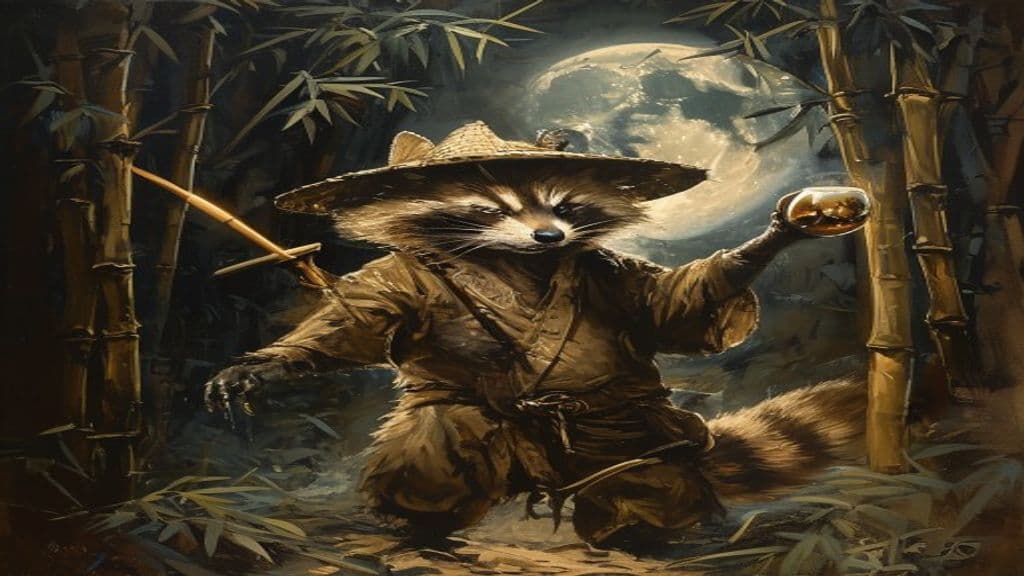
Tanuki
The raccoon-dog spirit of Japanese folklore — a cheerful trickster and master of shape-shifting, less dangerous than the kitsune but far more mischievous. Famous for leaves transformed into money.
Community Record
- [1]Akateko (folklore). Wikipedia, 'Akateko (folklore)'wiki
- [2]Akateko. Wikipedia, 'Akateko'wiki
- [3]Akateko | Public Domain Super Heroes | Fandom. Public Domain Super Heroes (Fandom) entry for Akatekoother
- [4]October Mythology Special: The Disembodied Hands of Legend – Bloom Reviews. Bloom Reviews, 'October Mythology Special: The Disembodied Hands of Legend'other
- [5]Giant in the Playground Forums — Japanese/Chinese Island [Archive]. Giant in the Playground forum archive discussionother