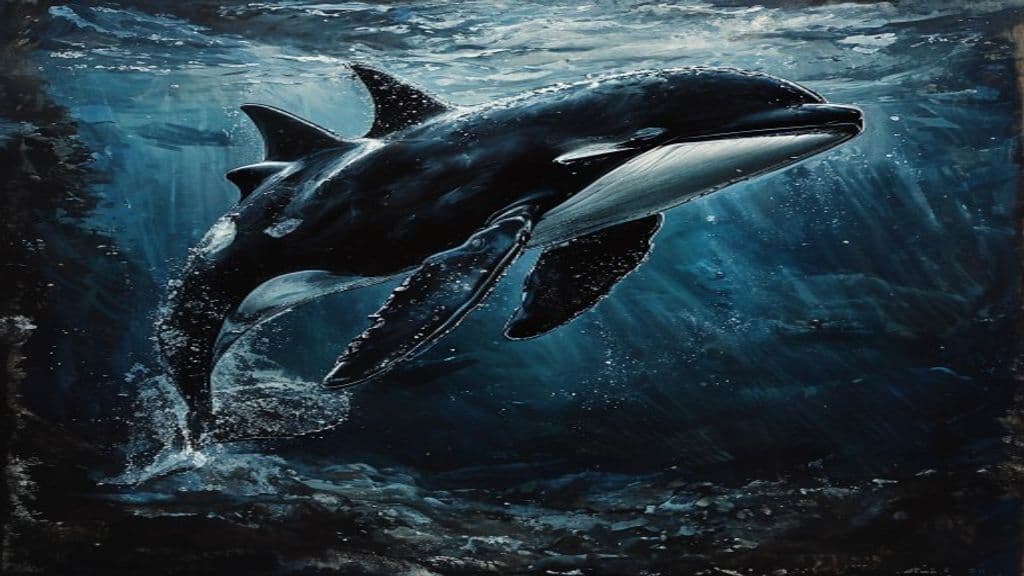
The principal ethnographic account cited (Edward William Nelson, c.1900) presents the akhlut as part of a class of "mythical and composite animals" in Inuit lore along the shore of the Bering Sea. Nelson records that the creature is understood locally as an orca (akh'lut) that is "credited with the power of changing at will to a wolf," and that belief in the kăk-whăn’-û-ghăt kǐg-û-lu’-nǐk is prevalent among Inuit of that region. Nelson includes the akhlut in a roster of boundary‑crossing animals (for example, a white whale said to transform into a reindeer) used in local storytelling to explain puzzling observations at the sea/land margin. Nelson, writing as a naturalist, also offered a naturalistic hypothesis (ice breaking away causing apparent tracks) alongside the recorded Inuit explanation; the origin narrative presented here follows Nelson's reported Inuit account as preserved in the cited corpus.
Sources describe the akhlut in two principal manifestations. In its marine form it is described as "similar in form to the killer whale" or orca (Nelson). When on land it "takes the form of a wolf," and Nelson records local claims that it may roam the land as a wolf and then "return to the sea and again become a whale." Later popular and gaming sources frequently represent the akhlut visually as a literal wolf‑orca hybrid; those depictions are modern adaptations and are distinguished from the early ethnographic descriptions, which emphasize separate orca and wolf forms and accounts of transitional evidence such as tracks meeting the water's edge. The cited materials do not supply consistent measurements, coloration notes beyond the orca/wolf identification, or detailed morphological minutiae.
The defining ability attributed to the akhlut in the cited ethnographic material is voluntary shapechanging between an orca (marine) form and a wolf (terrestrial) form: it is "credited with the power of changing at will to a wolf," and conversely may become a whale again after roaming the land (Nelson). Accounts characterize the creature as "very fierce and to kill men," indicating a dangerous disposition toward humans. Nelson records Inuit testimony that wolf tracks were seen "leading to the edge of the sea ice and ending at the water, or beginning at the edge of the water and leading to the shore," which is treated by storytellers as evidence of the change between forms. Nelson himself juxtaposed this folklore with a naturalist explanation (ice breaking away) in his reporting; the documented abilities here reflect the folkloric claims recorded in his account and later summaries.
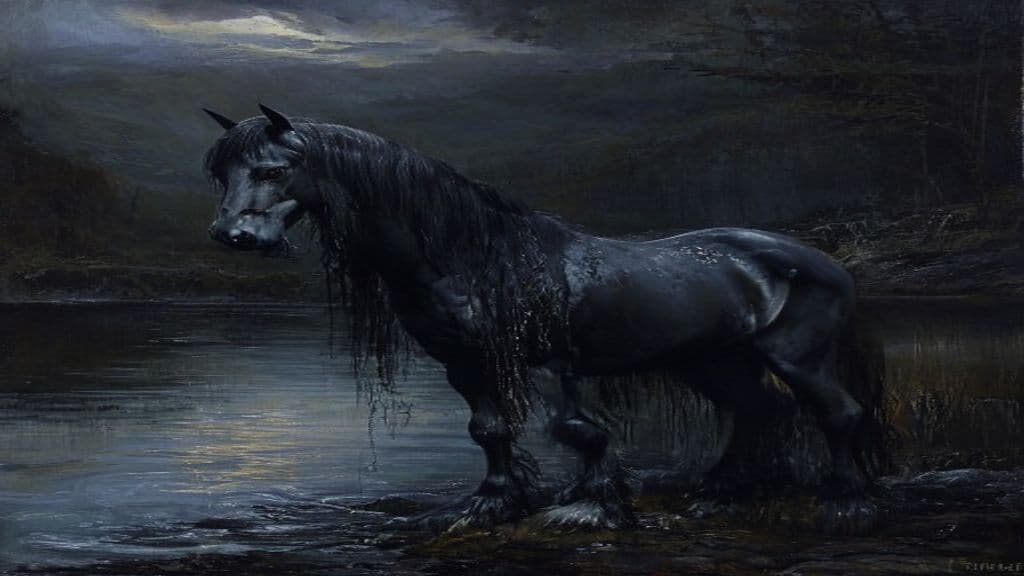
Kelpie
A Scottish shape-shifting water horse that appears as a beautiful tame horse near lochs and rivers, then drowns and devours any rider foolish enough to mount it.
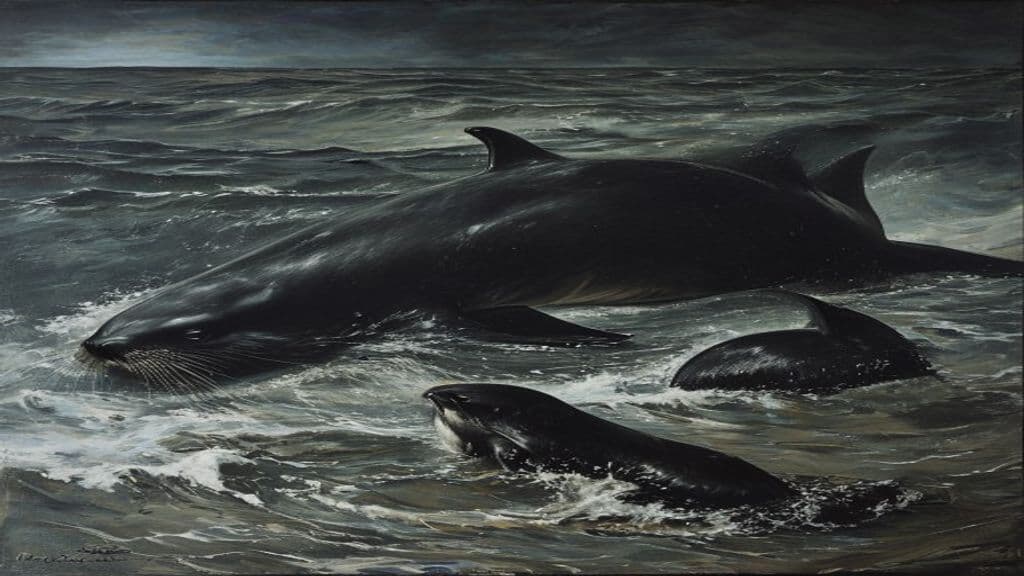
Selkie
A seal-being from northern Atlantic coastal folklore said to shift between seal and human forms by removing or donning a seal skin. Tales focus on intimate relations with humans, the selkie's longing for the sea, and the narrative motif of a hidden skin that prevents return to the ocean.
Adlet
A category of non-human peoples in Inuit narrative tradition (also rendered Erqigdlet/Irqigdlit) that functions both as a mythic ancestor-race and as dog‑legged antagonists; the term can denote inland native American peoples or half‑canine humanoids depending on regional usage.
Aipaloovik
Aipaloovik is an Inuit sea-associated supernatural being described in available sources as an evil or dangerous water deity linked to death and hazard for fishermen. The figure is described as the opposite of the being Anguta; beyond this brief characterization the cited sources provide no detailed myths, appearance, or ritual corpus.
Alignak
Alignak is named in modern reference works as an Inuit deity associated with the moon and with dynamic natural phenomena such as weather, water, tides, eclipses, and earthquakes. The available sources provide only terse domain associations and do not supply narrative, iconographic, or ritual detail.
Amarok
In Greenlandic Inuit tradition the Amarok (also Amaroq) is a singular, gigantic wolf-like spirit said to hunt alone and to interact powerfully with humans: stalking and devouring lone nocturnal hunters, wresting with humans to bestow strength in Rink's tales, and — in another tale — dragging a humanoid from the water and taking a mourner's soul. The term in some dialects is reserved for this legendary wolf, while other Arctic peoples may use the word for ordinary wolves.
Amautalik
Amautalik is a child‑stealing ogress from Inuit folktale collections and modern retellings. Presented in story collections, illustrated books, graphic novels, and short films, she functions as a monstrous threat who carries away children and haunts communities, and whom protagonists overcome through luck, courage, and ancestral knowledge.
Anguta
Anguta is an ancestral/parent figure in Inuit cosmology associated with the sea-goddess Sedna and the underworld Adlivun. Different traditions variously portray him as a creator or supreme being (especially in some Greenlandic accounts), a mortal ancestor, and most consistently as a psychopomp or lord of the dead who ferries souls and supervises part of the afterlife journey.
Apanuugak
Apanuugak is an Inuit legendary figure presented in modern summaries as a culture-hero who is narratively ambivalent: sometimes an error-prone or long-lived warrior and elsewhere depicted as a dastardly villain or cunning trickster.
Arnapkapfaaluk
A fearsome sea-being of the Coronation Gulf Copper Inuit who controls access to seals and other marine mammals; she withholds game as punishment for taboos or indiscretions and thus governs hunters' success.
Aulanerk
Aulanerk is an Inuit sea spirit attested in several short ethnographic and reference summaries as a benevolent sea-being who lives in the ocean and is responsible for producing waves and surf; he is also described as helping hunters by working with other sea powers to lead them to seals.
Caribou Mother
An Inuit deity described as the maternal source and protector of caribou herds and, in some texts, the owner of all land animals. She is depicted as ancient and gigantic and is implicated in regulating human behaviour toward animals, especially in the context of hunting.
Eeyeekalduk
Eeyeekalduk is identified in multiple compiled references as an Inuit supernatural figure associated with medicine, healing, and good health. The available sources list the name among Inuit deities or pantheons but provide no primary ethnographic detail about myths, rituals, or iconography.
Goose Wife
A bird‑woman figure from Inuit and other Arctic oral traditions who alternates between human and avian form by removing or donning a feathered skin; she may become a human wife when her skin is taken and later return to the bird realm by reclaiming or fashioning feathers.
Community Record
- [1]Akhlut — Wikipedia. Wikipedia entry 'Akhlut' (summary of Nelson and later adaptations)wiki
- [2]Wikidata: Akhlut. Wikidata item for Akhlut (linked data record)other
- [3]Akhlut (art upload). Archive.org collection item (modern art/adaptation)other
- [4]Akhlut (D&D - Statblock). Archive.org item documenting a Dungeons & Dragons statblock (modern adaptation)other
- [5]Question: What is the origin of the akhlut's name?. Mythology StackExchange discussion noting difficulty locating the term in Inuktitut dictionaries and uncertainty about linguistic provenancefolk
- [6]Nelson, Edward William (1900) — as summarized in secondary sources. Edward William Nelson's c.1900 ethnographic account, as summarized in the Wikipedia article and quoted therein (reports Inuit belief in an orca that changes at will to a wolf; notes prevalence among Inuit along the Bering Sea and records claims about wolf tracks meeting the sea‑ice edge).academic