
No single origin story is supplied for 'akua' in the provided materials because akua is a common-word category rather than an individualized mythic being. The sources show akua used to refer to many named Hawaiian deities (for example Kanaloa, Kāne, Lono, Poliahu, Pele as represented in a compiled list) and also used in Hawaiian translations of Christian texts to refer to Jehovah/the Christian God; individual akua have their own separate origin myths not documented in the provided excerpts.
The materials do not give a consistent, single physical appearance for an 'akua' because the term denotes a class of divine persons. Appearance varies by named deity (the fragmentary gods-list in the sources implies different akua are associated with sharks, childbirth, volcanoes, snow, sea, etc.). A modern moʻolelo excerpt shows a dramatic sensory flash in a narrative use, but that is literary and not a standardized description.
No unified catalogue of powers is provided for 'akua' as a class in the supplied sources. The compiled gods-list implies that specific akua have domain-specific powers (for example, sea-gods, volcano-gods, snow-goddesses, gods of agriculture or hula), and Hawaiian-language liturgical usage maps the term onto the Christian divine being. Beyond these general domain associations, the sources do not document detailed abilities or protocols of interaction.
Kanaloa
Hawaiian god associated with marine life and possibly tied to fertility or creation. (Note: * Power tier should be Greater (powerful regional), not Primordial (cosmic). * No information on appearance or abilities/behaviors is available, so these sections should be removed. * The association )

Pele
Pele is the Hawaiian goddess of fire, lightning, wind, and volcanoes, traditionally credited in Hawaiian narratives as the creator of the Hawaiian Islands and addressed with honorifics such as "Madame Pele" and "Tūtū Pele." She figures in genealogies of Hawaiian deities and in myths that explain volcanic activity and island formation.
Hiʻiaka
In Hawaiian religion, Hiʻiaka is a minor goddess and daughter of Haumea and Kāne. She is associated with the natural world and has sacred connections. (Note: * Power tier should be Minor Spirit (correct) * Origin story needs to be more specific, as the source only mentions parentage but not her role in ancient Hawaiian cosmology * Appearance and Abilities )
Pele
Pele is the Hawaiian goddess of fire, lightning, wind, and volcanoes, traditionally credited in Hawaiian narratives as the creator of the Hawaiian Islands and addressed with honorifics such as "Madame Pele" and "Tūtū Pele." She figures in genealogies of Hawaiian deities and in myths that explain volcanic activity and island formation.
Akira Fudō
Akira Fudō is the human protagonist of Go Nagai’s Devilman narrative who becomes a hybrid figure — described in the story as “the Devilman, the only being who can fight demons; a being possessing the powers of a demon and a soul of a man.” He gains demonic power (notably from the demon Amon) while retaining his human moral identity and functions as the principal fighter against a re-emergent host of ancient demons within the series’ modern-Japan setting.
Akkorokamui
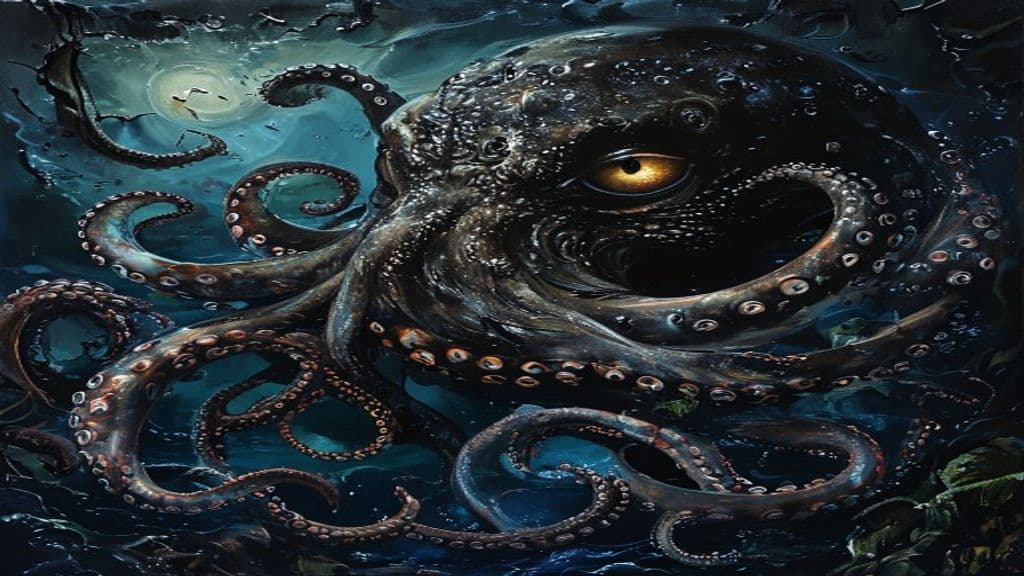
Akkorokamui is a titanic octopus-like sea kamuy (spirit) in Ainu tradition, described as the nushi (local lord) of Funka/Uchiura Bay in Hokkaidō. Traditional accounts portray it both as a fearsome physical monster capable of overturning or swallowing vessels and as a named supernatural presence embedded in Ainu cosmology and ritual vocabulary.
Akna
Akna is a female figure named in modern secondary sources as associated with childbirth and motherhood. The provided materials conflate brief mentions linking the name to both Maya and Inuit maternal goddesses; primary Maya iconographic or epigraphic evidence for a distinct Maya Akna is not supplied in the sources.
Akshayavata
In Hindu mythology, Akshayavata is a sacred banyan tree and/or lake that symbolizes eternal life. It is mentioned in both Hindu and Jain traditions and associated with the Puranas. (Note: - The power tier should be "Greater" or at least "Ancient", as it is associated with the Puranas, which are considered ancient texts. - No specific physical description is provided, but that doesn't m)
Akshobhya
Akshobhya is a transcendent buddha of Mahāyāna and Vajrayāna Buddhism, one of the Five Wisdom (Dhyāni) Buddhas. He personifies 'mirror knowledge' (ādarśa-jñāna), is conventionally placed in the East, and is lord of the eastern Pure Land Abhirati; in esoteric texts he is associated with the eastern Vajra division and invoked in mantra/mandala ritual contexts.
Akubōzu
Akubōzu (灰坊主, Akubōzu) is a household yōkai from parts of Akita and Iwate Prefectures in northern Japan said to live in the ashes of the hearth. Sources say they appear when people (notably children) play with or dig in hearth/furnace ash; the figure is cited as part of a broader Tōhoku motif warning against disturbing ash.
Akugyo
Akugyo (悪魚) are a class of monstrous aquatic yōkai in Japanese tradition: enormous sea creatures—described in different accounts as giant fish, gigantic ningyo-like merfolk, or fire‑breathing sea monsters—that threaten sailors and fishermen by capsizing boats and devouring drowning people.
Akuma
Akuma (悪魔/あくま) in Japanese sources is an evil spirit, devil, or demon associated with misfortune and mental disturbance. The term appears in Buddhist texts and Heian-period literature and was later used to translate the Christian figure of Satan, as well as the Buddhist Mara.
Akura-ō
No verifiable folkloric or literary entity named Akura-ō is documented in the supplied sources. The string "akura" appears only as a modern musical credit and as OCR artifacts in archival material; there is no authoritative description of an Akura-ō in the provided documents.
Akuro-ō
Akuro-ō is a fragmentarily attested label appearing in a secondary database gloss as 'Emishi's chief or ogre.' Surviving references are inconsistent and do not supply primary folkloric narratives, descriptions, or rituals; other supplied materials that mention demons or demon-rulers do not refer to Akuro-ō. This entry treats Akuro-ō as a probable secondary/database attestation rather than a well-documented traditional figure.
Community Record
- [1]Morning Prayer in Hawaiian. Morning Prayer (Hawaiian). Justus Anglican Resources. (shows use of 'ke Akua' in liturgical Hawaiian)other
- [2]Evening Prayer in Hawaiian. Evening Prayer (Hawaiian). Justus Anglican Resources. (shows use of 'ke Akua' in liturgical Hawaiian)other
- [3]Ka Palapala Hemolele a Iehova ko kakou akua ... (book listing). Book listing for a Hawaiian-language Bible edition: title fragment includes 'ko kakou akua' (our God), illustrating akua used to render Jehovah/the Christian God in Hawaiian-language scripture.other
- [4]Akua (Hawaiian/Polynesian) Gods (compiled list). Compiled list headed 'Akua (Hawaiian/Polynesian) Gods' listing named Hawaiian deities and brief domain descriptors (e.g., sea, volcanoes, snow, childbirth).other
- [5]Uncle Charlie Moolelo.com - Akua Lele Story. Modern moʻolelo titled 'Akua Lele' containing a narrative fragment mentioning a 'big flash of light'; literary usage of the word akua.literary