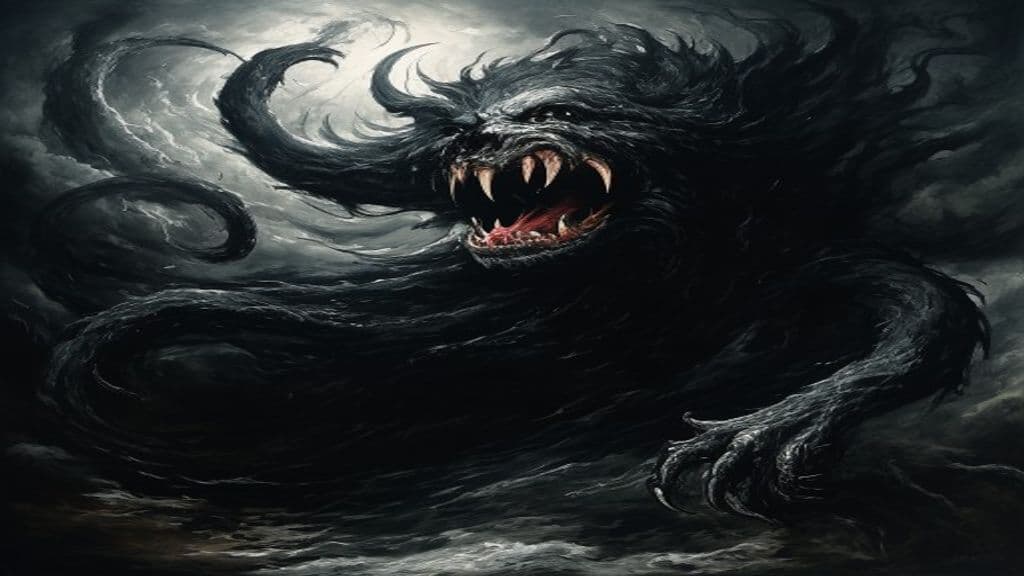
The name and concept of the ala are rooted in South Slavic popular belief in a female agent of destructive weather. Scholars cited in the source literature propose that the term ala/hala may be connected to the Greek word for hail (χάλαζα, khalaza), an etymology offered to explain the creature’s explicit association with hail clouds; dialectal variation (ala vs. hala) reflects regional phonology. The ala appears in narratives as part of a network of pre-Christian and Slavic weather-demon motifs that were later subject to Christian reinterpretation (for example, conflicts with dragons being recast around saints in Christianized tales).
Descriptions vary widely across regions and accounts. Folklore reports portray ale as indistinct or shifting forms: an invisible or black hissing wind seen before dark hail clouds; a vague gigantic creature with a huge mouth; dragon- or serpent-like female monsters (Bulgaria); raven-like or huge-mouthed raven forms; cloud-contours shaped into a winged, tailed figure; even bull-like forms with large horns. Ale may assume human or animal shapes in stories and are sometimes said to possess human bodies. Sources emphasize multiplicity and regional variation rather than a single fixed appearance.
Folkloric reports attribute to ale the active agency of leading and directing hail-producing thunderclouds and storms toward fields, vineyards, and orchards to destroy or carry away crops; in some accounts they uproot trees or otherwise cause agricultural ruin. They are described as extremely voracious—particularly prone to eating children—and in mythic narratives are sometimes said to try to devour the Sun or Moon, an etiological explanation for eclipses. Other reported powers include manifesting within gales and whirlwinds, producing a hissing sound, shapeshifting into animals or humans, and possessing people. Ale are typically hostile but may be placated and become favorable to particular individuals in some stories.
Weaknesses
- otherdragons (mythic enemies)
- othereagles (folk-natural deterrent)
- otherChristian saintly intervention (in Christianized tales, e.g., St. Elijah)
Wards
- conditionrespectful approach/placation
- otherencouraging natural protectors
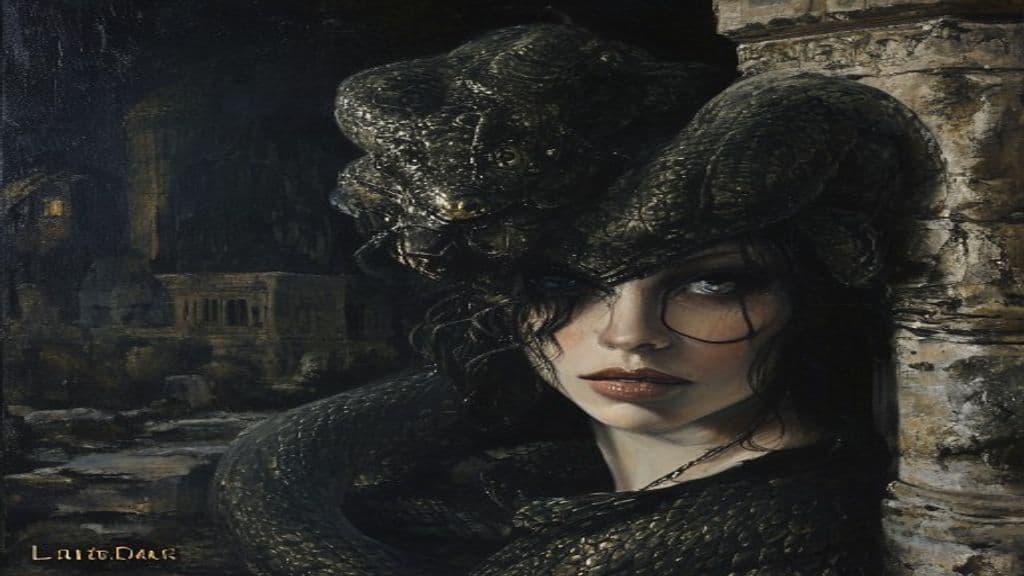
Lamia
A child-devouring demon of Greek mythology — once a queen of Libya and lover of Zeus, driven mad by Hera's destruction of her children and transformed into a monstrous hunter of other women's children.
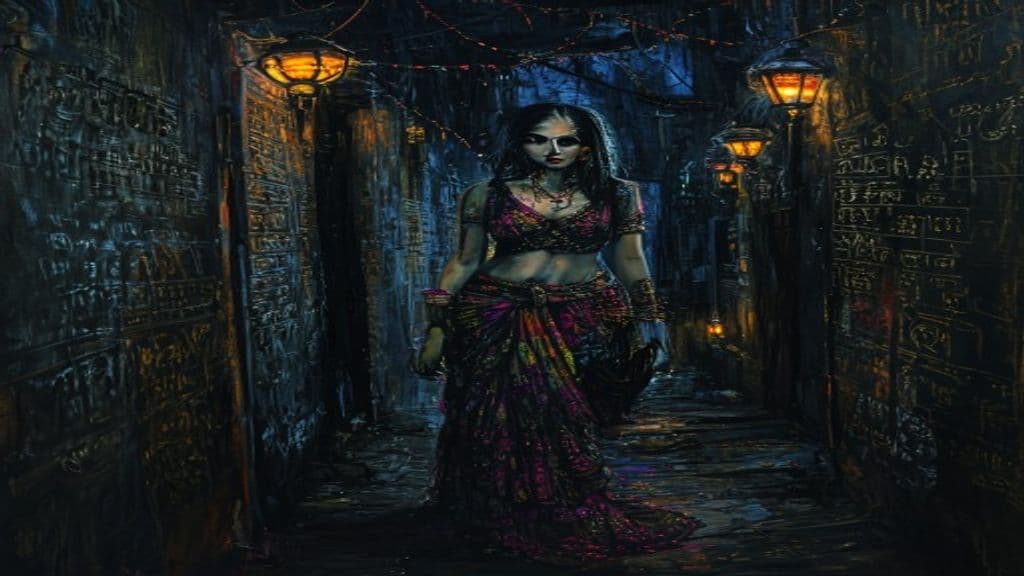
Stree
A vengeful female spirit from Chanderi who abducts men during festival nights. Warded off by the inscription 'O Stree, kal aana' — her legend, still practised on walls across Madhya Pradesh, inspired the 2018 Bollywood horror-comedy.
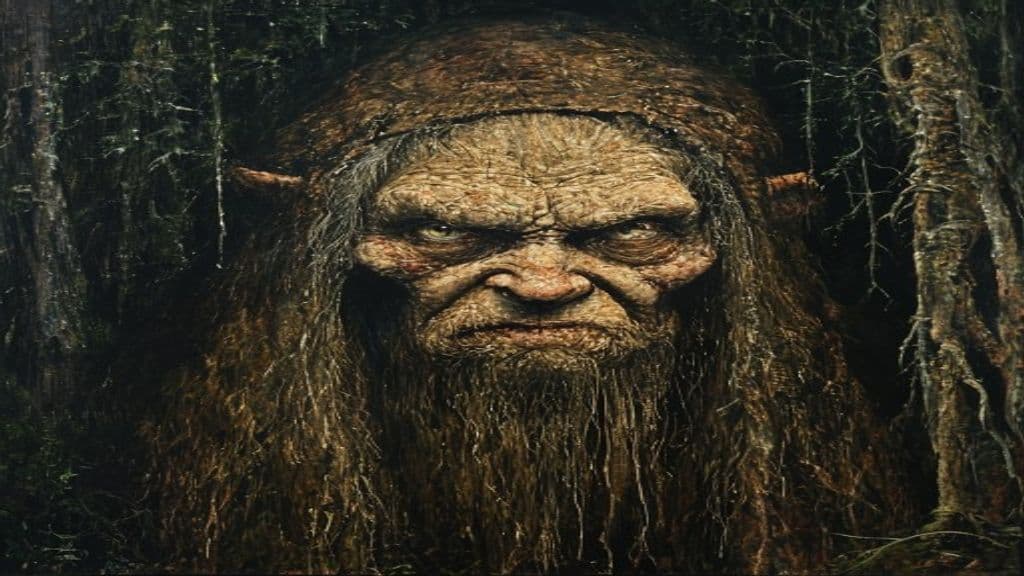
Baba Yaga
Baba Yaga is an ambivalent female figure of East Slavic folktale tradition, depicted variously as a fearsome, child-eating crone or as a helpful, maternal donor. She is associated with the deep forest, a hut described as standing on chicken legs, and the motific accoutrements of a mortar and pestle.

Dragon (Long)
Long (龍, "dragon") is a pervasive cultural and artistic motif that appears in Taoist sacred-geographical contexts, Chinese literature, and modern exhibitions; the provided sources treat it as part of the broader mythic imagery present around Taoist sites and ritual scenes rather than as a single, consistently described doctrinal entity.
Drekavac
A South Slavic night-haunting revenant-like creature whose name means "the screamer"; traditionally linked to the restless souls of improperly buried or unbaptised dead (including sinful adults and unbaptised children) and reported in many regional variants that foretell death or disease and frighten the living.
German
German is a South Slavic male vegetation and weather spirit recorded in eastern Serbia and northern Bulgaria. Known primarily through ritual effigies and rites performed by girls and young women, he is associated in folk belief with bringing rain and hail and with a symbolic death-and-revival cycle tied to agricultural fertility.
Vampire (tradition)
A class of revenant beings in southeastern and eastern European folk belief that subsist by feeding on the vital essence (generally blood) of the living. Recorded chiefly in early modern to modern oral traditions, these vampires are typically described as reanimated corpses whose presence explains unexplained illness, death, and post-mortem disturbances in their communities.
Al-Jānn
Al-Jānn (jann) is a pre-Adamite, ancestral category invoked in Arabic-Islamic exegetical, hadithic, mystical, and folkloric materials to designate an earlier class of sentient beings—progenitors of later jinn—said to be created of fire, to have once inhabited and sometimes ruled the earth, and to stand in a liminal ontological position between angels and humans.
Al-Kuz
Al-Kuz is not attested in the supplied corpus as a supernatural being; the name appears as the designation of an impact crater on Saturn's moon Enceladus and as the name of a literary character (one of the barber’s six brothers) in "The Hunchback's Tale" from The Book of One Thousand and One Nights.
Al-Mi'raj
A mythical creature from medieval Arabic literature, described as a one-horned hare or rabbit. (Note: * Power tier: Given the lack of information on abilities and powers, it's too early to assign a power tier. However, considering its classification as a "mythical creature" in medieval Arabic literatu)
Al-Wakwak
Al-Wakwak is a geographic entity in medieval Arabic literature, possibly described as an island or group of islands. (Note: * Power tier should be Primordial (cosmic) given it's mentioned as a geographic entity in medieval Arabic literature. * Origin story section is missing, which would typically include how Al-Wakwak was)
Al-ʻUzzā
Al-ʻUzzā was a principal female deity of pre-Islamic Arabian religion, widely venerated by tribes such as the Quraysh. She formed a triad with al-Lāt and Manāt, had a prominent shrine at Nakhlah (near Mecca) with sacred trees and a stone cube, and was invoked for protection, intercession and oracular consultation in late medieval Islamic sources that record pre-Islamic cult practice.
Alabuğa (Alabuga / Yelabuga)
Alabuğa (also attested as Alabuga or Yelabuga) is not attested in the provided sources as a supernatural being; rather the name functions as a modern toponym and institutional brand: a town in the Republic of Tatarstan, an associated Special Economic Zone (SEZ), and (in disambiguation) a river name in Kyrgyzstan. No folkloric, mythological, or ethnographic material describing a spirit or creature called Alabuğa is present in the supplied documents.
Aladdin
Aladdin is the human protagonist of a Middle Eastern folktale (ATU 561) who rises from poverty to wealth after acquiring a magical ring and a magical lamp that house spirit-agents. Although widely associated with The Thousand and One Nights, the tale entered that corpus via Antoine Galland from a story told by the Syrian storyteller Hanna Diyab rather than from the earliest Arabic Nights manuscripts.
Alaisiagae
A group of Germanic female deities attested in Roman Britain, worshipped by continental auxiliary troops at a shrine near Vercovicium (Housesteads) on Hadrian's Wall. Epigraphic evidence records dedications to named members (Beda, Fimmilena, and in other lists Baudihillia and Friagabis) alongside Mars Thincsus and the numen of the emperor; modern scholarship interprets them variously as war/victory goddesses, as goddesses associated with assembly/justice, or as part of Matronae‑type fertility/ancestor cults.
Alaka (Hindu tradition)
Mythical city in Hindu cosmology, dwelling place of Kubera and ruler of the yakshas. (Note: - Power tier: Primordial (Alaka's splendor rivals Amaravati, which is a capital of a cosmic deity; thus, it should be categorized as Primordial) - Abilities: The text states Alaka has grandeur and maj)
Community Record
- [1]Ala (demon) — Wikipedia. Wikipedia contributors, 'Ala (demon)', Wikipedia, The Free Encyclopediawiki
- [2]Ala — Wikipedia (disambiguation/folk article). Wikipedia contributors, 'Ala', Wikipedia, The Free Encyclopediawiki