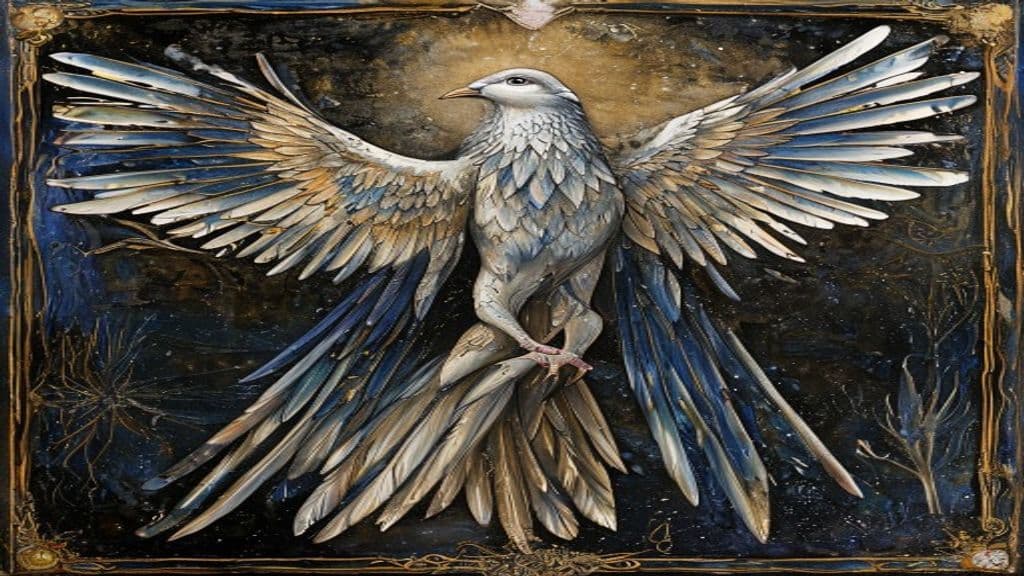
The Alatyr is attested primarily in East Slavic sources as a primordial sacred stone situated at the world's center. In the Dove Book tradition it stands on Buyan island in the middle of the world ocean and bears the World Tree; from beneath it flows a miraculous source supplying food and healing. Although the specific name appears chiefly in East Slavic texts, awareness of a central or paradisiacal sacred stone exists across Slavic regions in varied forms. Scholarly etymologies are uncertain: proposals relate the word to Russian yantar (amber), to an Iranic *al-atar ('white-burning'), and to lexical alternations suggesting a connection with Baltic/Latgalian notions of a regional stone (all noted in source summaries).
Descriptions vary and are chiefly symbolic. The Alatyr is most often called by color-epithets (white, blue/cerulean, grey, golden, 'sea' or 'heavenly' stone). Sources emphasize its locative and luminous qualities rather than precise shape or size. In some narratives it is the base for the World Tree and is depicted as a fixed great stone on which birds may sit; in Dove Book lore it is guarded by mythic guardians (a snake and a bird).
Attested functions and attributes include: containing "sacred letters" (a repository of sacred inscription or knowledge), emitting or being the site of a miraculous spring that provides food and healing, and serving as a cosmological anchor point and liminal receptacle in charms. In healing charms from Latvian, Belarusian, and Russian traditions, a raven is invoked to carry disease away and place it on a white/gray stone explicitly called the Latyr-stone in one Russian charm. The Alatyr is therefore portrayed as endowed with healing and magical properties and as a proper distant locus to which maladies may be ritually displaced. In the Dove Book the stone is guarded by Garafena (a wise snake) and Gagana (a bird), indicating its protected, sacral role in cosmology.
Weaknesses
- otherNo weaknesses recorded in sources
Wards
- otherNo folkloric wards against the Alatyr recorded; the stone is primarily a sacred, beneficial locus
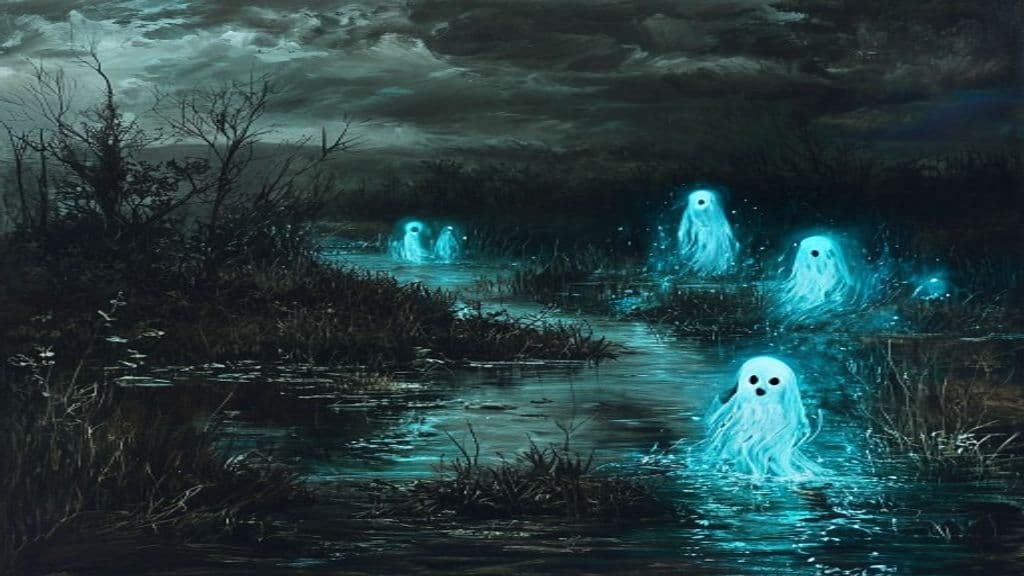
Will-o'-the-Wisp
A wandering light seen over marshy ground at night, leading travellers astray into bogs and fens. Possibly a spirit, possibly the soul of the unbaptised dead, possibly the devil himself.
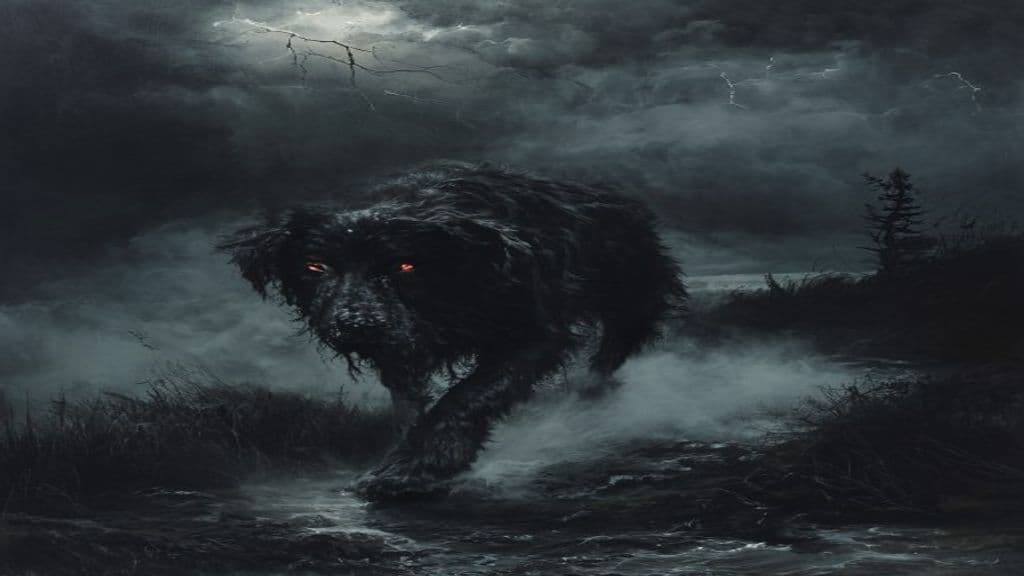
Black Shuck
A spectral black dog of East Anglian legend, with glowing red or green eyes. Its appearance is an omen of death. Its howl has been heard on clifftops during storms for centuries.
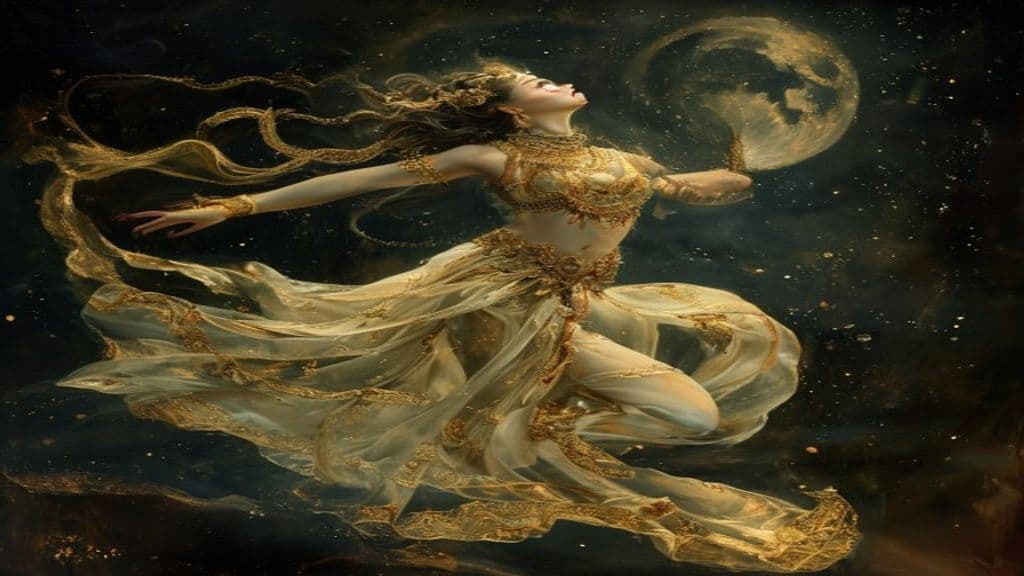
Apsara
Celestial dancers and water nymphs of Hindu cosmology — beautiful semi-divine beings who dance at the court of Indra and, by his command, descend to earth to distract sages from excessive asceticism.
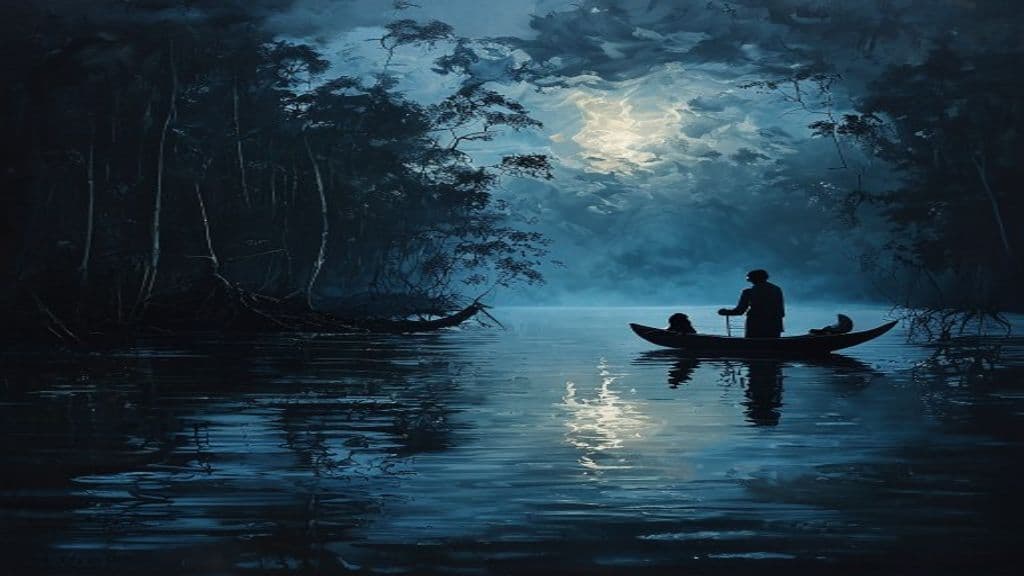
Aleya
Ghost lights of the Sundarbans delta — flickering flames over swamp water said to be the souls of dead fishermen, luring the living off safe paths into drowning waters.
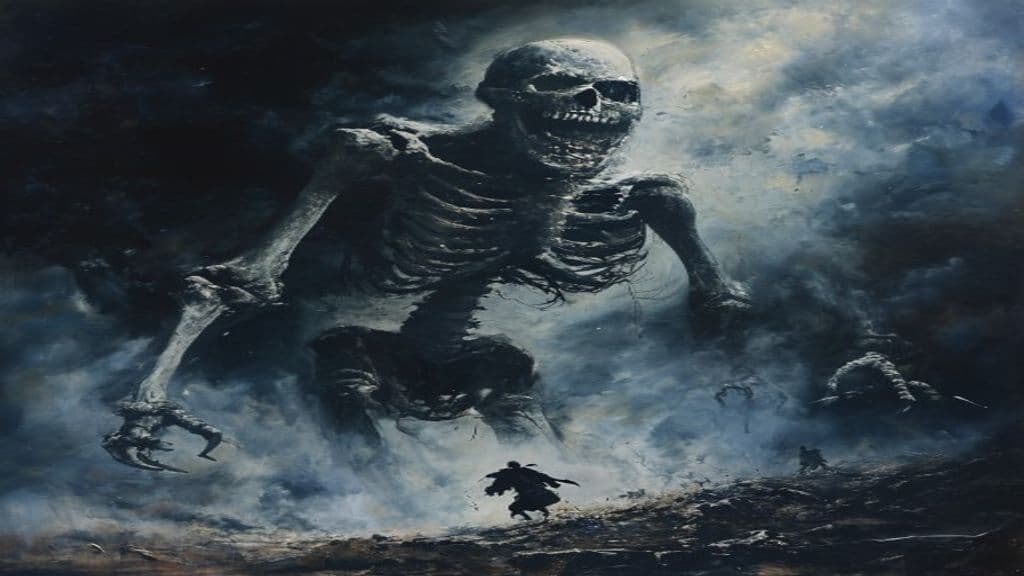
Gashadokuro
A fifteen-times-human-height skeletal yokai formed from the bones of those who starved to death or died on battlefields, their unburied remains fused together into a hungry colossus.
Alkonost
The Alkonost is a legendary woman-headed bird of East Slavic folklore, depicted as an individual mythic avian figure who lives in the underworld alongside her counterpart Sirin. Her song enchants listeners into forgetfulness or bliss, she is said to bless fruit during the Apple Feast of the Saviour, and her reproductive actions are causally linked in lore to sudden storms at sea.
Baba Yaga
Baba Yaga is an ambivalent female figure of East Slavic folktale tradition, depicted variously as a fearsome, child-eating crone or as a helpful, maternal donor. She is associated with the deep forest, a hut described as standing on chicken legs, and the motific accoutrements of a mortar and pestle.
Chernava
Chernava is a water spirit in East Slavic (Russian) folklore portrayed as a mermaid and the personification of the river Chernava; in the Sadko bylina she is presented as one of the Sea Tsar's daughters (in some versions, his niece) who aids the hero by transforming into the river Chernava and returning him to the human world.
Gamayun
Gamayun (Russian: Гамаю́н) is a prophetic, wisdom-bearing bird of Russian folklore, normally depicted as a large bird with a woman's head that "spreads divine messages and prophecies" and "knows everything of all creation, gods, heroes, and man." She is placed in the mythic geography on an island in the east near paradise and is presented as a symbol of wisdom rather than a hostile creature.
Alan Scott
Alan Scott is a fictional American comic-book superhero, the original bearer of the Green Lantern name, created by Martin Nodell and Bill Finger and debuting in All-American Comics #16 (July 10, 1940). He is a Golden Age costumed crimefighter who uses a mystical ring recharged from a green lantern and served as a founding member and early leader of the Justice Society of America.
Alan Wake
Alan Wake is a fictional human protagonist created by Remedy Entertainment: a bestselling crime‑thriller novelist who experiences metafictional supernatural events when manuscript pages of a book he does not remember writing come to life in the town of Bright Falls. The character appears across video games and related media (Alan Wake, DLC episodes, American Nightmare, Alan Wake 2) in stories that frame the threat as a pervasive 'darkness' opposed by light.
Alastor
Alastor (Ancient Greek: Ἀλάστωρ) is a concept-personification in Greek tradition denoting an avenging spirit or personified curse that punishes certain moral offences—especially familial bloodshed—and operates alongside chthonic avengers such as the Erinyes. Over time the term broadened to a secular insult and was reinterpreted in later Christian demonology as a type of possessing evil spirit.
Alatreus
Alatreus is a youthful mythic warrior named in Roman-era treatments of Greek myth (notably Statius's Thebaid). He is identified as the son of Lapithaon and the nymph Dercetis and appears as a tender-aged but effective combatant in battlefield episodes.
Alaunus / Alauna
Alaunus (masculine) and Alauna (feminine) are Gaulish theonyms attested in Roman‑period inscriptions and preserved in river- and place‑names across western and central Europe. The surviving evidence is epigraphic and toponymic; modern scholars often interpret the deity as associated with healing and prophecy and note at least one dedication equating him with Mercurius (Mercurius Alaunus).
Alaz
Alaz is the Turkic god of fire associated with hearths, flame, and the Great Fire (Ulugh Od). He is described as a powerful fire-being who sends protector-spirits (İye) to household hearths and can cause destructive fires when angered; fire under his authority is also a purifying force.
Alazṓn
Alazṓn (Ancient Greek: ἀλαζών) is a theatrical stock character of ancient Greek comedy who functions as an impostor or braggart: a figure who overestimates and theatrically misrepresents his own qualities and social status. As an archetype he generates comic situations, serves as the opponent of the eirôn, and recurs across Greek and Roman comedy, commedia dell'arte, and later drama.
Alba Silvius
Alba Silvius is a legendary king of Alba Longa in Roman foundational historiography, presented in regnal lists and chronicles as a member of the Silvian dynasty descended from Latinus. He is attested as reigning roughly 38–39 years and figures primarily as a genealogical and chronological link in the tradition that leads from Aeneas and Latinus toward the later Roman founders.
Community Record
- [1]Alatyr (mythology) — Wikipedia. Wikipedia article 'Alatyr (mythology)' summarizing East Slavic and Slavic folklore sources (Dove Book, charms, etymological proposals by Trubachyov, Martynov, Jakobson, and others).wiki