
Amatsuhikone is presented in the sources as a heavenly-born child of Amaterasu. He is described as the third son of Amaterasu and is variously said to have been born from the jewel(s) in Amaterasu's hair or from the vine used to bind Amaterasu's hair. In traditional chronology recorded in the sources, he later descended onto 432‑meter Mount Mikami during the reign of Emperor Kōrei (traditionally dated 290–215 BC) to become the mountain's shintai; this descent is presented as part of the legendary chronology tying divine genealogies to particular places and clans.
The cited sources do not supply a physical description or detailed iconography for Amatsuhikone. He is chiefly attested genealogically as a child of Amaterasu and functionally as a local kami when enshrined; his identity in the sources is maintained through lineage and place (Mount Mikami) rather than vivid visual detail. The available material records the existence of Mikami Shrine built to worship him but does not describe any standardized portrait, statue, costume, or other consistent visual attributes for the deity.
The provided sources do not attribute specific supernatural feats, magical powers, or routine behaviors to Amatsuhikone beyond his roles in mythic genealogy and as an enshrined mountain kami. He is presented as a divine offspring (the third son of Amaterasu), an ancestral progenitor for certain clans, and as the shintai of Mount Mikami—roles that convey religious and social significance rather than enumerated powers or acts in narrative episodes.
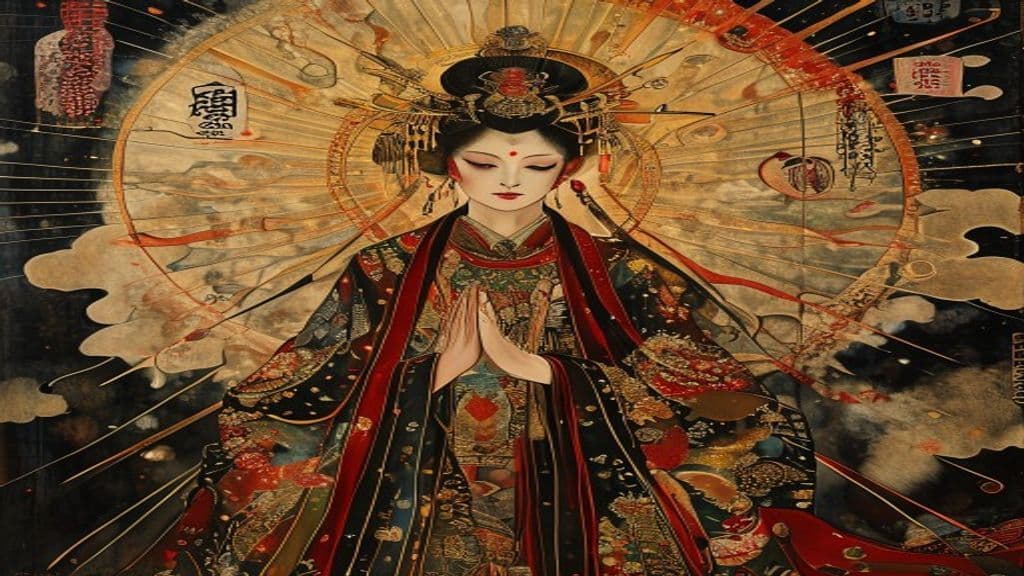
Amaterasu Ōmikami
Amaterasu Ōmikami is the sun deity and a principal kami in Shinto tradition, presented in classical Japanese sources as ruler of Takamagahara (the High Celestial Plain) and the mythic ancestress of the Imperial House through her grandson Ninigi. She is central to shrine cult at Ise and to ritual nomenclature and practice within institutional Shinto.
Ame-no-Tajikarao
Ame-no-Tajikarao is a kami in Japanese Shinto myth notable for exceptional physical strength. He appears in the Ama-no-Iwato narrative as the deity who pulls Amaterasu from the heavenly rock cave, and he is venerated at numerous shrines across Japan with associations to physical power and local lineage claims.
Ame-no-hohi
Ame-no-hohi (also rendered Ame no Fuhi) is a male kami in Japanese mythology identified in sources as the second son of the sun goddess Amaterasu. He is principally attested as an ancestral figure: historical rulers of Izumo and the modern heads of Izumo Taisha and Izumo-taishakyo claim descent from him.
Ame-no-oshihomimi
Ame-no-oshihomimi (天忍穗耳尊), often shortened Oshihomimi, is a kami in Shintō mythology described as the first son of the sun goddess Amaterasu and an ancestral figure for the Japanese Imperial family. In some versions of the myths he is offered rulership of the earth but declines; he is also father (through Takuhadachiji-hime) of Ninigi-no-Mikoto, linking heavenly descent to terrestrial rule.
Futsu-no-mitama
A named sacred sword or charm in Japanese mythic and popular-culture references, presented in modern secondary sources as the weapon used by the kami Takemikazuchi to "quell the lands" and later associated in some summaries with transfer to Emperor Jimmu. In contemporary media it is frequently adapted as a named piece of equipment or charm that grants combat power or symbolic authority.
Kuraokami
Kuraokami is a classical Japanese kami associated with rain and snow, named in the Kojiki and Nihon Shoki genealogies as one of the deities produced from the violent aftermath of the fire-deity Kagu-tsuchi's death. The name combines kura (闇, "dark") with the uncommon logograph okami (龗/淤加美), a character and set of associations linking rain, supernatural power, and later commentator identifications with snake/dragon imagery.
Tamamo-no-Mae
A legendary shape‑shifting fox‑spirit figure in Japanese mythology who, in otogizōshi and later Edo folklore, appears as a favored courtesan in imperial courts, causes a ruler's illness and political disorder, and—after death—was said to embed her spirit in the poisonous Sesshō‑seki stone until Buddhist rites pacified her.
Ōyamatsumi
Ōyamatsumi is a Japanese kami associated with mountains, islands, and the sea, presented in core creation genealogies as an elder divine ancestor whose children and descendants populate local and imperial mythic lineages. His principal cult site is Ōyamazumi Shrine on Ōmishima, and he appears prominently in Kojiki/Nihon Shoki narratives such as the Kamiumi birth-cycle and the Tenson Kōrin episode involving Ninigi.
Amathes
Amathes (Ancient Greek: Ἀμάθης) is a mythic eponymic ancestor in Greek tradition, described as a son of Heracles from whom the Cypriot town Amathus was said to derive its name. Some traditions alternatively attribute the town-name to a female eponym, Amathusa, mother of Cinyras.
Amatsu-Mikaboshi
A star-associated kami attested in the Nihon Shoki with ambivalent placement: in one account a rebellious star-god (Hoshi‑no‑Kami Kagaseo) who refused submission and was subdued, in another an "Evil Deity" the heavenly deities asked to be executed. The name and later commentary link the figure to stellar/planetary phenomena and to specialized star shrines (Hoshi‑jinja/Hoshimiya‑jinja).
Amatsumara
Amatsumara (天津麻羅), also called Amenomahitotsu, is a Shinto kami presented in sources as the divine smith of Takamagahara who is said to have aided in making the mirror used in the Amaterasu cave episode and who serves as a patron of earthly blacksmiths.
Amaunet (Amunet)
Amaunet (also spelled Amunet, Amonet) is a primordial female deity of ancient Egyptian religion, attested from early religious texts and represented as the feminine counterpart and consort of the god Amun. She is presented in sources as a pre-creation or primeval principle associated with hiddenness; Thebes is recorded as a principal center of her cult into the late dynastic and Ptolemaic periods.
Community Record
- [1]Amatsuhikone. Wikipedia, 'Amatsuhikone' entry.wiki
- [2]Wikidata: Amatsuhikone (Q10940228). Wikidata item for Amatsuhikone (Q10940228).wiki