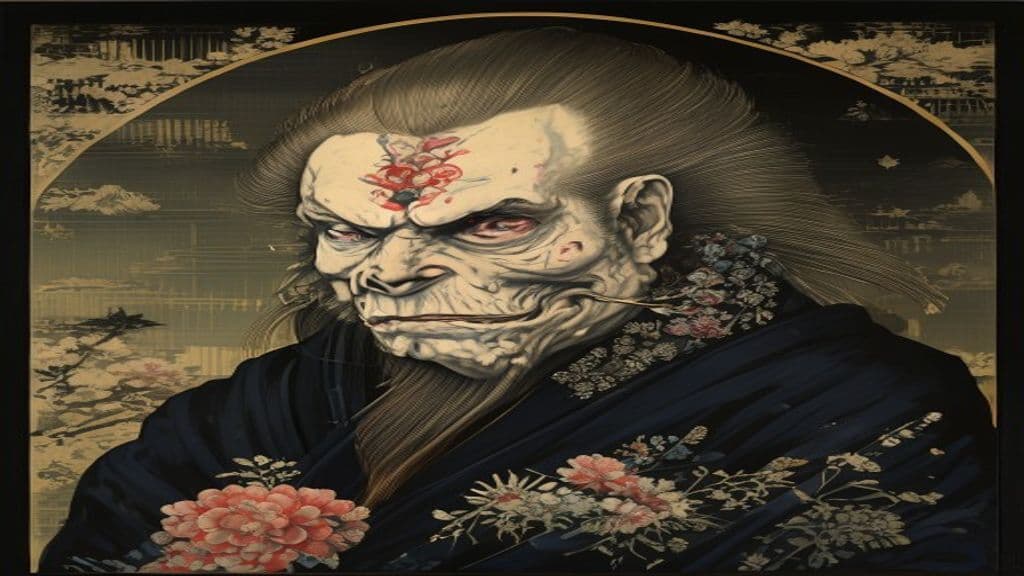
In classical sources Ame-no-Koyane is a heavenly deity (Amatsukami) associated with Takamagahara. He appears among the generation of divine officials who manage the gods' affairs: Nihon Shoki describes him as “the first in charge of divine affairs,” and he is one of the deities who descend with Ninigi in the tenson kōrin, marking him genealogically as the ancestor of the Nakatomi clan and, by extension in clan tradition, ancestral to Fujiwara no Kamatari and the Fujiwara. Textual traditions differ about his parentage: the Kogo Shūi and Kashima Shrine genealogies name Kamimusubi as his parent, while the Nihon Shoki gives Kogotomusubi—both variants are preserved in the sources and reflect alternative clan-centered genealogical traditions.
Classical textual sources supplied do not provide a consistent anthropomorphic or portrait-style description of Ame-no-Koyane. Rather than focused physical traits, he is represented in literary and cult contexts by his office and genealogical identity. He appears in devotional and iconographic programs such as the Kasuga mandara (Kasuga Taisha visual traditions) where his presence is symbolic of ritual office and ancestral lineage; shrines that enshrine him (Hiraoka, Kasuga, Ōharano, Yoshida) present him as a venerated kami within standard Shinto shrine representations rather than through a fixed physical portrait in the supplied materials.
Sources frame Ame-no-Koyane's efficacy in terms of ritual office and liturgical competence rather than overt magical feats. Nihon Shoki records that he was “the first in charge of divine affairs” and that he performed the Greater Divination as part of his service. In the Ama-no-Iwato myth he performs the ritual prayer that lures the sun goddess Amaterasu from the cave, restoring light to the world; he is also commanded by Amaterasu to guard the divine mirror, indicating custodial responsibility for an imperial regalia. He thus embodies ritual authority, divinatory function, and custodial guardianship in the mythic-cultic order.
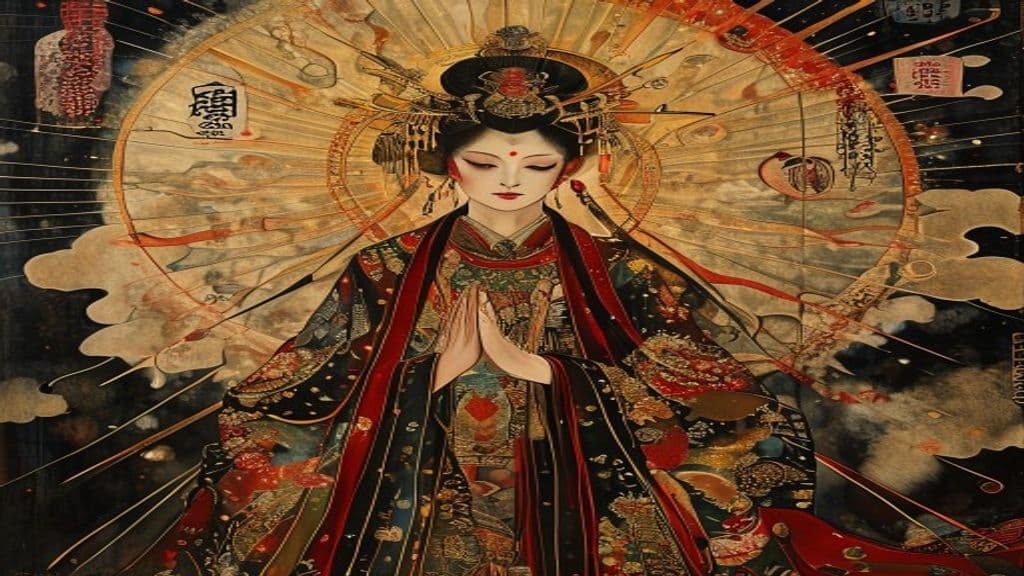
Ajisukitakahikone
Ajisukitakahikone is a kami in Japanese mythic literature (Kojiki/Nihon Shoki). He appears in the transfer-of-rule cycle between heaven and earth, is described as a son of Ōkuninushi, associated with the Kamo cult (called Kamo no ōmikami in some modern museum/catalog entries), and features in narratives that explain landscape formation and meteorological genealogy.
Amaterasu Ōmikami
Amaterasu Ōmikami is the sun deity and a principal kami in Shinto tradition, presented in classical Japanese sources as ruler of Takamagahara (the High Celestial Plain) and the mythic ancestress of the Imperial House through her grandson Ninigi. She is central to shrine cult at Ise and to ritual nomenclature and practice within institutional Shinto.
Amatsumara
Amatsumara (天津麻羅), also called Amenomahitotsu, is a Shinto kami presented in sources as the divine smith of Takamagahara who is said to have aided in making the mirror used in the Amaterasu cave episode and who serves as a patron of earthly blacksmiths.
Ame-no-Minakanushi
Ame-no-Minakanushi (天之御中主) is a primordial kami named in Japan's classical creation texts as one of the very first deities to come into being in Takamanohara (High Heaven). Presented in the Kojiki and Nihon Shoki as a solitary, hidden first god, he functions primarily as a mythic point of cosmic origin rather than an actively intervening deity in surviving narratives.
Ame-no-Tajikarao
Ame-no-Tajikarao is a kami in Japanese Shinto myth notable for exceptional physical strength. He appears in the Ama-no-Iwato narrative as the deity who pulls Amaterasu from the heavenly rock cave, and he is venerated at numerous shrines across Japan with associations to physical power and local lineage claims.
Ame-no-Tokotachi
Ame-no-Tokotachi is a primordial kami in classical Shinto cosmology attested in summaries of the Kojiki and Nihon Shoki tradition. Sources identify a very early solitary or among-the-first deity who manifests at the creation of heaven and earth; supplied materials also reference a closely related name, Ame-no-Minakanushi, in English summaries of those chronicles.
Ame-no-Uzume-no-Mikoto
Ame-no-Uzume-no-Mikoto is a Shinto kami of dawn, mirth, revelry and the performing arts whose comic and erotic dance at the entrance of Amano‑Iwato lures the sun goddess Amaterasu from hiding, restoring light; her action is cited as the mythic origin of kagura and of certain ritual/performance lineages.
Ame-no-hohi
Ame-no-hohi (also rendered Ame no Fuhi) is a male kami in Japanese mythology identified in sources as the second son of the sun goddess Amaterasu. He is principally attested as an ancestral figure: historical rulers of Izumo and the modern heads of Izumo Taisha and Izumo-taishakyo claim descent from him.
Ame-no-wakahiko
Ame-no-wakahiko is presented in the provided sources as a kami in Japanese mythology, described specifically as a god of grains and counted among the Amatsukami (heavenly deities). The sources identify him as a son of Amatsukunitama and note a medieval prose narrative, the Ame no Wakahiko Monogatari, exists about him.
Amenohoakari
Amenohoakari (天火明) is a Japanese kami associated with sunlight, heat, and the ripening of grain; he functions as an agricultural deity and a divine ancestor claimed by multiple clans and hereditary priestly lineages. Textual sources place him within heavenly genealogy (tensonzoku) while other records give alternate parentage, producing divergent traditions about his origins and relationships to other kami.
An (案)
An (案) is a small table, desk, or platform used in Shinto ceremonies to bear offerings. It is a liturgical furnishing and material mediator in shrine rites rather than a sentient supernatural being.
Atago Gongen
Atago Gongen (愛宕権現) is a syncretic mountain guardian venerated around Mount Atago as a local gongen (manifestation) of the bodhisattva Jizō and as a protective kami. Traditionally worshipped by Shugendō practitioners, townspeople, and samurai, the cult emphasizes protection from fire, theft, and disaster and developed through honji-suijaku fusion of Buddhist and Shinto ideas.
Community Record
- [1]Ame-no-Koyane. Wikipedia: Ame-no-Koyanewiki
- [2]Ame-no-Koyane (Wikidata). Wikidata entry for Ame-no-Koyanewiki
- [3]Hiraoka Shrine. Wikipedia: Hiraoka Shrine (lists Ame-no-Koyane as enshrined)wiki
- [4]Kasuga mandara (JAANUS). JAANUS: Kasuga mandara (notes on Kasuga visual-devotional program and enshrined deities)other
- [5]Amenokoyane | Kokugakuin Digital Museum. Kokugakuin University Digital Museum entry on Amenokoyaneother
- [6]Amaterasu and Susano-o – Yet Another Unitarian Universalist. Online retelling/analysis of the Ama-no-Iwato myth (references Ame-no-Koyane's ritual prayer)other
- [7]Kasuga Taisha, Nara's lantern shrine | Japan Experience. Kasuga Taisha context and shrine network (notes on deities venerated there)other