
In the Berber and Greek mythic register Antaeus (Berber: Anti) appears as a locally rooted figure encountered and defeated by the pan-Hellenic hero Heracles during the Heraclean cycle; sources identify the episode as Antaeus’s principal narrative role and link him to North African/Libyan frontier contexts (Source 1; Source 9). Separately, some Hellenizing and modern reference treatments render an obscure archaic Egyptian god as Antaios/Antewy (Antwey), noting the deity's early depiction and antiquity but describing origins as uncertain and distinct from the Berber/Greek character (Source 12; Source 13). The modern reuse of the name Antaios for a German cultural magazine and contemporary publisher imprint is an instance of classical naming adopted for editorial and institutional identity rather than a continuation of a single divine biography (Source 4; Source 2).
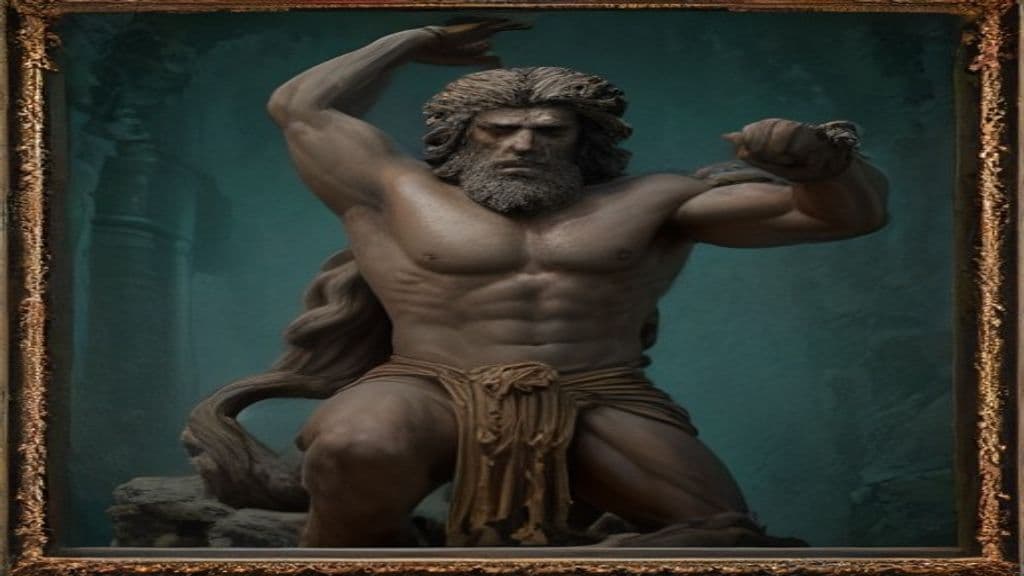
Literary descriptions of the Greek/Berber Antaeus are sparse in the provided excerpts; visual and artistic attestations (e.g., representations titled Herakles und Antaios) have shaped modern iconography of the Heracles–Antaeus encounter but the texts here do not record a fixed physical description (Source 7; Source 9). The Egyptian Antewy/Antwey is reported in the references as being depicted in the oldest times as two falcons and occasionally with rare early royal marks, suggesting paired-falcon iconography in archaic material culture, though fuller iconographic detail and provenance are not supplied in the excerpts (Source 12; Source 13). The modern magazine and publisher usages have no physical appearance beyond their printed and institutional manifestations (Source 4; Source 2).
In the mythic tradition Antaeus’s salient attribute in the provided material is his adversarial role against Heracles — a formidable local opponent defeated in the Heraclean narratives — but the excerpts do not enumerate supernatural powers or a broader catalogue of abilities beyond this narrative function (Source 1; Source 9). For the Egyptian Antewy the provided sources do not record cultic functions, powers, or ritual behaviors and describe the god's origin and role as obscure; no abilities are attested in the cited material (Source 12; Source 13). The modern institutional Antaios functions editorially and culturally (publishing essays, promoting certain intellectual orientations) rather than supernaturally (Source 4).
Abas
Abas (Ancient Greek: Ἄβας, gen.: Ἄβαντος) is not a single mythic being but a recurring personal name borne by multiple mortals and minor mythic figures in Greek epic and genealogical traditions — kings, founders, seers, warriors, attendants, a centaur, and a youth transformed by a goddess. The name is glossed in the sources as 'guileless' or 'good-hearted' and appears across Argive, Theban, Trojan, Euboean, and other local cycles.
Acheilus
Acheilus (also spelled Akheilos/Achilleus in some sources) is a minor figure of Greek myth described as a mortal son of Zeus who was transformed into a shark and thereafter called a 'shark-formed sea daimon.' Surviving summaries frame his story as a hubris metamorphosis: boasting about his beauty led a goddess to change him into a marine monster.
Achelois
Achelois (Ancient Greek: Ἀχελωίς, 'she who drives away pain') is an attributive name or epithet used in ancient Greek mythic contexts rather than a single, consistently characterized being. The term appears applied to several different figures — a surname of the Sirens, a general name for certain water-nymphs (Acheloides), and as the name of a daughter of Pierus — and functions within Greek naming practice as a descriptive label rather than a fixed ontological office.
Achilles (son of Zeus)
A minor figure in Greek myth named Akhilleus (Ancient Greek: Ἀχιλλεύς), presented in some traditions as a son of Zeus and the Lamia who was famed for irresistible beauty, won a beauty contest judged by Pan, and was transformed into ugliness by Aphrodite. This Akhilleus is distinct from the Homeric hero of the Trojan War.
Achiroe
Achiroe (variants Anchirrhoë, Anchinoë/Ankhinoe) is a minor Greek mythological figure: a Naiad associated with the river Nile, daughter of the river-god Nilus, who becomes the wife of the Egyptian king Belus and mother of mythic progenitors such as Aegyptus and Danaus (with some accounts also naming Cepheus and Phineus). She functions primarily as a genealogical link between river-divinity and royal lineages rather than as an active agent in surviving myths.
Acontes
Acontes (Ancient Greek: Ἀκόντην) is an Arcadian prince in Greek mythology, counted among the fifty sons of the impious King Lycaon. He appears in the Lycaon narrative as a participant in a sacrilegious meal prepared for Zeus (disguised as a peasant) and is destroyed by the god's lightning as punishment.
Actaea
Actaea is a named sea‑nymph in Greek mythic lists, identified in the provided sources as the personification or eponym of the seashore. She appears primarily in onomastic and catalogue contexts (lists of nymphs/Nereids) and has no surviving independent narrative or cultic rites attested in the cited material.
Acte (Akte)
Acte (Ancient Greek Akte, sometimes rendered Acme) is a divine personification in Greek myth: one of the Horae who embodies a particular hour of the day — specifically the hour of eating and pleasure, a designated afternoon work-hour — and functions chiefly as a temporal marker rather than an active mythic agent.
Adonia
The Adonia festival is a ritual mourning celebration for Adonis, the consort of Aphrodite in ancient Greek mythology. (Note: 1. The draft claims that the article is about a "ritual mourning celebration", but the source only mentions the festival as a mourning celebration. 2. Power tier should be Primordial or Ancient since )
Aega
Aega is attested in modern reference works as a mythological name from the Greek tradition; the string 'Aega' is used for more than one minor figure or entry in Greek mythic catalogs. Surviving provided sources give no coherent myth, iconography, or rituals tied to a single, identifiable deity or spirit named Aega.
Aegaeus
Aegaeus (Ancient Greek: Αἰγαῖος) appears in Greek myth as (1) a local river-god associated with the island called Scheria (traditionally associated with Corfu) and father of the nymphs Aigaiides and of Melite (who in some sources bore Heracles a son, Hyllus), and (2) as a toponymic surname/epithet of the sea-god Poseidon derived from the town of Aegae in Euboea.
Aegesta
Aegesta is an ancient place-name and eponym recorded in Greek and Roman sources as an alternate form of Segesta, an Elymian city in northwestern Sicily, and as a mythic personal name (Aegestus/Aegesta) tied to Trojan foundation legends rather than a supernatural being.
Community Record
- [1]Antaeus (Wikipedia). Wikipedia, "Antaeus"wiki
- [2]Herakles in Africa - Confronting the Other in Libya and Egypt. Ancient World Magazine, "Herakles in Africa - Confronting the Other in Libya and Egypt"other
- [3]Herakles und Antaios by Moritz von Schwind (image). Artvee, image "Herakles und Antaios" (Moritz von Schwind)other
- [4]Antaios (magazine) (Wikipedia). Wikipedia, "Antaios (magazine)"wiki
- [5]Antaios, Antwey, Antaeus (Egyptian gods) — Nemo.nu. Nemo.nu, "Antaios, Antwey, Antaeus" (summary of lexicographic references)other
- [6]Antiwy (Antaios) | Henadology. Henadology, "Antiwy (Antaios)"other
- [7]Saint Helena hoopoe (Upupa antaios) (Wikipedia). Wikipedia, "Saint Helena hoopoe (Upupa antaios)"wiki
- [8]Antaios — online books copyright info (University of Pennsylvania). Online Books Page, "Antaios" copyright/edition informationother