Antinous was a Greek youth from Claudiopolis in Bithynia who accompanied the Roman emperor Hadrian on his travels. He died on the Nile in October 130 CE before his twentieth birthday. On Hadrian's orders Antinous was deified after his death; Hadrian founded the city of Antinoöpolis near the place of death, instituted commemorative games, and promoted an organized cult devoted to his worship that spread throughout the Greek East and Latin West. In Egyptian contexts Antinous was assimilated with Osiris (referred to as Osiris-Antinous), integrating him into local religious frameworks of death and renewal.
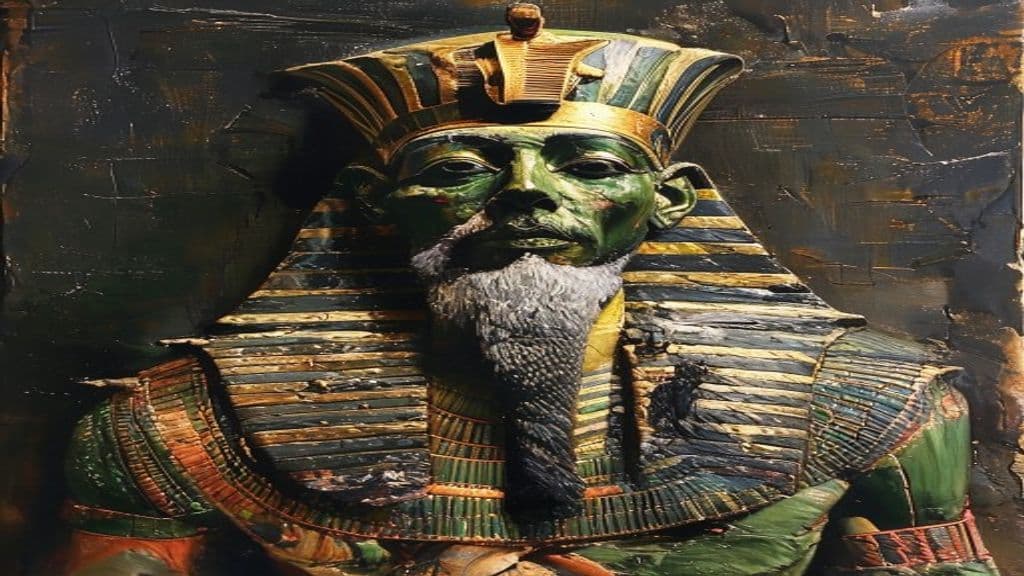
Surviving portraiture and statuary circulated throughout the Empire; the textual sources describe him as a Greek youth and note a recurring 'woodland boy' character in later statuary. Modern commentary refers to portrait heads (for example, marble busts wearing wreaths such as ivy) but the supplied texts offer no detailed contemporaneous eyewitness physical description beyond his youth and origin in Bithynia.
The sources do not ascribe inherent supernatural powers to Antinous in the manner of pre-existing spirits or monsters. His effective 'powers' are cultic and social: after deification he functions as an object of worship and a symbol mobilized by imperial authority. Through Hadrian's patronage he became the focus of organized rituals, institutional cult personnel and temples, civic honors (a city and games), widespread iconography, and syncretic religious identity (notably assimilation with Osiris) that allowed attributes associated with Egyptian death-and-regeneration motifs to be attached to his cult.
Weaknesses
- otherNo recorded supernatural vulnerabilities in supplied sources
Wards
- otherNo protective or anti-Antinous practices attested in supplied sources
Community Record
- [1]Antinous (Wikipedia). Wikipedia contributors, 'Antinous', Wikipedia, The Free Encyclopediawiki
- [2]Antinous (mythology) (Wikipedia). Wikipedia contributors, 'Antinous (mythology)', Wikipedia, The Free Encyclopediawiki
- [3]Antinoopolis Gayzette (Antinopolis.org). Antinoopolis Gayzette, Antinopolis.orgother
- [4]Star Tales – Aquila (notes referencing Antinous imagery). Ian Ridpath, 'Star Tales – Aquila'other
- [5]SkyEye: Aquila (notes referencing Antinous imagery). SkyEye, 'Aquila'other
- [6]Archive excerpt: Taurus Poniatovii, Aquila-the Eagle (continued). Antinous, Scutum Sobiesci.. Archive text-page on constellation imagery referencing Antinousother
- [7]Edith Wharton - La Tragédie De La Muse (archive.org). Edith Wharton, 'La Tragédie De La Muse' (archival reference mentioning Antinous in later literature)literary