
Multiple variant traditions surround Asclepius' birth and origins. The common Greek account names him son of Apollo and Coronis, rescued from his mother's burning funeral pyre and cut from her womb by Apollo; other local traditions claim Tricca/Trikala as a place of origin, and later reception narratives assimilate him to Roman and non-Greek healing figures. These alternative birth and parentage variants are preserved in classical and summary sources (Wikipedia; StructMed).
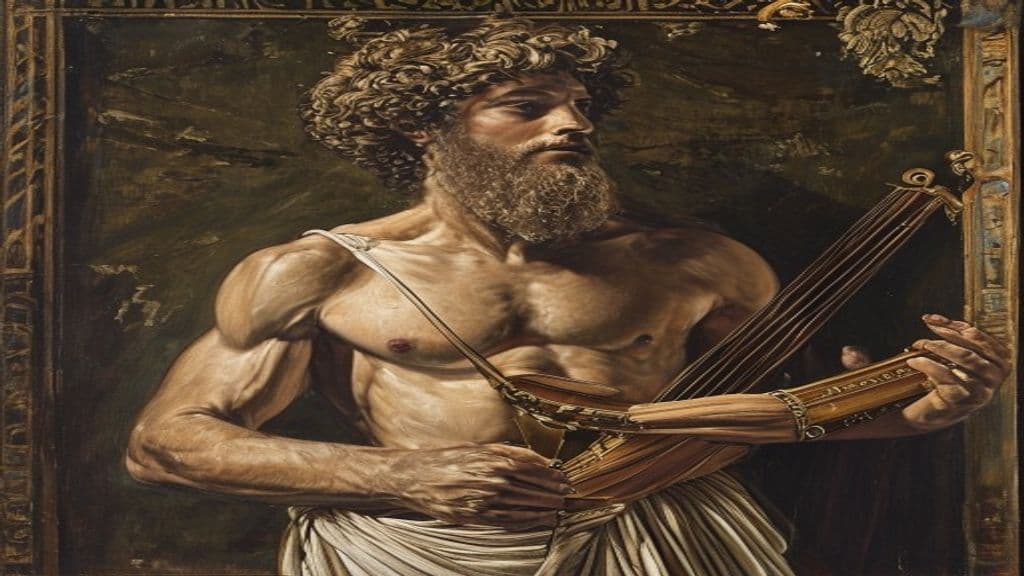
Iconography centers on emblematic attributes rather than a fixed physiognomy. The most consistent visual symbol is a rod or staff entwined with a serpent (the Rod of Asclepius); snakes are recurrent motifs in his myths (a snake licking his ears to impart secret knowledge) and sanctuary practice. Some narrative variants record exposure and care motifs (one tradition reports he was nursed by a goat and guarded by a herdsman's dog), but such details are episodic traditions rather than universal iconographic prescriptions (Wikipedia; Rod of Asclepius).
Asclepius embodies both practical sanctuary medicine and mythic miraculous power. In cult practice his sanctuaries ran therapeutic programs—ritualized incubation (sleeping in a temple chamber to receive healing dreams), hydrotherapy from springs, massage and physical therapies, herbal remedies, and priestly interpretation administered by Therapeutae—forming a combined ritual/medical regimen (Ed Tick; Hektoen International). In mythic narratives he is credited with extraordinary cures, including a famous episode where snakes reveal an herb used to restore life to Glaucus, and a story in which a snake licks his ears to transmit secret knowledge; such myths support claims of resuscitative or near-transgressive powers and validate the serpent-rod symbolism (Wikipedia; Rod of Asclepius; Open Library of Humanities).
Weaknesses
- conditionNot a hostile or malignant being; lacks traditions requiring warding—limitations include mythic prohibition consequences (e.g., Zeus' punishment in myths for resurrection acts) and dependency on sanctuary protocols
- ritualControlled sanctuary environment—ritual cleansing, priestly protocol and use of protected incubation rooms limit uncontrolled manifestations and channel divine presence
Wards
- ritualSanctuary incubation protocol (protected room with sleeping pads, skylights/openings and priestly oversight) — functions as a controlled, protective setting for divine contact and healing
- symbolTherapeutae mediation — priest-attendant role as institutional safeguard and interpreter of dreams and signs
Community Record
- [1]Asclepius - Wikipedia. Wikipedia, 'Asclepius'wiki
- [2]Rod of Asclepius - Wikipedia. Wikipedia, 'Rod of Asclepius'wiki
- [3]Asclepius at Epidaurus - Hektoen International. Hektoen International, 'Asclepius at Epidaurus'academic
- [4]Dream Healing (Asclepian sanctuary practices) - Ed Tick. Ed Tick, 'Dream Healing' (2009) (archive)other
- [5]Asclepius: StructMed (Cambridge). StructMed, 'Asclepius' (Cambridge)other
- [6]Hippocrates’ Oath and Asclepius’ Snake: The Birth of the Medical Profession (archive). Archive, 'Hippocrates’ Oath and Asclepius’ Snake'other
- [7]Asclepius’ Myths and Healing Narratives: Counter-Intuitive Concepts and Cultural Expectations. Panagiotidou, O. (2016), Open Library of Humanitiesacademic
- [8]Asclepius (Nag Hammadi Library). Nag Hammadi Library, 'Asclepius 21-29'literary