No preserved mythic birth narrative for Ashima is recorded in the supplied sources. The attestations place Ashima within the West Semitic religious vocabulary as a personified principle of 'name/portion/lot' (Hebrew אֲשִׁימָא, Latin Asima). She is reported in 2 Kings 17:30 among deities associated with Samaritan cults and is known from onomastic formations (e.g., Ashim-Yahu, Ashim-Beth-El) and parallels in Ugaritic and Elephantine contexts. Linguistic and comparative notes in the source link her to Akkadian shimti ('fate') and to South Semitic/Arabian Manāt, indicating she functioned as a local or regional goddess representing apportionment and destiny rather than appearing in a preserved origin myth.
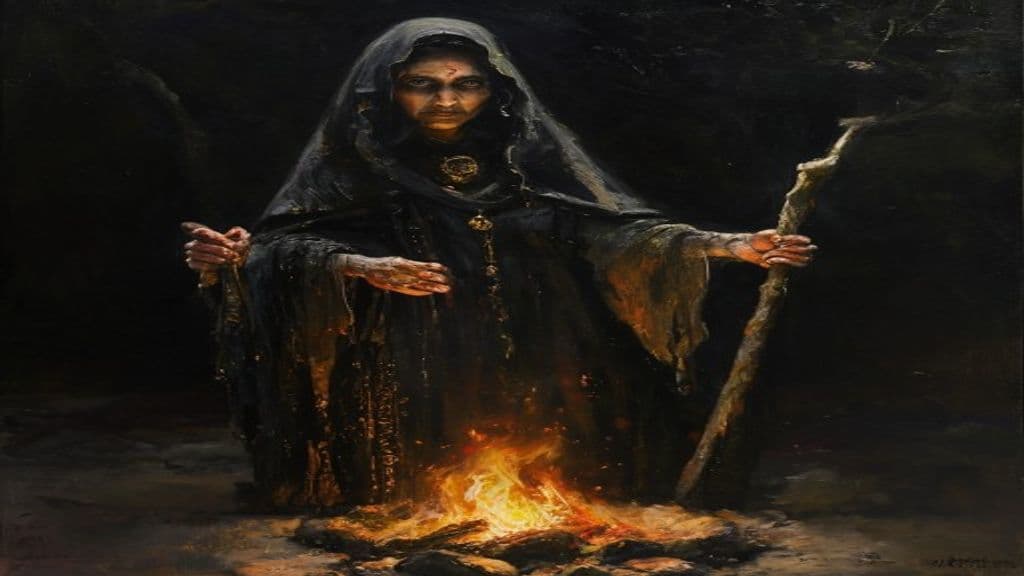
No archaeological or contemporaneous cult image of Ashima is preserved in the cited material. Later Jewish commentarial traditions recorded in the secondary literature offer variant descriptions of an Ashima idol: the Talmud reportedly describes a 'bald sheep' (possibly goat or ram), Rabbi Saadia Gaon is recorded as describing a cat-shaped form, and Rabbi Elias Levita is cited as describing a monkey-shaped idol. These are later, differing textual attributions rather than archaeological attestations and the sources present them as variant traditions.
The primary competence attributed to Ashima in the sources is as the personification of fate — the 'name, portion, or lot' allotted to persons or things. Linguistic and comparative evidence ties her role to Akkadian shimti and to cognates such as Manāt, framing her agency as apportioning, measuring, or assigning destiny, duty, or function. The supplied material does not record narrative acts, miracles, or interactions with individuals beyond this conceptual function.
Community Record
- [1]Ashima. Wikipedia contributors, 'Ashima,' Wikipedia, The Free Encyclopedia, https://en.wikipedia.org/wiki/Ashima (accessed)wiki