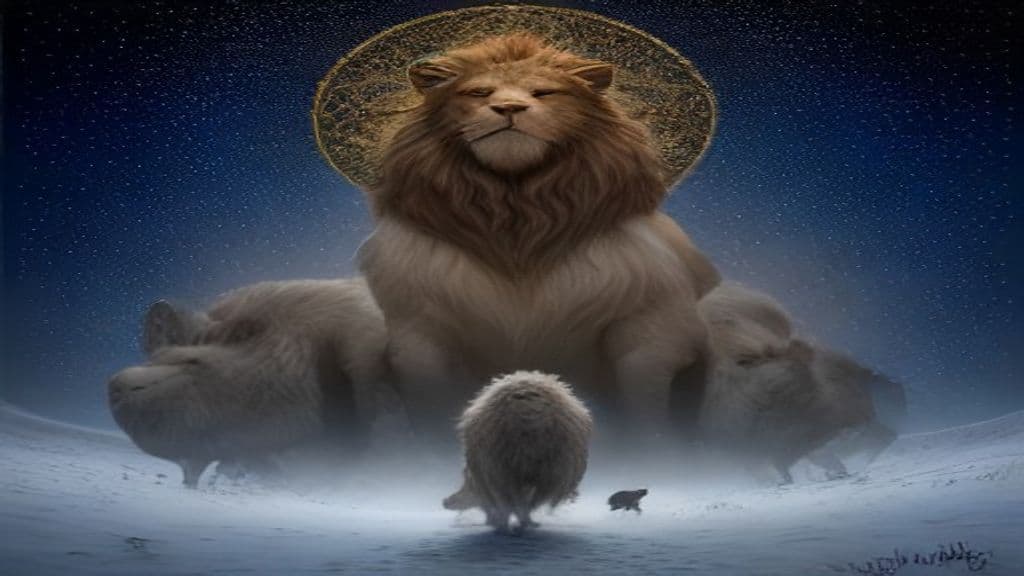
Within C. S. Lewis's Narnian cosmology Aslan is presented as the creator and prime metaphysical presence of Narnia. In The Magician's Nephew he is credited with the creation of Narnia; he is named as the son of the Emperor-Over-the-Sea in summaries of the series' theology. Lewis frames Aslan as a suppositional or typological incarnation of Christ — a personal, creative, and kingly presence who establishes the moral order and history of the realm rather than an impersonal force. Outside Lewis's fiction, the word aslan (Turkish for 'lion') and the label 'Aslan' appear in other unrelated uses (personal names; a lion-like alien species in the Traveller RPG), which are distinct from Lewis's singular being.
Aslan is consistently depicted in the Narnia summaries as a great, talking lion, described as the King of Beasts and the King above all High Kings. Narrative episodes record limited alternate manifestations: in The Voyage of the Dawn Treader he briefly appears as a lamb before returning to his usual lion form; in The Horse and His Boy he at times presents himself in a humbler guise—appearing as a 'common' or apparently witless lion or as a comforting cat in a specific episode—indicating controlled variation of appearance for narrative purposes. The name 'Aslan' itself corresponds to the Turkish word for 'lion,' a linguistic note Lewis or later commentators have pointed out and which informs the lion imagery.
Across the Narnia narratives Aslan exercises creator-level and kingly powers within the fictional world: he creates Narnia (The Magician's Nephew); bestows speech on some animals; allows himself to be killed to atone for another and is restored by a 'deeper magic' (The Lion, the Witch and the Wardrobe); reverses enchantments and restores those turned to stone and reverses transformations such as Eustace's dragon-enchantment (The Voyage of the Dawn Treader); crowns rulers and serves as final judge, leading inhabitants into 'Aslan's Country' at the world's end (The Last Battle); gives prophetic Signs and guidance to questing characters (The Silver Chair); and intervenes militarily when needed, for example leading forces that include awakened Trees and maenads in Prince Caspian and slaying the White Witch in The Lion, the Witch and the Wardrobe. These acts are narrated as direct interventions by Aslan rather than as repeatable rites performed by mortal agents.
Weaknesses
- otherNo conventional weaknesses recorded; governed by 'deeper magic' constraints
Wards
None recorded.
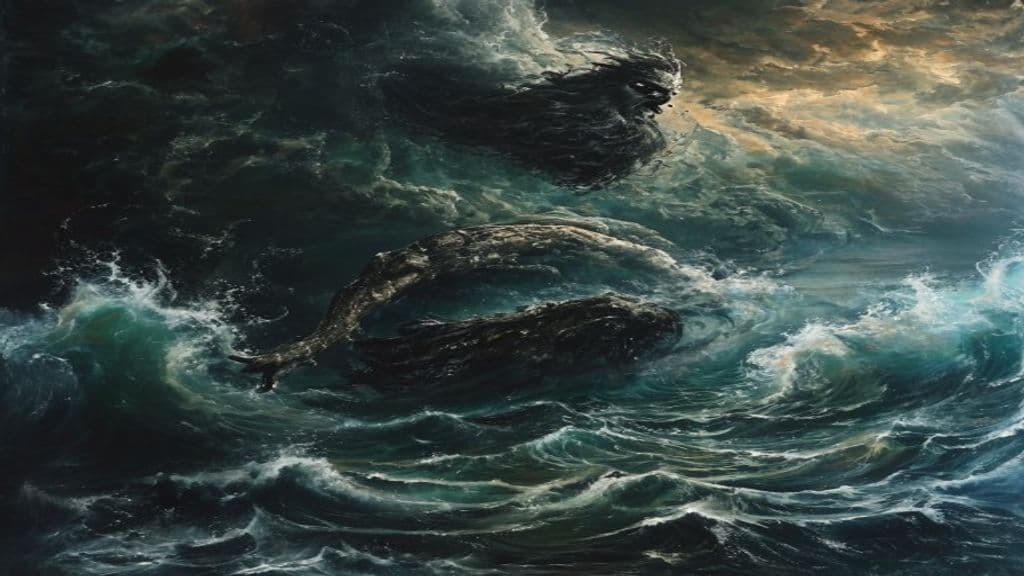
Marid
The most powerful class of jinn in Islamic tradition — beings of the sea, associated with the deep ocean, storms, and the granting of wishes at terrible cost. The classic genie of the Arabian Nights.
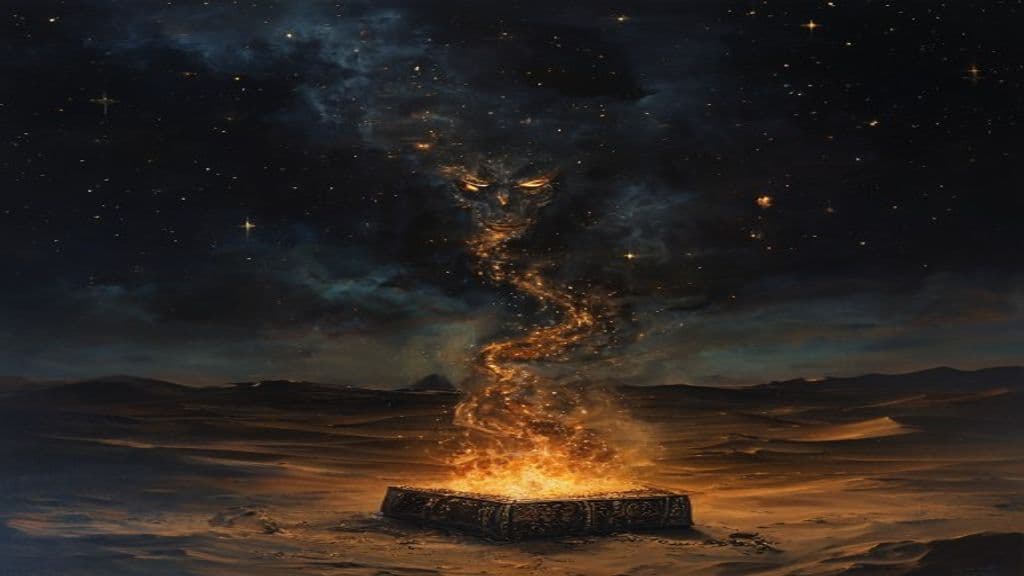
Djinn
The class of supernatural beings created from smokeless fire in Islamic cosmology — a parallel civilization to humanity, capable of belief or unbelief, with their own prophets, society, and judgment before God.
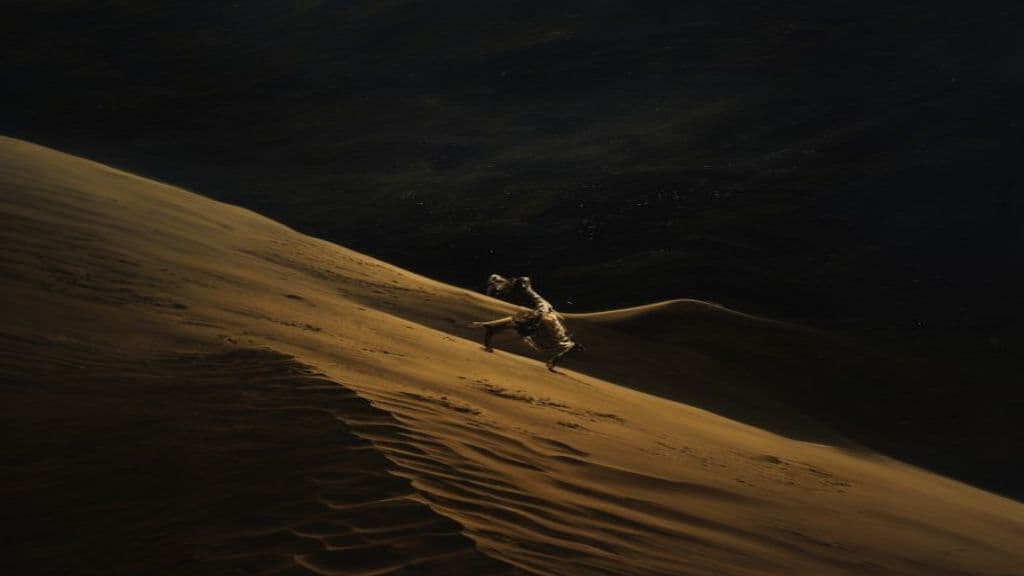
Jann
The weakest class of djinn in Islamic tradition, associated with desert winds and taking the form of snakes or whirlwinds, dwelling in empty wilderness and posing little threat to those who know the proper invocations.
Community Record
- [1]Aslan - Wikipedia. Wikipedia: Aslanwiki
- [2]Aslan - Wikidata. Wikidata: Aslanwiki
- [3]Aslan - Traveller. Traveller RPG wiki: Aslan species (Fteirle)other
- [4]Aslan Hierate - Traveller. Traveller RPG wiki: Aslan Hierateother
- [5]Traveller Library Data: Aslan. Traveller library notes on Aslanother
- [6]Reza Aslan - Wikipedia. Wikipedia: Reza Aslan (example of name usage)wiki
- [7]Aslı Ceren Aslan - ICORN. ICORN entry: Aslı Ceren Aslan (example of name usage)other
- [8]Archive: Aslan Cohen Cohen Favorites. Archive entry referencing the label 'Aslan' in other contextsother