
In Greek mythic tradition Athena is a daughter of Zeus; Hesiod's Theogony relates that Zeus swallowed Metis while she was pregnant and thereafter Athena was born from Zeus's forehead. Scholarly discussion recorded in the sources connects Athena's name to the place-name Ἀθῆναι (Athenai), with many scholars treating the goddess as named from the city, though the name likely contains a pre-Greek element (e.g. *-ān-) and its precise linguistic origin is uncertain. A Mycenaean Linear B inscription (a-ta-na po-ti-ni-ja) at Knossos attests a goddess-form associated with Athena in Bronze Age Aegean records, suggesting antiquity to her worship; Plato's Cratylus preserves ancient etymological speculation treating her name as linked to notions of mind or 'divine intelligence' (θεοῦ νόησις) rather than providing a definitive linguistic derivation.
Iconographically Athena is conventionally depicted wearing a helmet and bearing a spear; major associated emblems include the owl, the olive tree, snakes, and the gorgoneion (the Gorgon’s head). The epithet Athena Parthenos points to cult images (most famously the chryselephantine statue housed in the Parthenon) and to her presentation as a virginal protectress of the polis.
Athena functions as patron of wisdom, technical skill and handicraft (epithet Ergane), and as a martial and civic protector (epithets Promachos, Polias, Poliouchos). She is depicted in myth as aiding heroes (Perseus, Heracles, Bellerophon, Jason), intervening in epic narratives (the Iliad and the Odyssey), and as the divine contestant who grants the olive tree in the founding myth of Athens, thereby securing civic patronage. Later literary sources (not cultic prescriptions) attribute punitive or transformative acts to her in mythographic episodes (e.g., Ovid's accounts of Arachne, Medusa, and Corone). In cult and civic practice she is a protective tutelary deity rather than a being against whom ritual warding is prescribed in the supplied material.
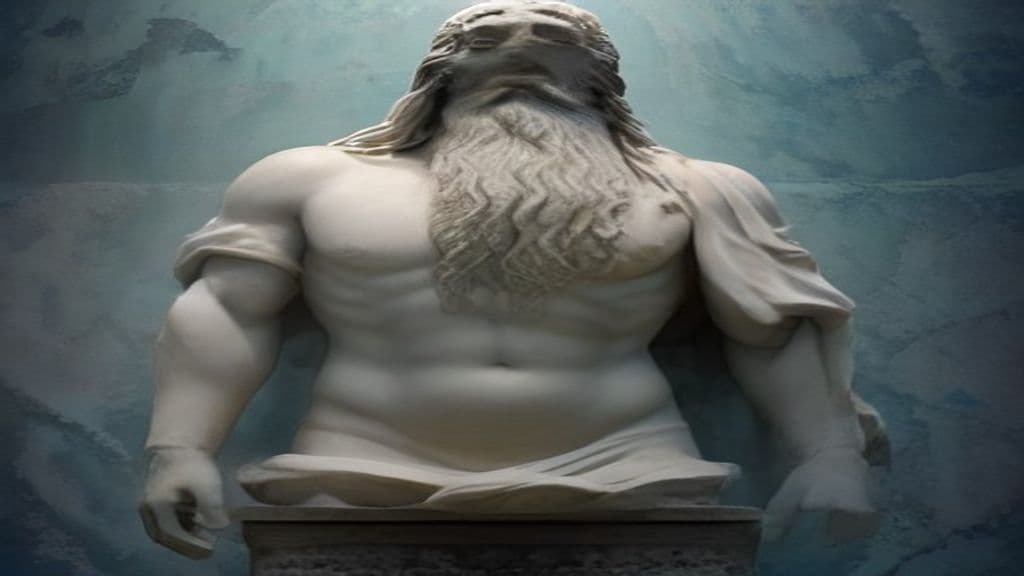
Poseidon
Poseidon is a principal deity of the ancient Greek pantheon, counted among the Twelve Olympians; he presides over the sea, storms, earthquakes and horses and functions as protector of seafarers and guardian of cities and colonies.

Zeus
Zeus (Ancient Greek: Ζεύς) is the supreme deity of the classical Greek pantheon, a sky-and-thunder god who rules as king of the gods on Mount Olympus and functions as a sky‑father who assigns roles among the immortals.

Arachne
Arachne is a mortal woman from classical Greco-Roman myth (best known from Ovid's Metamorphoses, Book 6) whose unrivaled weaving skill and challenge to the goddess Athena/Minerva lead to her metamorphosis into a spider; the tale functions as an etiological myth explaining why spiders spin webs and as a cautionary exemplum about hubris toward the gods.

Medusa (the Gorgon)
Medusa, also called Gorgo or the Gorgon, is one of the three Gorgons in ancient Greek mythology. She is described as a mortal woman whose hair is composed of living snakes and whose gaze turns onlookers to stone; she is usually named as a daughter of the sea-associated figures Phorcys and Ceto and sister to Euryale and Stheno.
Community Record
- [1]Athena — Wikipedia. Wikipedia contributors. 'Athena.' Wikipedia, The Free Encyclopedia.wiki
- [2]Athena — Wikidata. Wikidata entry Q37122 (Athena).wiki
- [3]Gormley -Dr. Athena McConnell & Carrie Dornstauder- Wednesday, November 16, 2022. Archive.org audio item mentioning modern persons named Athena (not used for ancient goddess material).other
- [4]Athena Lent Evaluates Financial Resources for At-Risk Communities. Archive.org item referencing a modern person named Athena (not used for ancient goddess material).other
- [5]BAME Professors. Archive.org item referencing modern persons named Athena (not used for ancient goddess material).other