Sources present Bacchus as the Roman form or identification of the Greek Dionysus rather than an independently invented Roman origin. Greek tradition preserves multiple birth-variants for Dionysus (for example, accounts identifying him as a son of Zeus and Semele), and Roman practice syncretized Dionysus with native Italic figures: NovaRoma summarizes that Liber and Bacchus were conflated in Roman religion, with Bacchus taking on Liber's traditional role. Historically, this syncretism and the adoption of Dionysian cult forms into Roman practice are attested in classical and later summaries; Roman responses to Bacchic cult activity (such as legal suppression episodes in Roman history, e.g., the Bacchanalia controversies recorded in Roman sources) are discussed in secondary materials about the deity and illustrate social limits on the cult rather than supernatural origins in the provided excerpts.
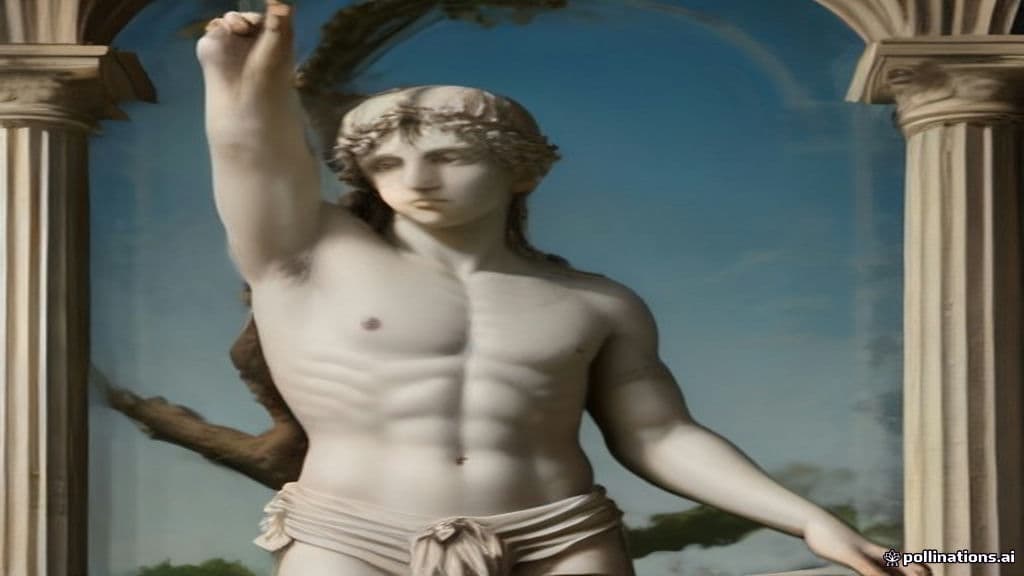
The assembled sources emphasize classical anthropomorphic depictions alongside ritual attributes rather than an unchanging supernatural form. Iconography and art commonly render Bacchus/Dionysus as a youthful male figure (as in later sculpture such as Michelangelo's 'Bacchus'), typically shown with the thyrsus (a fennel-stem sceptre sometimes wound with ivy and dripping with honey), ivy, and wine-related accoutrements. The thyrsus is repeatedly attested in sources as a central ritual implement associated with his image and rites.
Source accounts describe beliefs about Bacchus's effects rather than prescriptive magical mechanics: he is said to induce baccheia, a ritual frenzy or ecstatic state, and his wine, music, and dance were believed to free followers from self-conscious fear and social restraints. Those who participated in his mysteries were believed to be possessed by the god. The thyrsus is described in sources as both a beneficent ritual wand and, in mythic contexts, a weapon used against opponents of his cult. Secondary summaries also note that priests and attendants of his cult engaged in sanctioned drunkenness and revelry as part of festival practice.
Weaknesses
- otherNo explicit supernatural weaknesses recorded in provided sources; historical and legal suppression (e.g., Roman actions against Bacchanalia) function as social constraints rather than magical weaknesses
Wards
- otherNone specified in provided excerpts; sources do not record protective rites aimed at warding Bacchus—his cult is engaged through participation rather than avoidance

Community Record
- [1]Dionysus - Wikipedia. "In ancient Greek religion and myth, Dionysus is the god of wine-making, orchards, fruit, vegetation, fertility, festivity, insanity, ritual madness, religious ecstasy, and theatre."; "He was also known as Bacchus by the Greeks for a frenzy he is said to induce called baccheia."; "His wine, music, and ecstatic dance were considered to free his followers from self-conscious fear and care and subvert the oppressive restraints of the powerful."; "His thyrsus... is both a beneficent wand and a weapon used to destroy those who oppose his cult and the freedoms he represents."wiki
- [2]Bacchus - Wikidata. Wikidata entry for Bacchus (ancient Roman deity of wine).other
- [3]Bacchus - Biblical Cyclopedia. "Bac'chus the Latinized form, in the Auth. Vers. at 2 Maccabees 6:7, 14:33, of the heathen deity called by the Greeks DIONYSUS"other
- [4]Bacchus - NovaRoma. NovaRoma summary: "Roman title for the Greek deity Dionysius. ... Liber. and Bacchus were conflated in Roman religion, with Bacchus taking the traditional role of..."other
- [5]Priests of Bacchus - Mythus (secondary summary). "Priests of Bacchus are given to drunkenness and revelry, and their services, which are more festival-like than anything, are hedonistic examples of self-indulgence, intensified..."other
- [6]Bacchus (Michelangelo) - Wikipedia. Later artistic representations (e.g., Michelangelo's sculpture) illustrate classical anthropomorphic depictions of Bacchus as a youthful male figure associated with wine and revelry.wiki