
Mythic accounts vary. Traditional narratives place Dionysus' birth and nursing in locales like Mount Nysa or Thrace and portray him as a foreign-arriving god who travelled widely before being accepted in Greece. Orphic variants describe twice-born or chthonic parentage (for example, son of Zeus and Persephone in some Orphic texts), while archaeological evidence (Linear B di-wo-nu-so) indicates an early Mycenaean attestation. Ancient and modern etymologies for his name are disputed and multiple traditions (Asian Minor introduction, Mycenaean continuity, and regional name-variants) coexist in the sources.
Literary and iconographic traditions present variable depictions: youthful or mature, sometimes effeminate, sometimes bearded, and often in foreign dress. Consistent cultic attributes include the thyrsus — a fennel-stem staff often wound with ivy (sometimes described in sources as dripping with honey) — associations with ivy and vines, and frequent accompaniment by frenzied female followers (maenads/Bacchae) and animal attendants. Visual portrayals in vase-painting and classical art show him in parade or procession, sometimes aboard ships (mythic voyages) or leading ecstatic rites.
Dionysus induces baccheia — ritual frenzy or divine madness — in his adherents through wine, music, and ecstatic dance; initiates who partake of his mysteries were believed to become possessed and empowered by the god. His thyrsus is both a beneficent cult-symbol and, in myth, a weapon used against opponents of his cult. He functions in certain traditions as an intermediary with the dead: his cult is described as a 'cult of the souls', with maenads performing blood-offerings and Dionysus acting as a divine communicant between living and dead. Socially, his rites can dissolve or subvert conventional boundaries of class and gender, producing liberatory as well as politically troubling effects.
Weaknesses
- conditioncivic regulation and legal suppression
- conditioncontrolled ritual integration (initiation and supervised cult practice)
Wards
- conditionRoman legal suppression of Bacchanalia (political restriction on unsupervised gatherings)
- conditionsocial and civic regulation (supervised festival practice rather than uncontrolled revel)
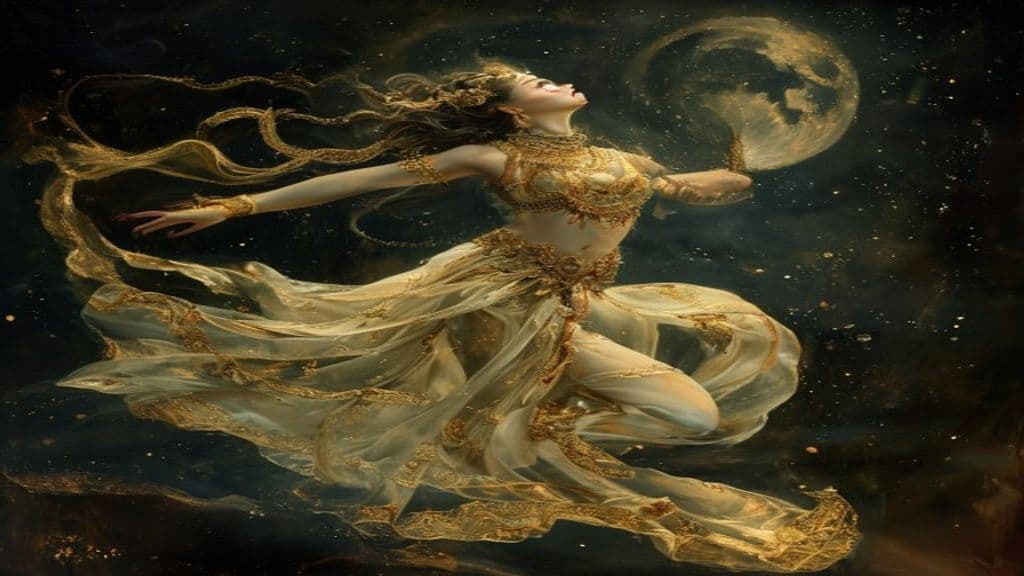
Apsara
Celestial dancers and water nymphs of Hindu cosmology — beautiful semi-divine beings who dance at the court of Indra and, by his command, descend to earth to distract sages from excessive asceticism.
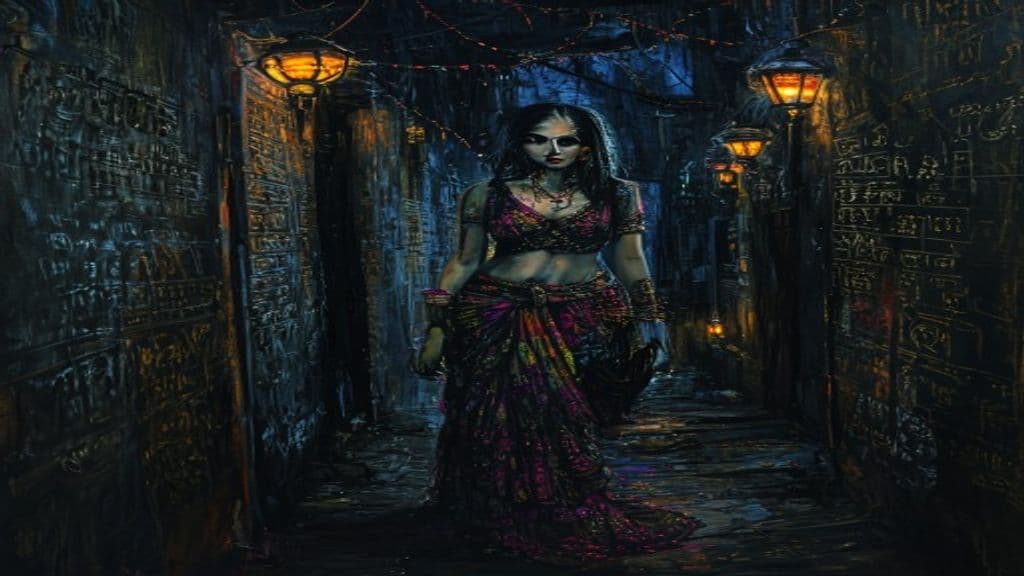
Stree
A vengeful female spirit from Chanderi who abducts men during festival nights. Warded off by the inscription 'O Stree, kal aana' — her legend, still practised on walls across Madhya Pradesh, inspired the 2018 Bollywood horror-comedy.
Community Record
- [1]Dionysus - Wikipedia. Wikipedia, 'Dionysus' (accessed via provided research notes)wiki
- [2]Dionysus – Mythoi Koinoi (pressbooks). Pressbooks chapter summarizing Dionysus' mythic and cultic roles (as cited in research notes)other
- [3]Linear B attestations and etymological discussion (secondary summaries). Summary material in supplied notes referencing Linear B di-wo-nu-so and contested etymologies (Nonnus, Suda, Mount Nysa proposals)academic
- [4]Selection of quoted fragments and scholarly summaries supplied in research notes. Compiled research notes provided by user containing quoted fragments on thyrsus, baccheia, mysteries, maenads and civic regulationliterary