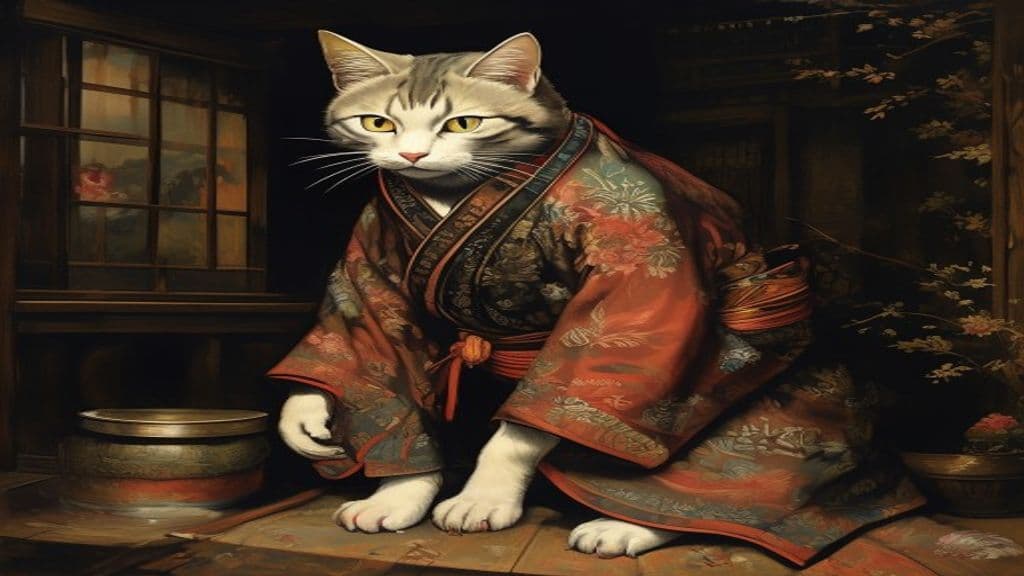
Bakeneko originate in Japanese folk belief as transformed domestic cats; the compound name literally marks them as 'changed' or transformed cats. Sources describe a broadly held idea across regions that aged or long-kept cats may become bakeneko after a threshold number of years in a household, with local variants placing that threshold at twelve years (Ibaraki and Nagano), thirteen years (Kunigami District, Okinawa), or seven years (Yamagata District in Hiroshima, where lore adds that a cat kept that long may kill its keeper). The tradition sits alongside other animal-transformative yōkai (kitsune, bake-danuki) and has been used narratively to explain unsettling domestic misfortunes and to encode moral commentaries about mistreatment of animals.
There is no single fixed physical description in the sources; bakeneko are essentially cats that can appear catlike or take on human form. Folklore emphasizes transformation rather than a uniform body plan: some tales describe cats standing on their hind legs or wearing human garments (for example a cat-like monster appearing in a mother's clothes in the Takasu Genbei tale), and other accounts stress that the bakeneko is normally a one-tailed transformed cat — a contrast often drawn with the related nekomata, which is commonly said to have two tails. Visual motifs such as a cat lit from below by lamp light while standing on hind legs contribute to the eerie image associated with them.
Collected traditions attribute a variety of uncanny powers to bakeneko. They are said to shapeshift into human form and to don or mimic human clothing and actions (dancing with a towel or napkin on the head is a recurring motif). Stories credit them with speaking human words, cursing or taking revenge on cruel people, possessing or manipulating living humans, and even manipulating the dead. Folk narratives also associate them with small household thefts (licking or stealing lamp oil) and with prowling behaviors that may endanger travelers in remote areas. These abilities are presented variably across regional tales rather than as uniform, codified powers.
Weaknesses
- conditionperceived prevention by limiting years a cat is kept
- otherprejudicial dislike of long-tailed cats (Edo-period belief that long tails could bewitch people)
Wards
- ritualtail-cutting (Edo-period folk custom)
- conditiondeciding in advance how many years to raise a cat (household preventive practice)
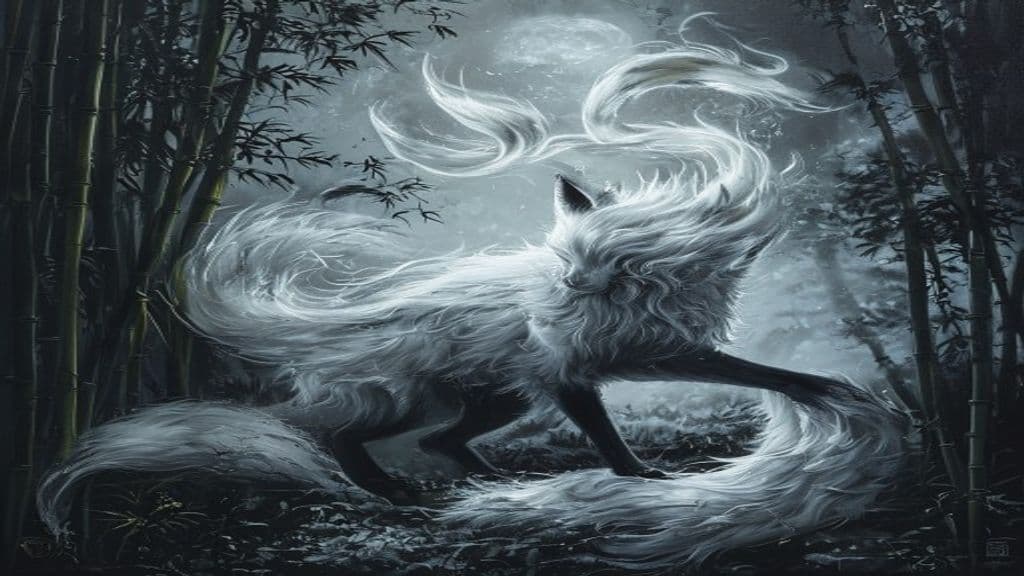
Kitsune
Fox spirits of Japanese mythology — intelligent, long-lived beings who gain additional tails (up to nine) as they age and grow in power. They serve as messengers of the god Inari and as powerful tricksters.
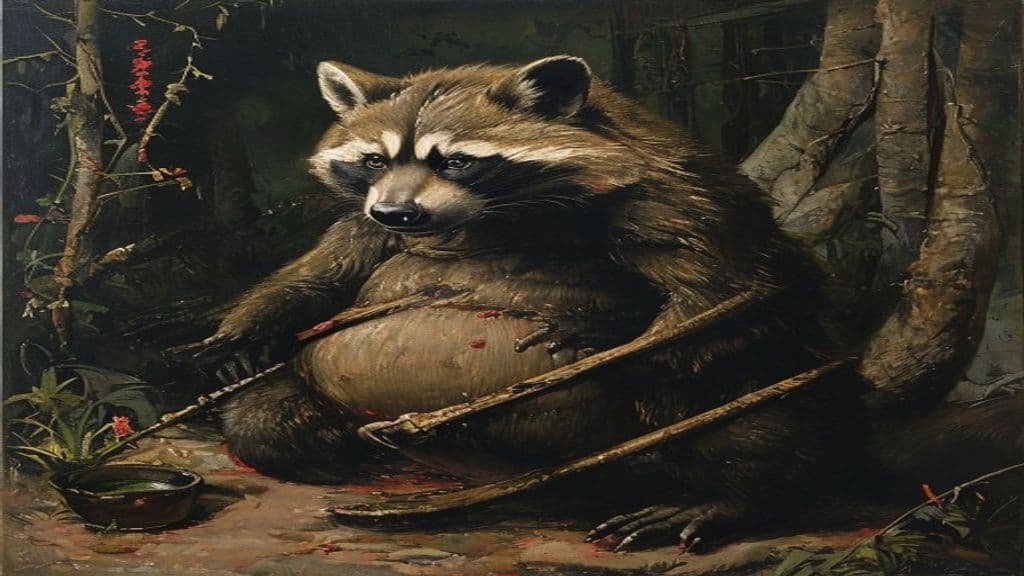
Bake-danuki
Bake-danuki (化け狸) are a class of yōkai in Japanese folklore: tanuki (Japanese raccoon dogs) that acquire supernatural powers, most notably shapeshifting and trickery. They appear throughout Japan with strong regional concentrations and some locally named, ritualized exemplars.
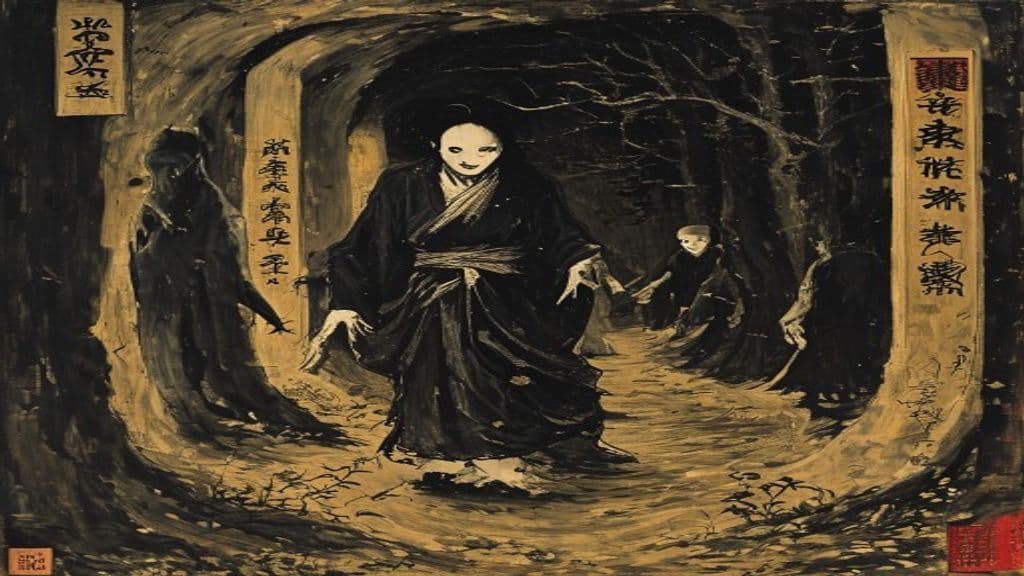
Yūrei
Yūrei (幽霊) are spirits of the dead in Japanese folklore who remain bound to the world of the living rather than having completed transition to an afterlife. They are a culturally specific category of ghost/spirits, often discussed alongside related terms such as bōrei and shiryō and appearing widely in literary, visual, and local legend contexts.
Akashaguma
Akashaguma is presented in the available sources as a child-like house guardian spirit in the Japanese yokai tradition, closely comparable to the regional zashiki-warashi. It is associated with domestic interiors (parlors or storage rooms) and with bringing prosperity to households where it dwells.
Aobōzu
Aobōzu (青坊主, "blue priest") is a Japanese yōkai whose depiction and behavior vary by locality. Appearing as a priestly humanoid with blue coloration or as a priest-faced apparition, it functions in regional legends as a frightening presence that can kidnap, threaten, or haunt people—especially children and schoolchildren—and is sometimes identified as a disguised animal or a mountain deity.
Azukibabaa
Azukibabaa (あずきばばあ, "bean hag") is a Japanese yōkai represented as an old-woman figure whose presence is signaled by the sound of azuki beans being handled (azukiarai). Found in regional folk narratives around Kantō and nearby prefectures, she lures or unnerves night travelers and in some localities is said to scoop up or swallow passersby.
Betobeto-san
A Japanese yōkai manifesting as the sound of footsteps that follow lone travelers at night. Traditionally regarded as non‑harmful: walkers are advised to step aside and address it politely to have the footsteps pass.
Chōchinbi
Chōchinbi (提灯火, "paper-lantern fire") are regionally reported Japanese atmospheric spirit-lights treated as a variety of onibi. Tales describe them as lantern-like floating flames seen near footpaths, rice fields, riverbanks, and graveyards, sometimes vanishing when approached and sometimes associated with animal yōkai or resentful human spirits.
Hannya (般若)
Hannya is a traditional Japanese Noh mask type and the theatrical/folkloric embodiment of a woman transformed into a resentful, jealous spirit. The mask represents a stage of metamorphosis into an onryō-like figure, visually marked by horns and a leering mouth, and is situated at the intersection of Noh theatre, ritual dance (kagura), and Buddhist-influenced folk belief.
Hito-gitsune
A household-associated small carnivore spirit from western Japan (Chūgoku region) that attaches to certain families, providing wealth in belief but causing illness, behavioral change, social stigma, and transmission across households. It is represented in regional traditions as a marten/fox/weasel‑like possessing spirit rather than a singular individualized deity.
Inugami
Inugami (犬神) are Japanese household-associated dog-spirits that appear in western Japan. In folklore they may be intentionally created by kodoku/kojutsu rituals or become hereditary household possessors that attach to people, animals, or objects and produce illness, jealousy, or social stigma.
Ishinagenjo
Ishinagenjo is a Japanese coastal folkloric phenomenon in which fishermen hear the sound and feel the effects of a huge stone crashing into the sea though no stone is ever found. Sources treat it variously as an episode of yōkai activity (sometimes linked to sea-witch figures such as the Iso Woman) or as an illusion/perceptual error recorded in fisherfolk accounts from several coastal localities.
Isonade
A large, shark-like sea monster from Japanese regional folklore (notably Matsuura and other parts of western Japan). Its body is said to remain hidden beneath the waves, with only a huge, barbed tail fin visible; it approaches boats stealthily, can snare sailors with its hooked tail, capsize vessels, strike beaches, and is associated with fierce winds when it appears.
Japanese wolf
An endemic subspecies of gray wolf historically inhabiting Honshū, Shikoku, and Kyūshū, remembered in Japanese natural history and folklore as both a biological predator and a liminal spiritual figure associated with mountain deities and occasional protective roles toward travelers.
Kamaitachi
A class of Japanese yōkai associated with sudden cutting winds and whirlwinds that cause sharp, initially painless wounds. Narratives vary by region: kamaitachi may be imagined as weasel-like creatures riding dust devils, trios of mischievous gods, animated sickles (tsukumogami), or other local spirit causes.
Community Record
- [1]Bakeneko - Wikipedia. Wikipedia contributors. "Bakeneko." Wikipedia, The Free Encyclopedia. https://en.wikipedia.org/wiki/Bakenekowiki
- [2]Wikidata: Bakeneko. Wikidata entry Q804321 for bakeneko. http://www.wikidata.org/entity/Q804321wiki
- [3]ANZU, CHAT-FANTÔME (VOST) 2024 (contemporary cultural reference). Archive: ANZU, CHAT-FANTÔME (VOST) 2024. https://archive.org/details/anzu-chat-fanto-me-vost-2024other