In Chilota tradition the Basilisco chilote originates as an egg laid by a chicken and incubated by a rooster; when it hatches it becomes a hidden, harmful animal that establishes itself beneath a human dwelling. Sources present this origin as a literal lifecycle: ordinary domestic birds produce the egg and a rooster’s incubation is part of its hatching. The myth is described as specific to the Chiloé Archipelago and is framed in the literature as syncretic — drawing on local Colo Colo motifs while borrowing more directly from European basilisk and cockatrice traditions.
Descriptions in the available sources are concise and consistent: the Basilisco chilote is described as having the crest of a rooster combined with the body of a serpent. No further standardized details about size, coloration, or other morphological features are provided in the sources consulted; descriptions are therefore limited to the rooster crest plus serpentine body motif.
The Basilisco chilote is documented as a parasitic household creature that lives in a hole it digs under a house and feeds on the phlegm and saliva of the people who live there. Its feeding causes the inhabitants to dehydrate progressively and eventually die. Its life cycle and behavior include being hatched from an egg incubated by a rooster and then living clandestinely beneath the dwelling while preying on residents' bodily secretions. The myth is explicitly linked to the cockatrice/basilisk family of egg-born bird–serpent hybrids.
Weaknesses
- ritualBurn the egg and kill the hen that laid it
- ritualBurn the house to destroy a hatched Basilisco chilote
Wards
- ritualBurn the egg and kill the hen that laid it
- ritualBurn the house where it lives (to destroy a hatched specimen)
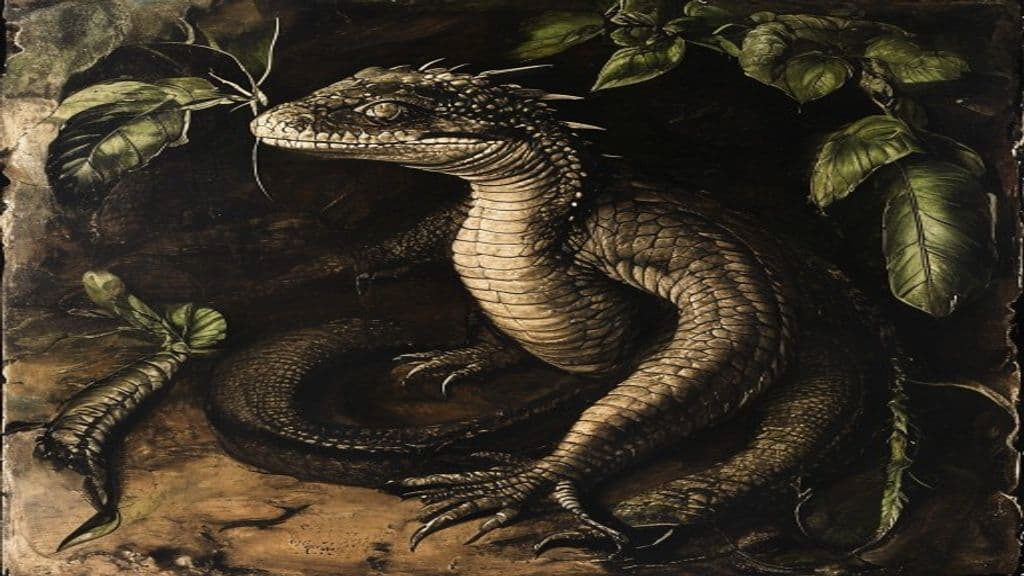
Basilisk
A legendary serpent from classical and medieval bestiary tradition, the basilisk is described as a paradigmatic "king" of serpents whose gaze, breath, or venom is fatal and whose presence scorches and corrupts the surrounding environment. Treated variously as a monstrous animal, materia for alchemy, and a locus of local legend, it features recurrent countermeasures (weasel, rooster, mirror) in the sources.

Cockatrice
A medieval and early-modern Western legendary hybrid beast, typically described as a two‑legged serpent- or dragon‑bodied creature with the head and some features of a rooster; famed in bestiary tradition and later literature for a lethal gaze/touch and for arising from an unnaturally incubated rooster's egg.
Community Record
- [1]Basilisco Chilote (Wikipedia). Wikipedia contributors. "Basilisco Chilote." Wikipedia, The Free Encyclopedia. https://en.wikipedia.org/wiki/Basilisco_Chilotewiki
- [2]Wikidata entry: Basilisco Chilote. Wikidata: Q4867454. http://www.wikidata.org/entity/Q4867454wiki