
Bastet is attested from early Egyptian dynastic periods (worship attested as early as the Second Dynasty, c. 2890 BCE) and is named in Egyptian hieroglyphic texts as bꜣstt. Over time her cult and iconography evolved: in earlier periods (third millennium BCE) she appears as a lioness or a woman with a lioness head, a fierce solar/royal protector and avenging Eye of Ra; by the Third Intermediate Period (c. 1070–712 BCE) and thereafter she is increasingly represented as a domestic cat or a woman with a cat's head and is tied to household protection, fertility, and motherhood. Her temple at Per-Bastet (House of Bastet, later called Bubastis) in the Delta served as her principal cult center throughout much of Egyptian history.
Early iconography depicts Bastet as a lioness or as a woman with a lioness head; in later periods she is commonly represented as a domestic cat or a woman with a cat's head and a slender female body. She is sometimes shown holding ritual objects such as a sistrum and an aegis/collar often embellished with a lioness head, and is at times depicted with kittens. Images and statuettes of Bastet were frequently produced in alabaster.
Bastet functions primarily as a protective divine agent: defender of the king, patron of Lower Egypt, and an Eye of Ra who combats chaotic forces (she is depicted fighting the serpent Apep). She is associated with protection against contagious disease and evil spirits, and—through the domestic cat's role—is linked to control of vermin and snakes, as well as fertility, pregnancy, childbirth, and motherhood. Her character thus ranges from a martial lioness warrior in early phases to a gentler domestic/fertility goddess in later periods.
Weaknesses
- otherNo specific vulnerabilities recorded in supplied sources
Wards
- otherCult implements/attributes (sistrum and aegis/collar) — attested as ritual objects held by Bastet in iconography and used in goddess cult practice
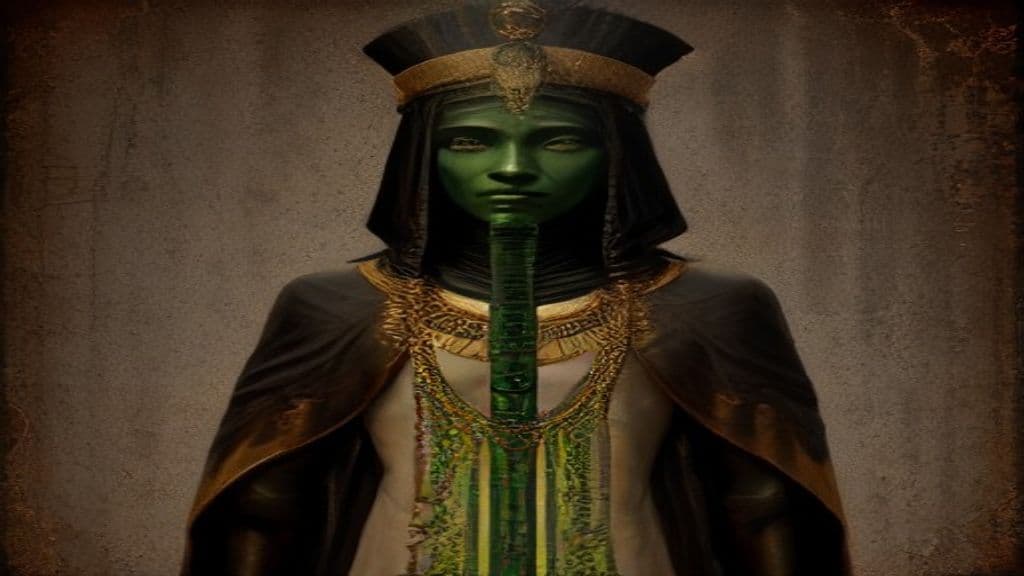
Ptah
Ptah is the principal Memphite deity of ancient Egypt, venerated as a creator god and patron of craftsmen and architects. He conceives the world 'in the design of his heart' and realizes it by speech, serves as master of ceremonies and justice in state cult, and is central to funerary and royal ritual in Memphis.

Wadjet
Wadjet is an ancient Egyptian local goddess of Dep/Buto (Per-Wadjet) in the Nile Delta who became the patron and protector of Lower Egypt and, alongside Nekhbet, a joint protector of united Egypt. She appears as a cobra (uraeus), the 'Eye' (Wedjat-eye), and as a nursing maternal figure for kings; she served protective, royal, oracular, and cultic functions in Pharaonic religion.
Community Record
- [1]Bastet - Wikipedia. Wikipedia, 'Bastet' article (selected excerpts on name, cult center, iconography, functions, and chronology).wiki
- [2]Wikidata: Bastet. Wikidata entry for Bastet (identifiers and summary attestations).other
- [3]The Temple of Bastet - Discover Egypt's Monuments - Ministry of Tourism and Antiquities. Ministry of Tourism and Antiquities: summary of Per-Bastet/Bubastis as the goddess' temple site and cult center.other