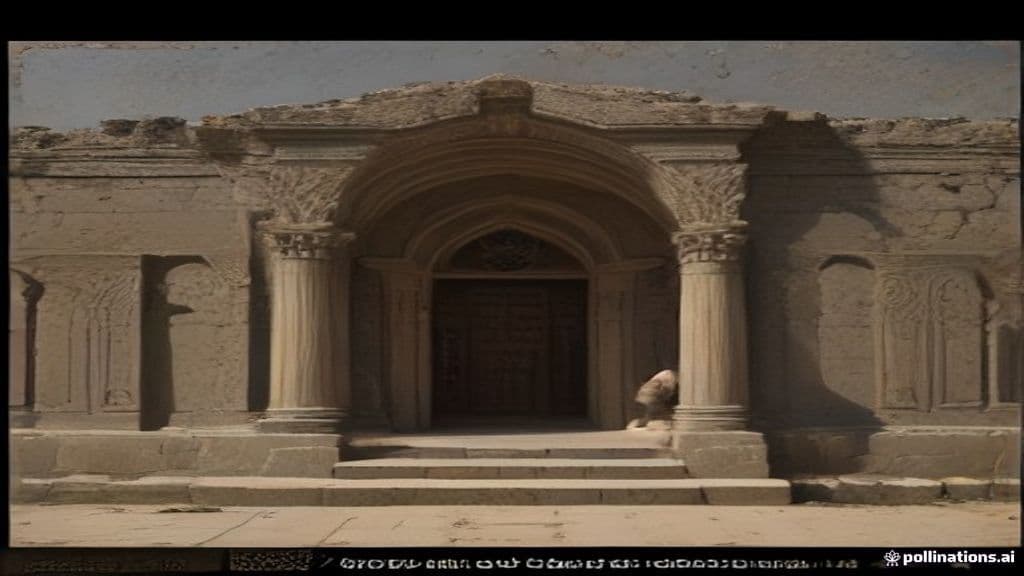
No preserved mythic birth narrative or foundational myth for Belet Nagar survives in the provided sources. The primary attestation is as a city-personified deity — 'Lady of Nagar' — whose identity is coextensive with the sanctuary and polity of Nagar; scholarly proposals linking her to earlier Tell Brak cultic traditions (e.g., the so‑called 'eye temple') are hypotheses rather than documented origin myths.
The textual sources do not provide a consistent anthropomorphic description of Belet Nagar. Archaeological and scholarly suggestions that an early deity at Tell Brak (associated with 'eye idols' from the 'eye temple') may represent a predecessor of Belet Nagar are speculative and unproven; no direct iconographic identification is securely attested in the cited materials.
Belet Nagar's attested functions are political-religious rather than narrated miraculous feats. Texts present her as the city's tutelary goddess who sanctions kingship ('goddess to whose favor' rulers owe their position), serves as a divine witness in treaties (notably in Shekhna), receives offerings in southern Mesopotamian cult contexts (e.g., offerings in Ur, joint temple in Uruk with Išḫara), and whose statue participated in cultic travels/festivals used for civic actions such as establishing boundary markers. These roles convey divine authority over political legitimacy and communal ritual space rather than a catalogue of supernatural powers in mythic narratives.
Weaknesses
- othernone attested
Wards
- othernone attested; interactions recorded are propitiatory (offerings, pilgrimage) rather than warding

Community Record
- [1]Belet Nagar — Wikipedia. Wikipedia, 'Belet Nagar' entry (access provided in research notes)wiki
- [2]Tell Brak — Wikipedia. Wikipedia, 'Tell Brak' entry (notes that temple is probably beneath the Mitannian palace; cited in research notes)wiki
- [3]RootsHunt: Urkesh / Nawar / Nagar notes. RootsHunt summary noting probable temple location and regional cult links (provided in research notes)other
- [4]Wikidata: Belet Nagar. Wikidata entry for Belet Nagar (tutelary goddess of Nagar), cited in research notesother
- [5]Aggregated academic and blog summaries (Cradle of Civilization; Aratta blog posts). Cradle of Civilization / Aratta blog posts and related aggregated webpages referenced in the provided corpus (used for contextual points noted in research notes)other
- [6]Miscellaneous aggregated mentions (Behind the Name submission; PDSh fandom cross-references). Aggregated web references included in the provided research corpus (not primary texts); cited for presence in modern summariesother