
Ninhursag appears across multiple Sumerian and Akkadian mythic texts rather than a single 'canonical' origin: she features as a generative mother-figure in myths such as 'Enki and Ninhursag' and 'Enki and Ninmah' and in narratives connected to Ninurta and the Anzû cycle. The deity is variously named with epithets that stress maternal and creative functions—shassuru ('womb goddess'), tabsut ili ('midwife of the gods'), 'mother of all children'—and in some traditions is identified with or equated to the earth (Ki) or represented by related birth-goddesses whose names sometimes become distinct in later lists.
Surviving summaries and overviews emphasize names, roles, and epithets rather than a consistent iconography; the provided sources do not supply a reliable, detailed physical description. Textual evidence focuses on her functions as 'lady of the sacred mountain' and motherly roles rather than on standardized visual attributes.
Ninhursag functions as a creatrix and fashioner of life in Sumerian mythic narratives, involved in the formation of humankind and other beings in stories such as 'Enki and Ninhursag' and 'Enki and Ninmah'. She is a fertility and birth goddess (epithets include shassuru 'womb goddess', tabsut ili 'midwife of the gods', and 'mother of all children'), a tutelary and political patron invoked in royal ideology (earliest votive inscriptions call a king 'beloved son of Ninḫursaĝa'; in Babylonian investiture ritual as Ninmena she is said to place the golden crown on the king in Eanna), and a member of divine family networks—she is named as mother of some gods in certain texts (for example, named as mother of Ninurta in some traditions). Her cult is associated with temples and shrines (e.g., E-maḫ at Adab for Dingirmah, shrines at Eridu and Kish, a temple at Malgium), indicating institutional rites connected to childbirth, kingship, and local tutelary practice.
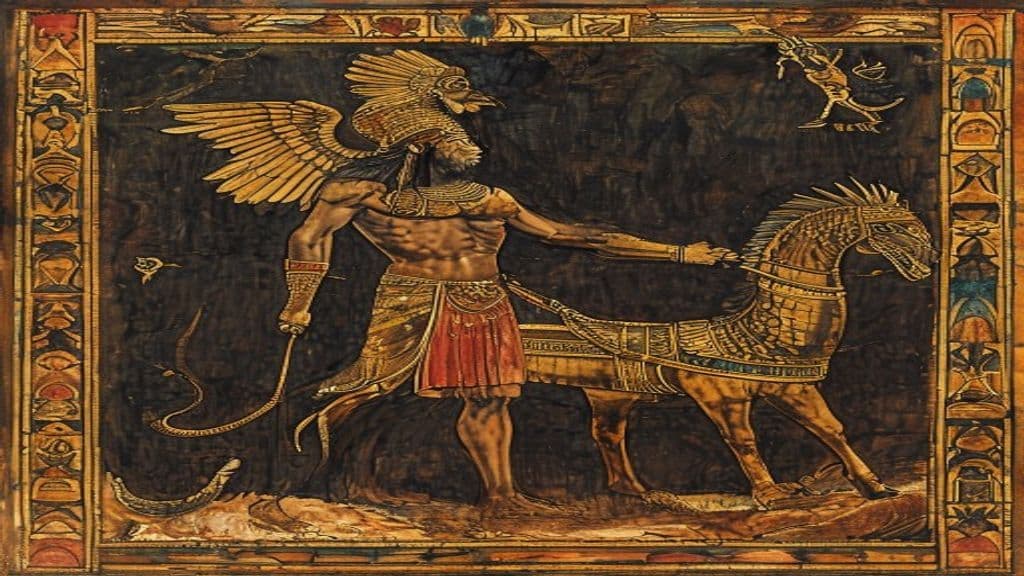
Ninurta
Ninurta is a major deity of ancient Mesopotamia (Sumerian–Akkadian–Assyrian–Babylonian) whose roles include agriculture, healing/exorcism, law and scribal authority, and martial champion of the gods. He is attested from the mid-third millennium BC onward and was venerated at city cult-centers such as Nippur (Eshumesha), Girsu/Lagash (as Ninĝirsu), and later in Assyrian Kalhu.

Enki (Ea)
Enki, also known by the Akkadian form Ea, is a major Mesopotamian deity associated with wisdom, crafts, magic and incantations, and the freshwater deep called the Abzû. Centered at the cult-city Eridu (temple E‑Abzû), he functions in myths as a crafty counsellor, culture‑hero and creator figure who aids humans and orders aspects of the world.
Community Record
- [1]Ninhursag. Wikipedia: 'Ninḫursaĝ ... was the ancient Sumerian mother goddess of the mountains, and one of the seven great deities of Sumer...' (accessed sources supplied in research notes).wiki
- [2]Ninhursag - GatewaysToBabylon. GatewaysToBabylon summary and retellings of myths mentioning Ninhursag's roles in creation narratives and cultic contexts.other
- [3]Enki and Ninhursag (retelling). Retelling of the 'Enki and Ninhursag' myth used in source summaries.other
- [4]Arcana video description (summary). Archive summary noting Ninhursag's role in myths with Enki (modern retelling/summary).other