Benzaiten originates as the East Asian reception of the Hindu goddess Sarasvatī, a river deity and patroness of speech and the arts. In Chinese Buddhist translations she appears as 辯才天/大辯天 and is incorporated into sutra narratives. Notably, in the Golden Light Sutra (as transmitted in Chinese translation and cited in Japanese sources) Sarasvatī/Bencaitian appears before the Buddha's assembly and vows to protect those who put faith in, recite, or copy the sutra, promising increased intelligence and teaching mantras/dharanis for healing and averting misfortune. The cult and imagery of this figure were transmitted to Japan during the early medieval period (traditionally dated to transmission of Buddhism in the 6th–8th centuries) and there she was further syncretized with native kami such as Ichikishima-hime-no-mikoto and with the serpent deity Ugajin.
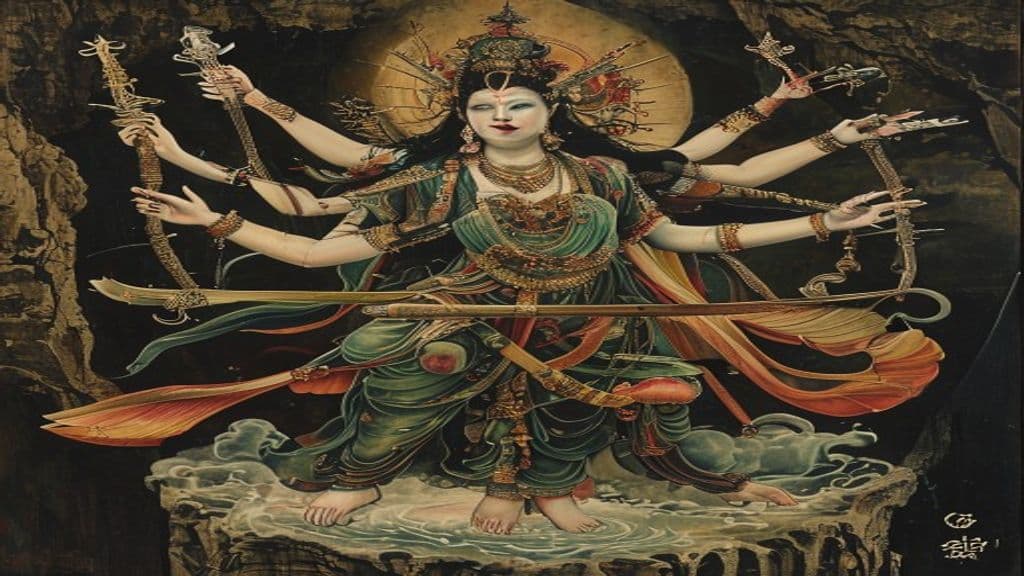
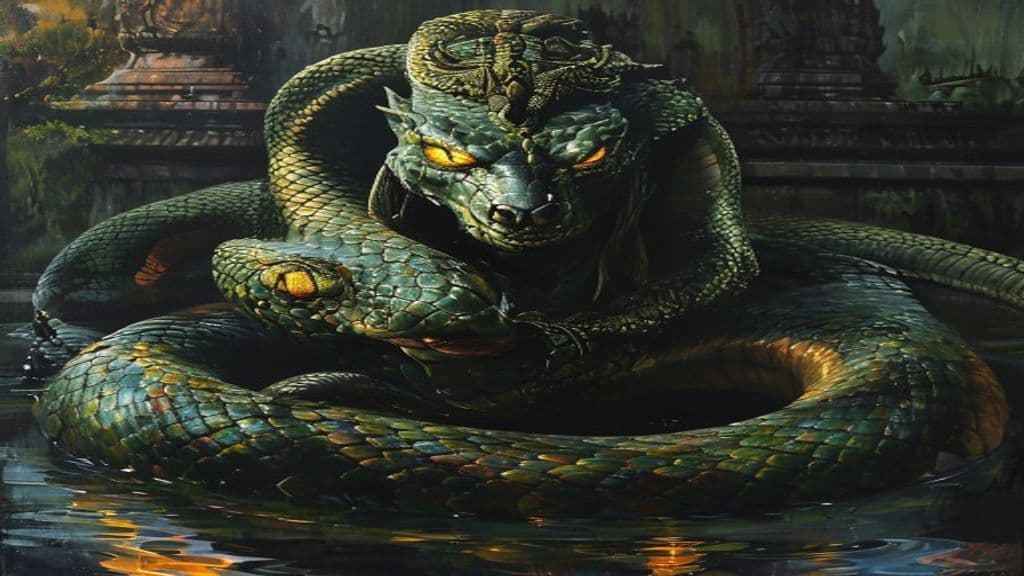
Iconography commonly shows Benzaiten holding a biwa (lute-like instrument) in reference to Sarasvatī's veena; she may also carry a sword and a wish-granting jewel (cintāmaṇi). An esoteric or sutra-derived eight-armed form bearing weapons (bow, arrow, sword, spear, axe, vajra, iron wheel, noose) appears in Golden Light Sutra-related descriptions and reflects influence from Durga-style iconography. In syncretic Japanese depictions she may be paired with or depicted with the snake/dragon-headed Ugajin above her head, and in popular art her forms vary widely.
Benzaiten functions as a protective dharmapāla in East Asian Buddhism: the Golden Light Sutra passage attributes to her a vow to protect all who put faith in, recite, or copy the sutra, promising increased intelligence and teaching mantras and dharanis that heal illness and avert misfortune. She retains Sarasvatī's roles as patroness of speech, music, arts, learning and eloquence, and through medieval popular conflation (e.g., with Kisshōten) became associated with monetary fortune and is counted among Japan's Seven Lucky Gods. Her sutra-derived and esoteric portrayals supply warrior and martial attributes (the eight-armed armed form) invoked for state protection, while her longstanding links with water, nāgas, dragons and snakes inform shrine placement at springs, caves, islets and coastal sites.
Weaknesses
- conditionProtective efficacy contingent on faith and ritual practice (sutra recitation/copying)
Wards
- mantraRecitation or copying of the Golden Light Sutra / mantras and dharanis taught by Bencaitian
- ritualShrine cult practice (site visitation and offerings at Benzaiten shrines such as Zeniarai Benzaiten)
Community Record
- [1]Benzaiten. Wikipedia: Benzaitenwiki
- [2]Benzaiten (JAANUS). JAANUS entry on Benzaitenother
- [3]Benzaiten (alternate JAANUS entry). JAANUS variant entryother
- [4]Benzaiten (Wikidata). Wikidata: Benzaitenother
- [5]Zeniarai Benzaiten Ugafuku Shrine. Wikipedia: Zeniarai Benzaiten Ugafuku Shrinewiki
- [6]Zeniarai Benzaiten Ugafuku Shrine (Subterranea/ShowCaves). Subterranea of Japan: Zeniarai Benzaiten Ugafuku Shrineother
- [7]Benten Cave (Subterranea/ShowCaves). Subterranea of Japan: Benten Caveother
- [8]Hell Courtesan (Kawanabe Kyōsai) — Archive item referencing Benzaiten imagery. Archive: Hell Courtesan (Kyōsai) — example of Benzaiten in artother
- [9]Benzaiten - Green Shinto (blog summary). Green Shinto blog: Benzaitenother
- [10]Benzaiten imagery in Japan (No-sword blog). No-sword: Benzaiten imagery in Japanother