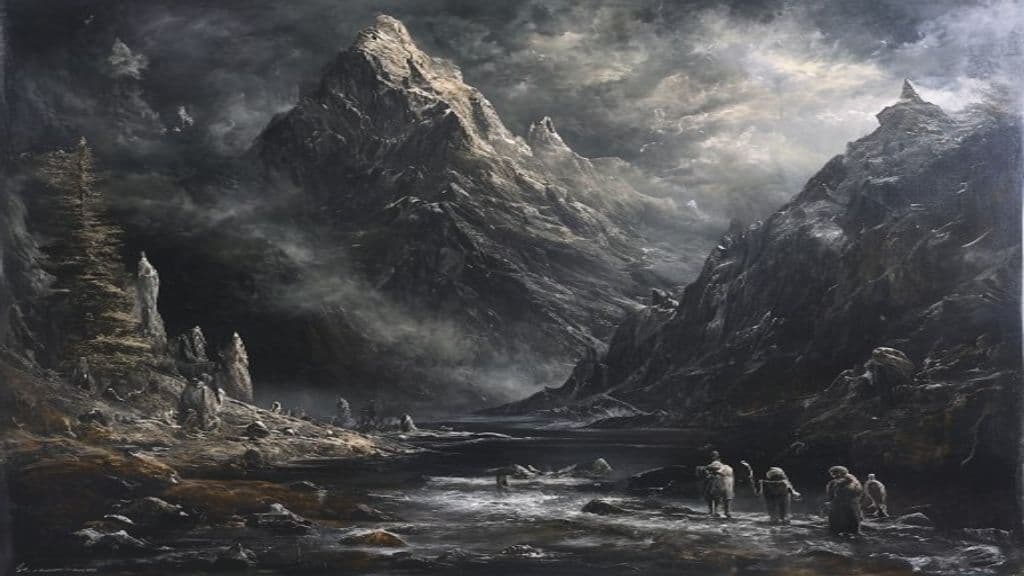
Within Scandinavian folk tradition the bergsrå is not usually presented as a singular creator or primordial being but as the localized 'rå' (a genii loci-type spirit) of a particular mountain. As such the bergsrå functions as the mountain's proprietor or potentate — an autonomous supernatural personage whose life and authority are bound to that place. Scholarly treatments that place the bergsrå among the family of nature-spirits (see also Mannhardt's comparative work on forest spirits) and the English glosses recorded in modern summaries present the bergsrå as the mountain's own supervising spirit, sometimes paralleled in popular usage with labels like 'mountain troll' or 'mountain king' but most precisely identified in the native term rå (sources: Wikipedia: "Bergsrå"; Mannhardt archive listing).
Source accounts indicate the bergsrå may be either masculine or feminine and is often described as living in the mountain with a court of relatives and sometimes accompanied by trolls; beyond sex variability and the presence of a retinue the supplied materials do not give a single fixed physical description. Ethnographic and folkloric summaries thus portray the bergsrå less as a narrowly fixed bodily type and more as an individualized, place-bound personage with household and attendants inside the mountain (sources: Wikipedia: "The bergsrå could be either masculine or feminine. It lived in the mountain with a court of relatives and sometimes surrounded by trolls.").
The primary behaviours attributed to the bergsrå in the supplied sources are proprietorship of a mountain domain, operation of a household or court within the mountain, and the power to entice or trick humans into the mountain interior — a phenomenon known in Swedish folklore as bergtagning ('being taken into the mountain'). Historical accounts incorporated into tradition record intimate encounters between humans and bergsrå (for example the 1691 courtroom account of Sven Andersson claiming sexual intercourse with a female bergsrå), and summaries indicate bergtagnings frequently involve lone individuals with victims often described as women (sources: Wikipedia: bergtagnings; trial reference to Sven Andersson 1691). Mannhardt's comparative survey places such figures among forest- and nature-spirits whose activities reflect anthropomorphized relations to specific natural features (source: Mannhardt archive listing).

Hulder (Huldra)
The hulder (Norwegian huldra) is a class of Scandinavian 'hidden folk' — a forest-associated local spirit traditionally conceived as a race or kind rather than a single individual. They are counted among the rå (wardens/keepers) of particular natural places and are widely attested in Scandinavian toponyms and folk belief.
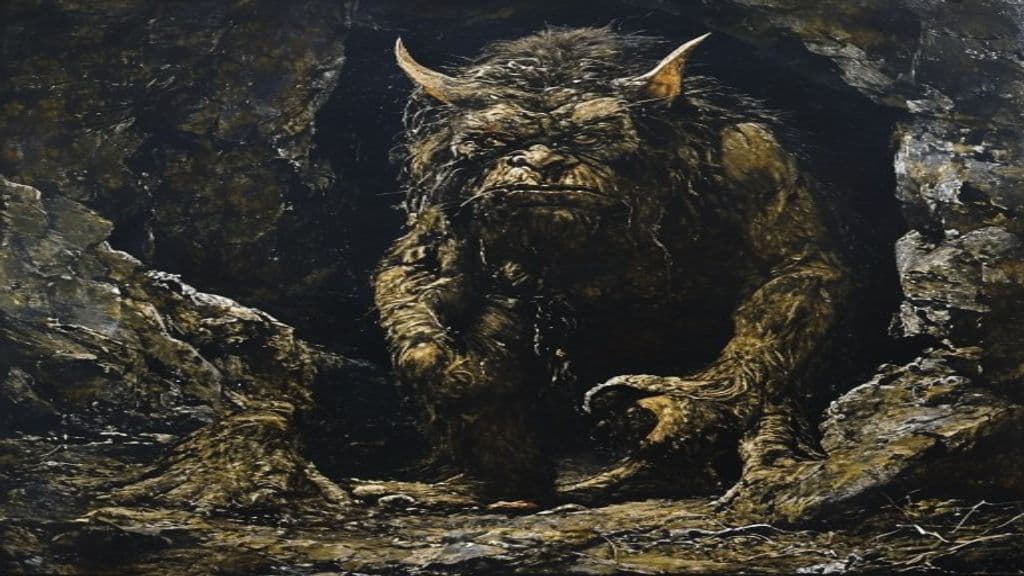
Troll (Germanic Tradition)
In Germanic folklore, a troll is a being that dwells in isolated areas of rocks, mountains, or caves, living together in small family units and rarely interacting with humans. (Note: - Power tier should be changed from Primordial to Ancient (trolls' origins from primordial forces don't necessarily imply cosmic-level power). - Ability description is not entirely accurate; it's stat)
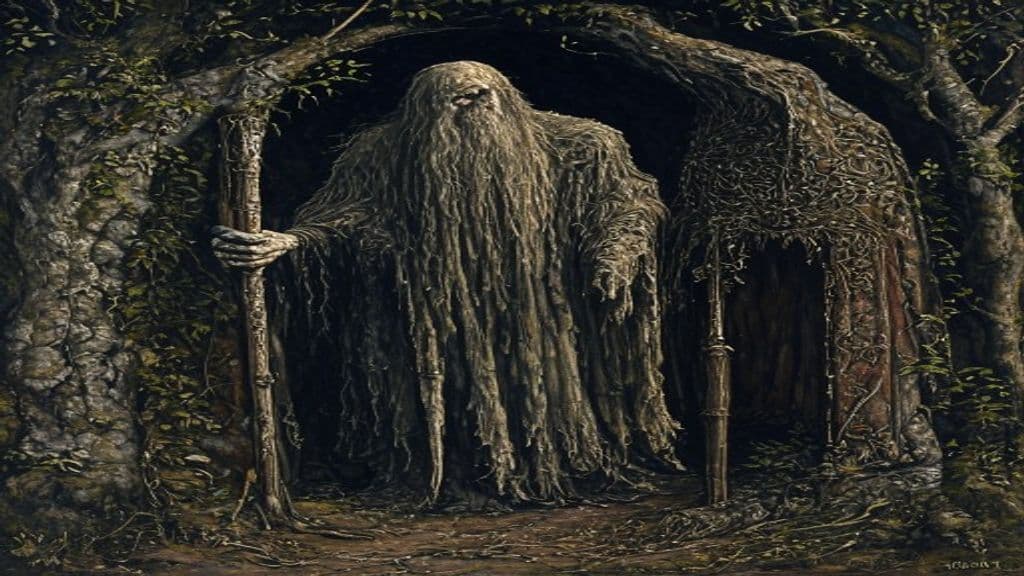
Wight
A Germanic-language term historically meaning 'being' or 'creature' that, across Old English and Old Norse usage, covers ordinary created beings as well as a range of supernatural local spirits (e.g., land- and household- vættir). In later medieval and modern contexts the term's range shifted and in modern fantasy it has been narrowed by authors to denote specific undead creatures.
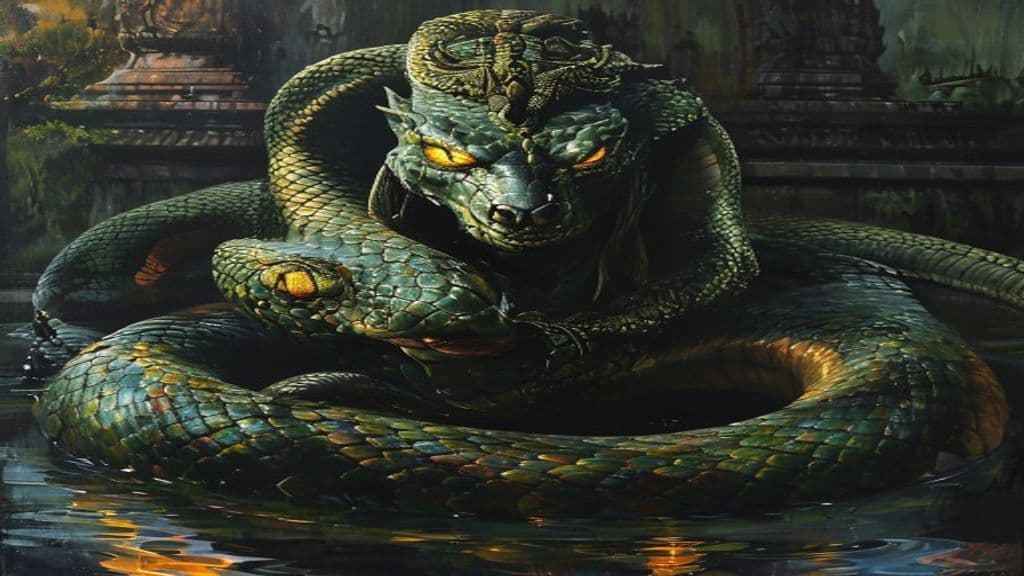
Naga
Divine serpent beings of Hindu, Buddhist, and Jain cosmology — powerful guardians of water, earth, and underground treasures. Revered as deities in South and Southeast Asia.

Apsara
Celestial dancers and water nymphs of Hindu cosmology — beautiful semi-divine beings who dance at the court of Indra and, by his command, descend to earth to distract sages from excessive asceticism.
Church Grim
A site-bound guardian spirit in English, Scottish and Nordic/Scandinavian folklore that watches over an individual Christian church and its churchyard, defending the consecrated ground from profanation and hostile spirits. Forms and origin accounts vary by region, including a large black dog in English tradition, the bound spirit of an animal (often a lamb) in Scandinavian accounts, and in some Scottish strands the spirit of the most recently buried person acting as a temporary watcher.
Sjörå
A female humanoid water spirit of Swedish folklore classed among the rå (place-keepers). Bound to a particular lake, pool, or freshwater site, the sjörå protects the waters and its fish, rewards respectful users with good catches and safety, and may seduce or drown those who are disrespectful.
Skogsrå
A female forest rå in Swedish folklore who rules the woods and its game; she appears as a beautiful woman from the front but reveals non-human features when seen from another angle. She interacts with hunters, woodcutters and charcoal-burners, offering favors (hunting luck, help with work, offspring) or ensnaring men who follow her into the forest.
Ysätters-Kajsa
A localized Swedish wind-being from the province of Närke, presented in late 19th/early 20th-century sources (notably Selma Lagerlöf) as a singular, personified 'wind-troll' who delights in gales and whirlwinds and plays mischievous but sometimes protective roles in local life.
Bergeist
No information about an entity called 'Bergeist' appears in the provided source materials. The supplied excerpts contain no descriptions, traditions, rituals, or cultural contexts for a Bergeist; any assertions beyond absence of evidence would be speculative and are not supported by the given sources.
Bergelmir
Bergelmir is a jötunn in Norse mythology, attested as a descendant of the primordial giant Aurgelmir (Ymir) and portrayed as the survivor who preserves the frost-jötunn line after the primeval flood caused by Ymir's death. He appears in two primary Old Norse contexts: the poem Vafþrúðnismál (where he is implied to be an infant laid in a lúðr) and Snorri Sturluson's Gylfaginning (where he and his wife escape on a lúðr).
Berggeist
A German-language term denoting a mountain-spirit: an immanent, place-bound personality associated with a specific mountain. The concept is discussed in 19th-century German folkloristic classification of nature-spirits (Mannhardt) and appears in 20th-century artistic representation (Josef Madlener's painting "Der Berggeist").
Bergmönch
A German mountain spirit associated with pits and mines; described as a hooded, giant figure who aids favored miners and punishes those who offend him or violate mining-community mores. He appears in mining locales and may manifest as a monk-like giant, a miner, a horse, or become invisible.
Bernadeth
Bernadeth is a New God of Apokolips in DC Comics, a long-lived warrior who serves as a leader and enforcer among the Female Furies. She is notorious on Apokolips, wields the fiery Fahren/Faren knife, and has participated in power struggles, betrayals, deaths and resurrections across multiple comic continuities.
Bernadette "Bernie" Rosenthal
Bernadette "Bernie" Rosenthal is a fictional human supporting character in Marvel Comics' Captain America stories, introduced in Captain America #247 (April 1980). She is portrayed as a Greenwich Village glassblower turned law student and later lawyer, who serves as a romantic partner to Steve Rogers and as a civilian ally within the series' social milieu.
Bernardo Carpio
A Philippine legendary culture-hero associated etiologically with earthquakes; portrayed variously as a giant trapped between mountains whose struggles cause tremors or as a prodigiously strong human-sized hero. The current Hispanized name dates to the colonial period and overlays older pre‑colonial earthquake beliefs.
Beroe
Beroe is a name applied to multiple unrelated referents in historical, mythological, and biological sources: an ancient Thracian city (modern Stara Zagora, Bulgaria), several minor figures in Greek mythology (e.g., a nymph named Beroe), and a genus of comb jellies (ctenophores) in the family Beroidae. The supplied sources do not present a single, coherent supernatural entity called Beroe within a living folk cosmology.
Community Record
- [1]Bergsrå. Wikipedia contributors, 'Bergsrå', Wikipedia, The Free Encyclopedia.wiki
- [2]Bergsrået (Wikidata). Wikidata: Q10428568wiki
- [3]Wilhelm Mannhardt, Die Waldgeister und ihre Sippe (archive listing). Wilhelm Mannhardt, Die Waldgeister und ihre Sippe (archive listing and table of contents).academic