The provided excerpts do not supply a narrative cosmogonic origin for Bhuvaneśvarī. Classical and summary sources cited here identify her theologically rather than mythically: she is named among the ten Mahavidyas (the esoteric 'great knowledge' goddesses of Shaktism) and is identified in the Devi Bhagavata Purana as a form of Adi Parashakti / Mahadevi. Those attestations place her as an aspect or manifestation of the supreme feminine principle rather than supplying an independent origin story in the excerpts available.
The supplied materials do not include an iconographic description or detailed physical attributes for Bhuvaneśvarī. Source metadata and summary entries emphasize her theological status—her name etymologically combines Sanskrit elements bhuvana (world/universe) and īśvarī (female ruler), a compound gloss often rendered as 'Queen/Lady of the Universe'—but no pictorial or ritual iconographic details are present in the provided excerpts.
The sources in the provided set do not enumerate narrative deeds or enumerated powers. They consistently present Bhuvaneśvarī as a high theological manifestation of Mahadevi/Adi Parashakti and as one of the Mahavidyas, which in that doctrinal context implies sovereignty and cosmic authority associated with the supreme goddess. Beyond this theological status, no specific supernatural abilities or standard mythic behaviors are documented in the supplied excerpts.

Apsara
Celestial dancers and water nymphs of Hindu cosmology — beautiful semi-divine beings who dance at the court of Indra and, by his command, descend to earth to distract sages from excessive asceticism.
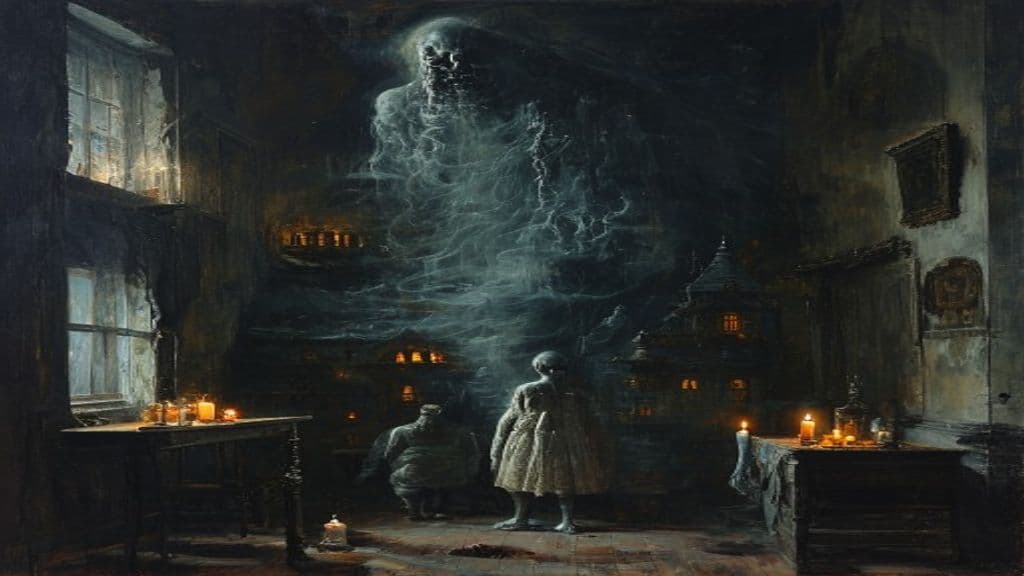
Mahapreta
The 'great ghost' — in Bihar and UP folk classification, a Mahapreta is a preta of exceptional power, born from a death involving multiple injustices simultaneously: wrongful killing, incomplete rites, and unresolved family debt combined. It commands lesser spirits and can cause harm across an entire lineage.
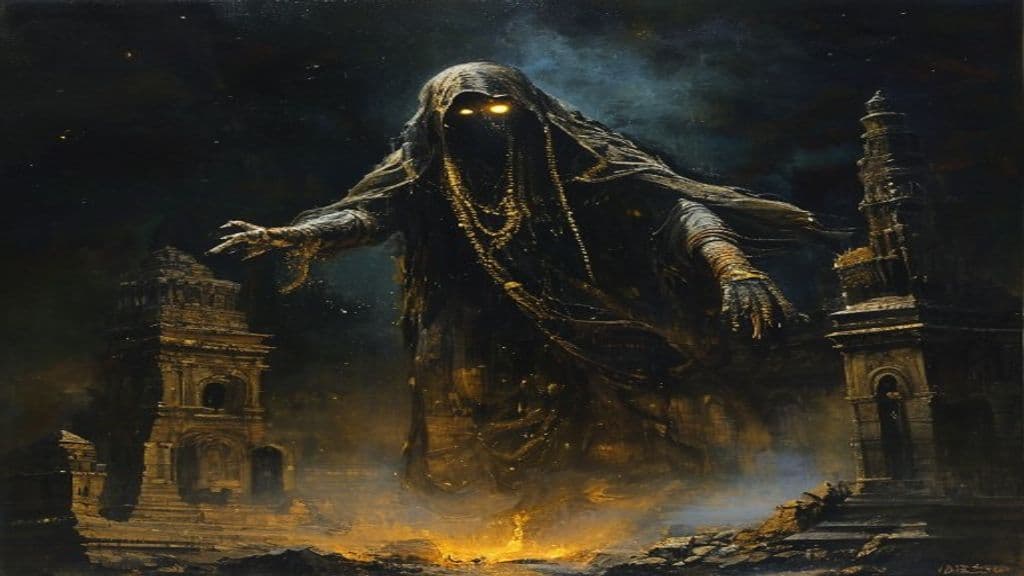
Brahmarakshas
The most learned and terrible of spirits — the ghost of a Brahmin who misused his scriptural knowledge in life and was condemned after death to be both demon and scholar, haunting places of learning.
Community Record
- [1]Bhuvaneshvari — Wikipedia. Wikipedia contributors. "Bhuvaneshvari." Wikipedia, The Free Encyclopedia.wiki
- [2]Bhuvaneśvarī — Wikidata. Wikidata entry Q2608097: Bhuvaneśvarīwiki
- [3]Sri Bhuvanesvari Stava Manjari - Kul Bhushan Pt. Rama Dutaa Shukla. Archive.org bibliographic record: Sri Bhuvanesvari Stava Manjari (Kul Bhushan Pt. Rama Dutaa Shukla).other
- [4]The Siddhanta Kaumudi Of Bhattoji Dikshita Vol I. Archive.org bibliographic record: The Siddhanta Kaumudi (publisher metadata includes Bhuvanesvari Asram, Allahabad).other
- [5]The Siddhanta Kaumudi. Archive.org bibliographic record: The Siddhanta Kaumudi (publisher metadata includes Bhuvanesvari Asram, Allahabad).other