The Biscione appears in heraldic sources as the emblem adopted by the Visconti family after their acquisition of Milan in 1277; it is recorded in late-13th-century sources such as Bonvesin da la Riva's De magnalibus urbis Mediolani and is depicted in frescoes of the period (Great Hall of the Visconti Castle of Angera). The device thereafter remained associated with the Duchy of Milan under the Sforza and spread to various municipal arms and seals in Central-Eastern Europe through dynastic and political links. Etymologically, the Italian biscione is a masculine augmentative of biscia 'grass snake', ultimately from Latin bestia 'beast'. (Sources: Source 1; Source 7.)
Standard representations show a large stylized serpent (described in at least one source as a 'divine serpent') holding a small human child in its mouth; the child may be depicted as being swallowed or emerging from the serpent's jaws. Variants occur in heraldic usages: a Hungarian seal of Nicholas I Garai shows a crowned snake devouring a sovereign's orb rather than a human, and some modern corporate uses substitute a flower for the child. The device appears in frescoes, coats of arms, seals, architectural ornament, and contemporary logos (e.g., Alfa Romeo, Inter Milan). (Sources: Source 1; Source 7; Sources 1, 11.)
The sources do not attribute animate, supernatural, or volitional powers to the Biscione; its 'action' is iconographic — the serpent is portrayed in the act of holding, swallowing, or disgorging a human figure (or, in variants, an orb or flower). Its significance is political and emblematic rather than being described as a living, interacting supernatural agent. (Source 1.)
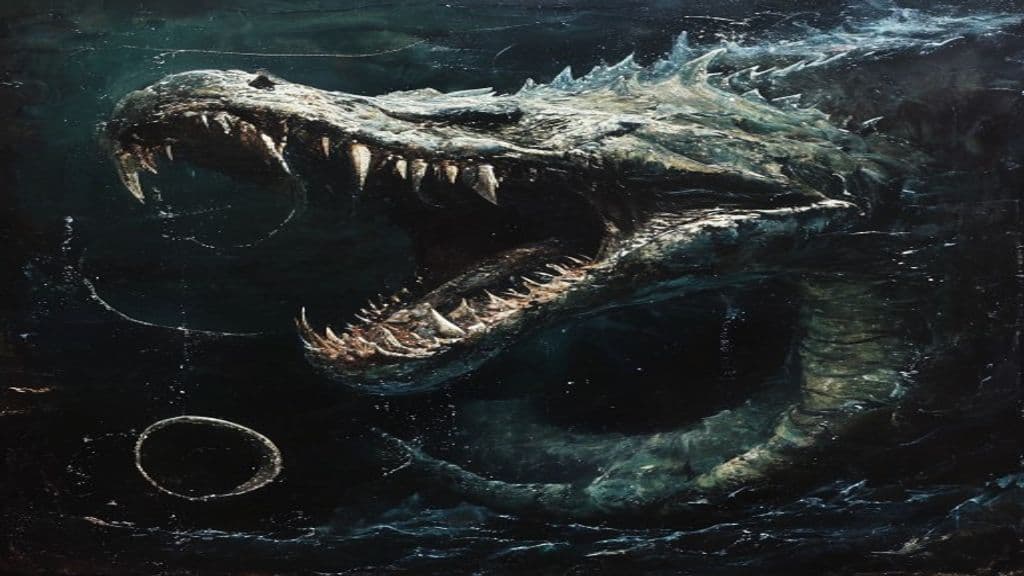
Leviathan
A giant sea serpent in Jewish mythology, embodying chaos and serving as a metaphor for a powerful enemy. (Note: - Power tier should be Ancient (Leviathan's abilities are often described as deity-level, such as threatening the damned after their lives are over and being annihilated) - Appearance is not mentioned)
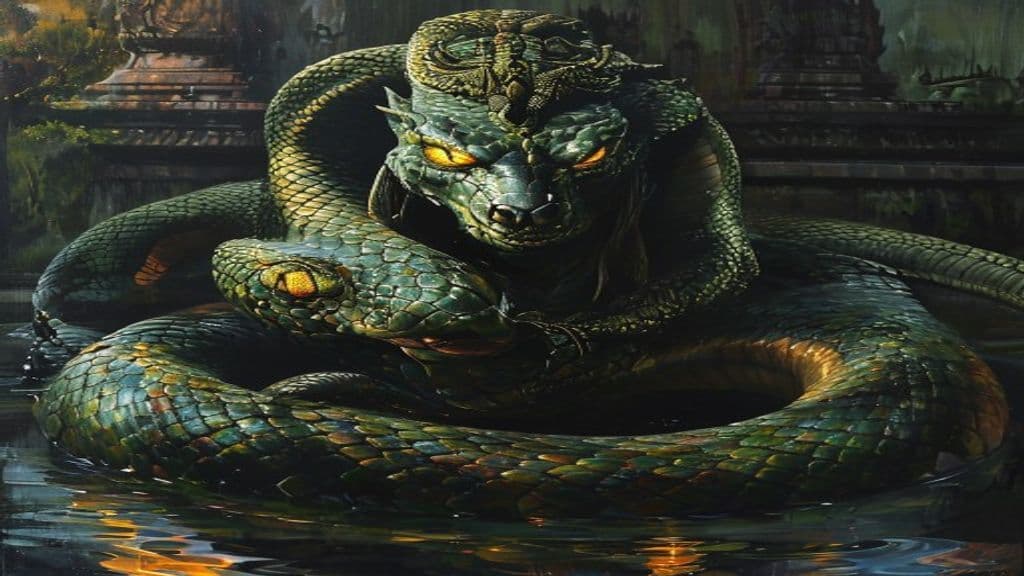
Naga
Divine serpent beings of Hindu, Buddhist, and Jain cosmology — powerful guardians of water, earth, and underground treasures. Revered as deities in South and Southeast Asia.
Community Record
- [1]Biscione (Wikipedia). Wikipedia, entry 'Biscione'wiki
- [2]Palazzo Pio — Vasi75 (reference to biscia). Architectural note referencing 'biscia, grass snake, hence Biscione'other