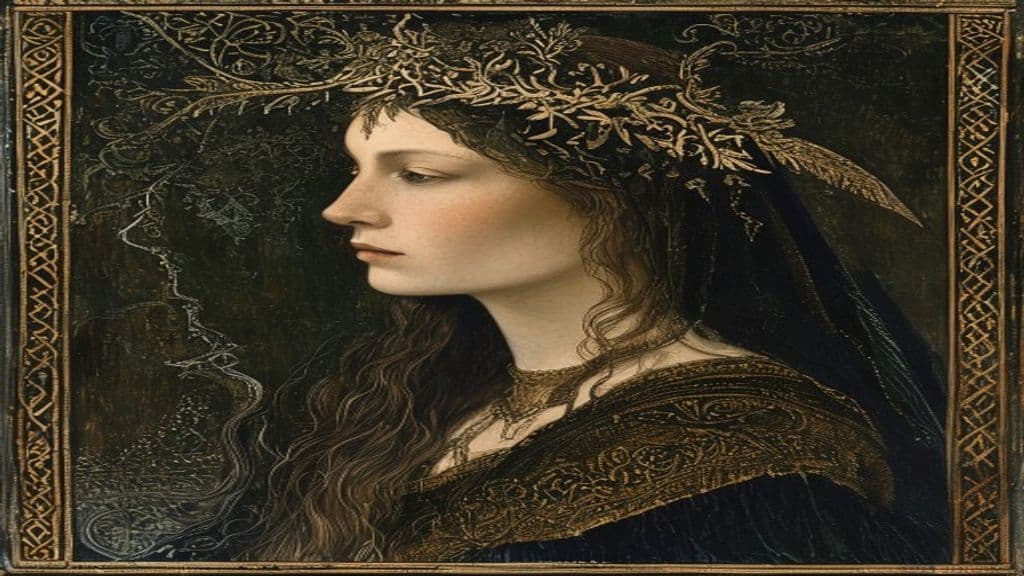
In the Dindsenchas tradition Boann is a daughter of Delbáeth and sister of Befind, placed among the older mythic population (the Tuatha Dé Danann). Two principal origin episodes are preserved in the narrative corpus. In one, Boann approaches Nechtan's forbidden Well of Segais and, having 'walked around it tuathal' (a ritualized contrarian movement), causes the well to burst forth; the waters surge to the sea and create the River Boyne. In the Dindsenchas version this flood consumes her, and she is said to have lost an arm, a leg and an eye in the catastrophe; variant accounts simply relate that she drowns when she approaches the well. In a related birth-tale, Boann lives at Brú na Bóinne with Elcmar and conceives Aengus by the Dagda after the Dagda sends Elcmar away and magically keeps the sun stationary so nine months pass undetected; Boann then gives birth to Aengus. These episodes present her both as an etiological figure for the Boyne and as the generative mother in a solstitial/seasonal motif.
The sources give no sustained iconographic or clothing description of Boann. Narratively she is portrayed as a named woman of genealogical placement rather than through a fixed visual portrait. Specific physical details in the texts are limited to outcomes of the well-origin tale (narrative mutilation in one version: loss of an arm, leg and eye) and incidental items associated with her household in other stories (for example, a lapdog named Dabilla is mentioned in the wider corpus). The supplied material does not record a consistent habitual appearance.
Boann's agency in the tradition is primarily mythic and etiological: by approaching and ritually encircling the Well of Segais she catalyzes a landscape-creating flood that forms the River Boyne. She exercises sexual and creative agency in conceiving Aengus by the Dagda; that birth-episode is linked in the sources and scholarship to a seasonal/solar motif (the sun kept standing still while nine months pass). In the Táin Bó Fraích she functions as a patronal benefactor: she furnishes her nephew Fráech with an extraordinary suite of gifts—fifty worked mantles and tunics, fifty jeweled spears, fifty horses, fifty swords, seven hounds, seven trumpeters, three jesters and three harpists—enabling him to appear with prestige before rulers. The texts also portray vulnerability: interactions with the sacred well lead to drowning or bodily loss in variant accounts, so her narratives combine creative potency with mortal risk when confronting forbidden waters.
Weaknesses
- conditionviolating prohibition / approaching a forbidden well
- conditionperforming a tuathal (contrary) circumambulation around the well
Wards
- conditionobedience to prohibition (do not approach Nechtan's/Segais well)
- conditionavoid ritual contrarian movement (do not walk tuathal around the well)
Aengus
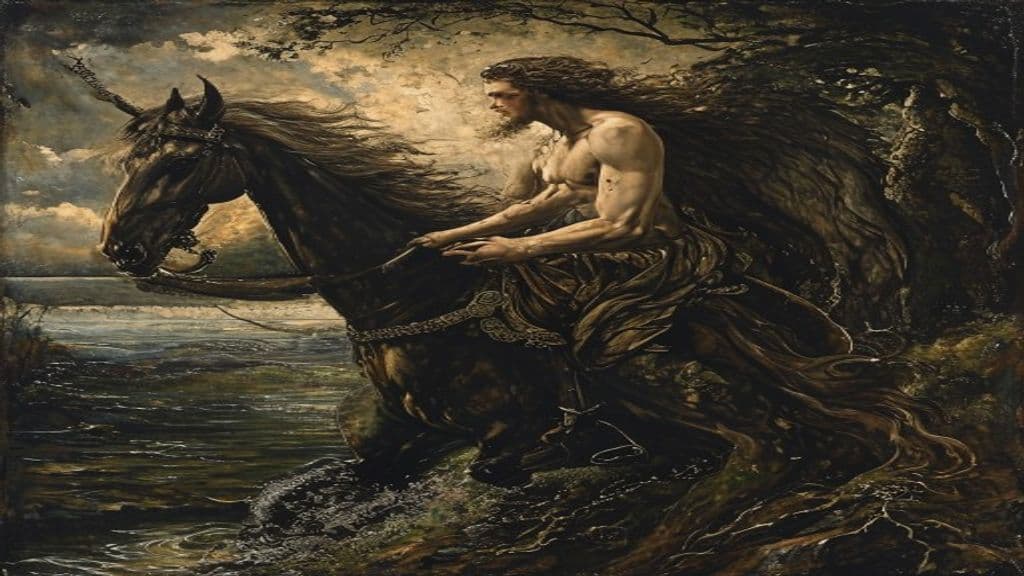
Aengus (Óengus, Aonghus) is a member of the Tuatha Dé Danann in Irish myth, portrayed as a youthful, attractive figure associated with love, youth, poetic inspiration and seasonal/solar symbolism; he is linked to Brú na Bóinne (Newgrange) and appears as fosterer, protector, enchanter and avenger in multiple tales.
Will-o'-the-Wisp
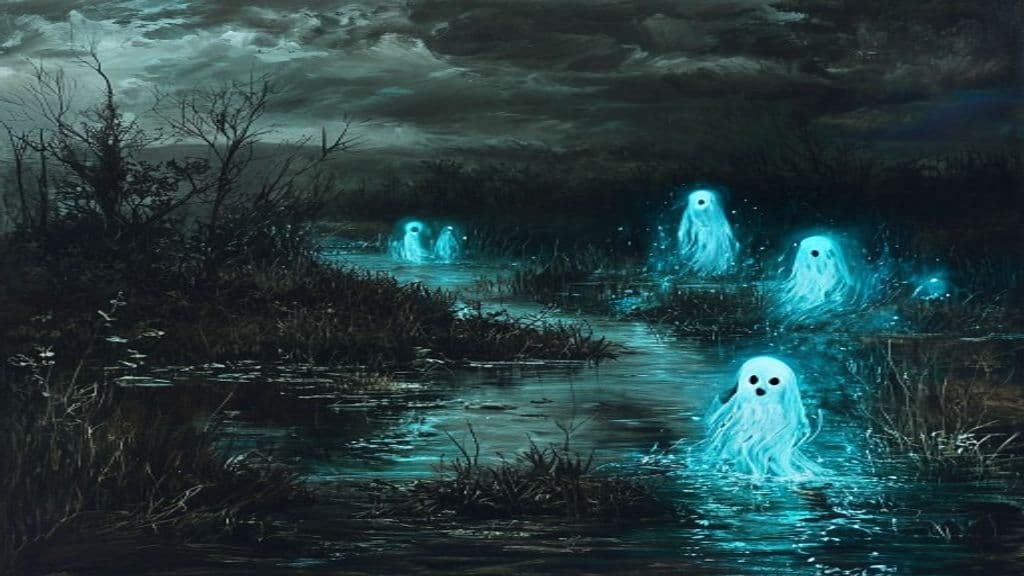
A wandering light seen over marshy ground at night, leading travellers astray into bogs and fens. Possibly a spirit, possibly the soul of the unbaptised dead, possibly the devil himself.
Community Record
- [1]Boann. Wikipedia, article 'Boann'wiki
- [2]Boann (Wikidata). Wikidata entry for Boannother
- [3]Thingiverse / Celtic art archive item (contextual file). Archive item referenced in research notes (non-primary to the myths)other
- [4]CIA Reading Room document (archival note). Archive item referenced in research notes (not relevant to primary tradition)other