In the medieval Irish narrative corpus Bodb Derg appears as a son—variously given as of Eochaid Garb or of the Dagda—and as a member of the Tuatha Dé Danann. Following the Tuatha Dé Danann's defeat (noted in the tradition after the battle of Tailtiu), Bodb is elected king of the Tuatha Dé Danann on the grounds that he is the Dagda's eldest son in at least one account; his election is recognised by other rivals except Lir. He fathers many deities in the genealogical accounts and appears as a ruling figure of the Munster síd in several tales, including the Aislinge Óenguso cycle and narratives that connect the Tuatha to human heroic cycles.
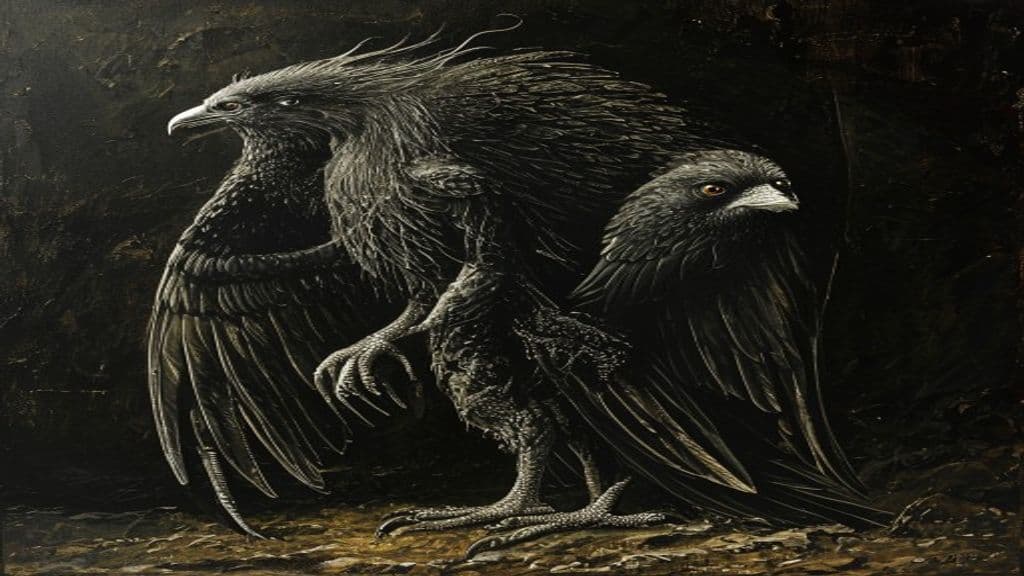
Primary sources do not give a consistent physical description of Bodb Derg as an embodied form. The name Bodb/Bodhbh is etymologically related to the female war-crow Badb (bádhbh), and the epithet Dearg (red) leads the medieval glossing tradition to render his name as 'Red Crow.' This onomastic link establishes a symbolic association with crow/war-crow imagery and red coloration in the textual record, but the supplied narrative texts do not explicitly depict him taking a crow form or provide detailed anthropomorphic features.
Sources portray Bodb primarily as a political and dynastic figure: king of the Munster síd, elected monarch of the Tuatha Dé Danann after their defeat, counsellor and negotiator (for example, he counsels forbearance toward Lir and offers daughters in marriage to placate him), and an agent who aids other figures of the Tuatha (he helps Aengus identify Caer Ibormeith in Aislinge Óenguso). In at least one saga tradition he leads Tuatha forces in support of human warriors (a Fenian battle tradition), indicating capacity for mustering otherworldly kin in narrative military action. Broader attributes commonly ascribed to the Tuatha Dé Danann in secondary summaries (immortality, superhumanity) provide contextual background but are not direct, individualized power-descriptions for Bodb in the supplied texts.
Aengus
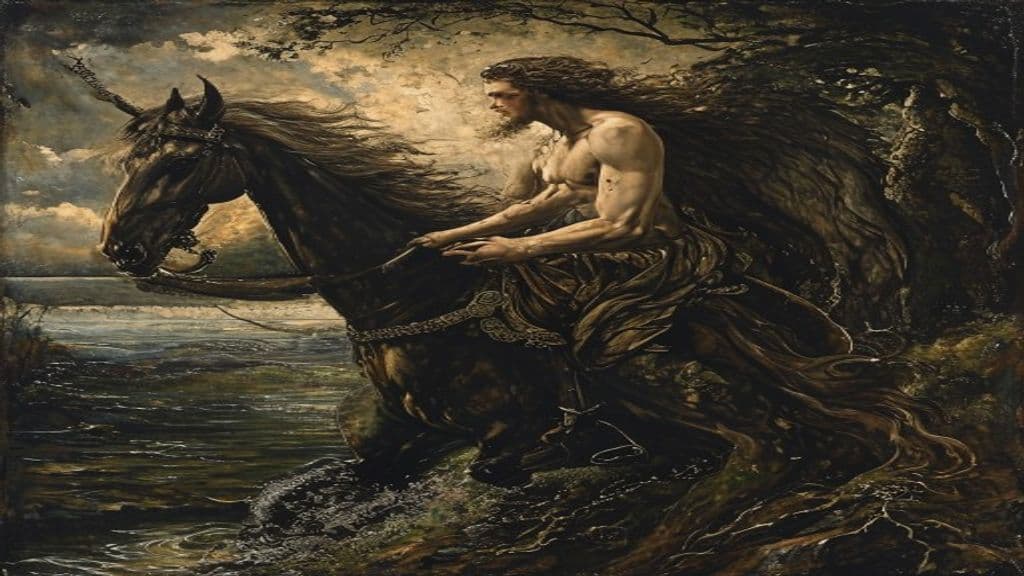
Aengus (Óengus, Aonghus) is a member of the Tuatha Dé Danann in Irish myth, portrayed as a youthful, attractive figure associated with love, youth, poetic inspiration and seasonal/solar symbolism; he is linked to Brú na Bóinne (Newgrange) and appears as fosterer, protector, enchanter and avenger in multiple tales.
Badb
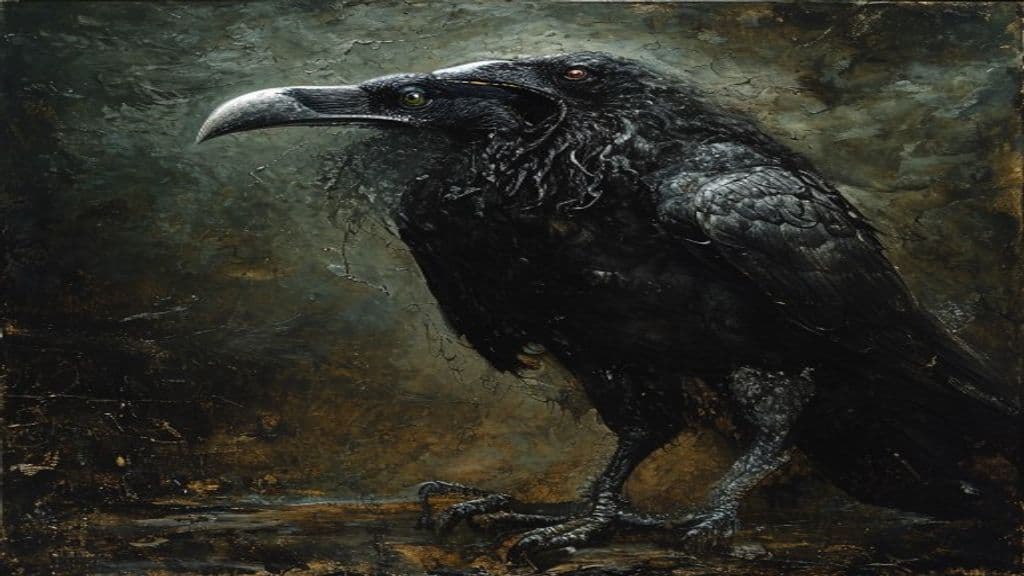
Badb is an Irish supernatural female figure associated with warfare, death, and prophecy. She commonly appears as a crow or raven and as a wailing omen, acts on battlefields to sow confusion and foretell slaughter, and is often treated as one member of the triadic Morrígna.
Abarta (Ábartach)
Abarta (also Ábartach) is a figure of Irish myth who, in surviving accounts, tricks Fionn mac Cumhaill's warriors by giving them a supernatural grey horse that bears them into the Otherworld. Sources variably identify him as a member of the Tuatha Dé Danann or as a Fomorian; after the incident he is compelled to release the captured warriors and is refused entry to the Fianna.
Abcán (Abhcán)
Abcán (modern spelling Abhcán) is a named dwarf poet and musician of the Tuatha Dé Danann in Irish myth. He appears in a small number of narratives as a musician whose art has soporific power and as the ferryman who brings the goddess Ruad from the Otherworld to the human world.
Abhean
Abhean is a named poet of the Tuatha Dé Danann in medieval Irish literature, described as a poet in particular of Lugh and recorded as having been killed by Óengus before Midir in a poem by Fland Mainistreach preserved in the Lebor Gabála Érenn.
Achtland
Achtland is a figure from Irish tradition who, according to the surviving account, was a mortal woman famed for rejecting mortal suitors who married a member of the Tuatha Dé Danann and crossed into the síde to become immortal as his wife.
Aed (Aodh)
Aed (Old Irish Aodh) is a named supernatural figure in Irish myth attested in variant genealogies: in some traditions he is one of the Children of Lir, while in others he appears as a son of the Dagda. His name derives from the Old Irish word for 'fire' and he appears in narratives that place him among the aristocratic households of the Tuatha Dé Danann/Daoine Sidhe.
Aengus
Aengus (Óengus, Aonghus) is a member of the Tuatha Dé Danann in Irish myth, portrayed as a youthful, attractive figure associated with love, youth, poetic inspiration and seasonal/solar symbolism; he is linked to Brú na Bóinne (Newgrange) and appears as fosterer, protector, enchanter and avenger in multiple tales.
Ailill Angubae
Ailill Angubae is a human figure in the Irish tale The Wooing of Étaín, presented as the brother of High King Eochaid Feidlech who falls desperately in love with his brother's wife, Étaín. His unrequited passion leads to a wasting illness and a failed rendezvous when the Tuatha Dé Danann figure Midir casts him into an enchanted sleep.
Airmed
Airmed (Airmid) is a healer and keeper of herbal knowledge among the Tuatha Dé Danann in Irish myth. Daughter of Díán Cécht and sister of Miach, she preserves the lore of healing plants, gathers herbs at Miach's grave, and is named among enchanters who sang over the well of Sláine to restore the wounded.
Aoi Mac Ollamain
Aoi Mac Ollamain (also Ai Mac Ollamain; recorded as Mac Ollamo and Mac Ollavain) is attested in early Irish material as a member of the Tuatha Dé Danann and is identified specifically as a god of poetry. Surviving references are brief and provide little detail beyond name, group affiliation, and a narrative detail about his birth and survival.
Aos Sí
Aos Sí are a broad class of supernatural beings in Gaelic (Irish and Scottish) folklore associated with the mounds and liminal places of the landscape. They are variously described as descendants or later forms of the Tuatha Dé Danann, ancestral or nature spirits, or otherworldly folk who coexist with humans and can be helpful or dangerous when offended.
Badb
Badb is an Irish supernatural female figure associated with warfare, death, and prophecy. She commonly appears as a crow or raven and as a wailing omen, acts on battlefields to sow confusion and foretell slaughter, and is often treated as one member of the triadic Morrígna.
Banba
Banba (modern spelling Banbha) is a matron goddess of Ireland in Irish mythology, daughter of Delbáeth and Ernmas of the Tuatha Dé Danann. She forms a triad of matronal personifications of the island with her sisters Ériu and Fódla, is associated with sovereignty and the land, and appears in origin and heroic narratives linked to specific Irish landscapes.
Community Record
- [1]Bodb Derg (Wikipedia). Wikipedia: 'Bodb Derg' (overview, name discussion, mythology section).wiki
- [2]Acallamh na Senórach I, Part 22. Acallamh na Senórach, part 22 (medieval Irish narrative corpus; referenced passages in supplied materials).literary
- [3]Acallamh na Senórach I, Part 38. Acallamh na Senórach, part 38 (medieval Irish narrative corpus; referenced passages in supplied materials).literary
- [4]Oidheadh Chloinne Lir (Children of Lir) — background (UCC/ISO). Background on Children of Lir traditions and related Tuatha narrative material (supplied as contextual source).literary
- [5]The Fosterage of the House of the Two Pails. Textual corpus material cited in source list (contextual reference to Tuatha narratives).literary
- [6]Shee-Eire: Bodb. Modern summary page providing additional contextual claims (used cautiously; secondary).other
- [7]Marvunapp: Tuatha Dé Danann / Red Lord (modern adaptations). Modern popular-adaptation material mentioning Bodb Derg in fiction (not used as primary attestation of traditional traits).other
- [8]Wikidata: Bodb Derg (Q638299). Wikidata entry (structured data reference aligned with Wikipedia summary).wiki