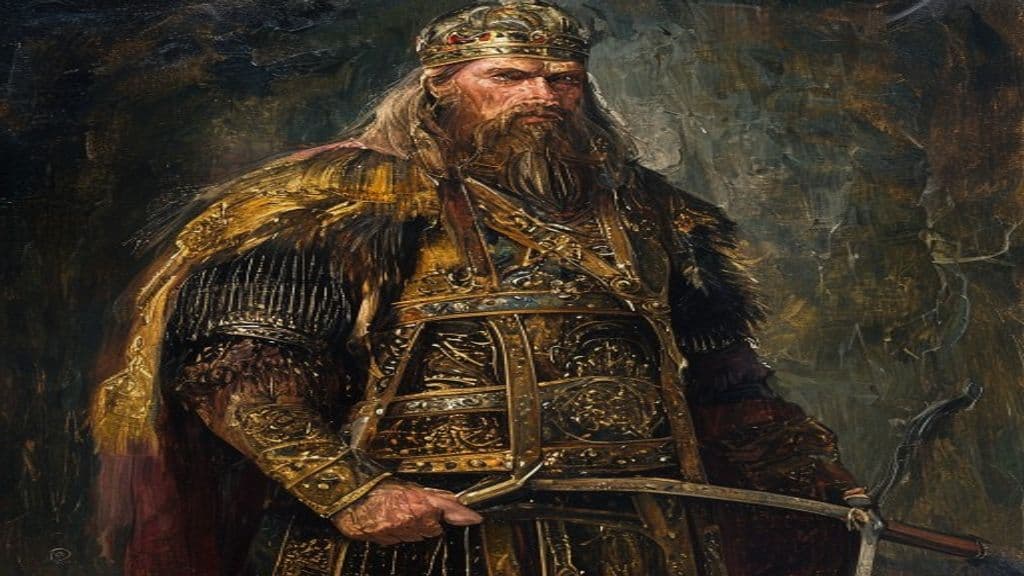
The bogatyr emerges as a stock heroic figure in medieval East Slavic bylinas. The term appears in Russian by the 13th century and is considered of non-Slavic origin in scholarship, with proposed connections to Iranian bahadur, Turkic-Mongol bahadir/batyr, and (more speculatively) Sanskrit forms. In narrative tradition some bogatyrs are presented as semi-historical prototypes (e.g., Ilya Muromets, Dobrynya Nikitich), while others (e.g., the giant Svyatogor) are purely mythic and may echo pagan Slavic material. Many well-known tales situate bogatyrs at the court of Prince Vladimir (Kievan Cycle), though the type also appears in other cycles such as Novgorod-themed epics.
Sources give general traits rather than fixed iconography: bogatyrs are described as physically strong, tall, powerful men often noted for 'resounding voices.' Detailed costume or uniform attributes are not consistently provided in the sources examined; individual named heroes acquire distinguishing attributes within their own tales. A female analog, the polianitsa (поляница), is described as a female warrior comparable to Amazons—capable of martial competence and sometimes rescuing or outwitting enemies—though not usually depicted as identical in physical strength to the male bogatyr in the source material.
Bogatyrs function primarily as defenders of Rus', renowned for immense strength, courage, and martial prowess. The literary tradition often downplays their use of magic—many bylinas strive to keep bogatyr heroism 'loosely based on historical fact'—even though bogatyrs frequently encounter mythic and supernatural adversaries (dragons, giants, magical beings). Some named figures within the tradition (e.g., Svyatogor, Volkh Vseslavyevich) belong to the mythological stratum and display more overtly supernatural or giant-like traits; the best-known trio (Ilya Muromets, Dobrynya Nikitich, Alyosha Popovich) exemplify individual temperaments (physical/spiritual power, courage, cunning) within the heroic role.
Weaknesses
- otherNo consistent supernatural vulnerabilities attested in sources
Wards
- otherNot applicable / not attested
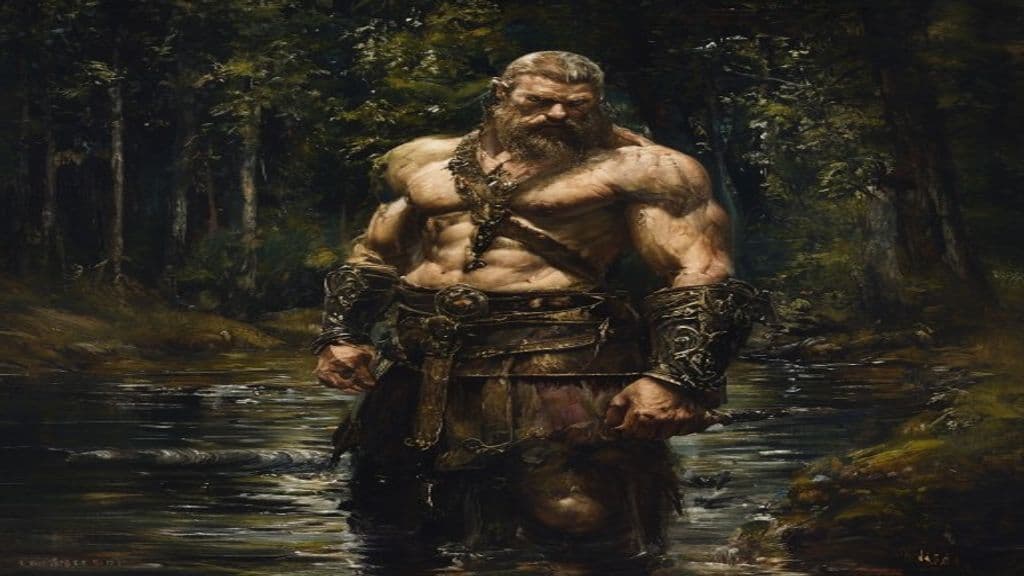
Dobrynya Nikitich
A Slavic bogatyr (heroic warrior) based on a historical warlord, reflecting medieval ideals of chivalry and nobility. (Note: - Power tier: Primordial (no supernatural abilities are mentioned, but he is a bogatyr, which implies a higher power tier) - Sensory cues: not present in source material - Weaknesses: not present in s)
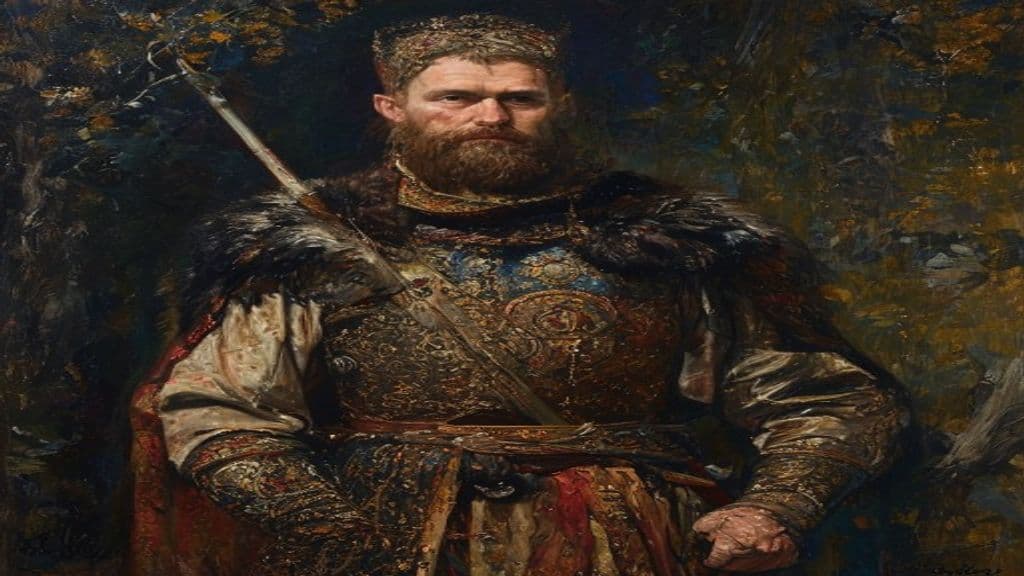
Alyosha Popovich
Alyosha Popovich (Алёша Попович / Олешко Попович) is a named human hero (bogatyr) of the East Slavic byliny tradition, remembered as the youngest member of the canonical trio of Kievan Rus' warriors. He is chiefly characterized by slyness, mockery, and trickery, and defeats foes by craft often aided by pious petition rather than mere brute strength.
Bodach
A Gaelic folkloric personage literally meaning "old man" (Old Irish botach) who functions variously as a trickster, bogeyman, household figure and — in some accounts — an omen of death (Bodach Glas). The term also carries historical social meanings (tenant/peasant) and is sometimes identified with higher mythic figures (e.g., Manannán mac Lir) in specific tales.
Bodb Derg
Bodb Derg is a kingly figure of the Tuatha Dé Danann in Irish myth, attested as ruler of the Munster síd and later elected king of the Tuatha Dé Danann after their defeat and withdrawal into the sídhe. His name is etymologically linked to the war-crow figure Badb and is glossed in sources as 'Red Crow.'
Bodhisattva
A bodhisattva is a being or practitioner in Buddhist thought who has generated bodhicitta — the wish and compassionate intention to attain awakening (bodhi) for the benefit of all sentient beings. In Early/Theravāda contexts the term often denotes the Buddha in his pre‑awakening lives, while Mahāyāna expands it into an ideal and category of spiritually advanced, active helpers and devotees.
Body of Light
A layered-humanity concept from classical Neoplatonism through Renaissance and later esoteric traditions: a quasi-material luminous vehicle (also called the astral or subtle body) that mediates between the physical body and the divine, enabling ascent through planetary/heavenly spheres and serving as the carrier of certain mental faculties.
Boeotus (son of Poseidon)
Boeotus is a mythic eponymous ancestor in Greek tradition credited with giving his name to the region and people of Boeotia. He appears in genealogical accounts as a son of Poseidon (often with Arne) or in variant traditions as son of Itonus and the nymph Melanippe, functioning chiefly as a founding ancestor rather than an active cultic or supernatural agent.
Boethoos
Boethoos (also Boethous/Boethos) is a minor named figure in Greek mythological genealogy, attested as a Lacedaemonian son of Argeios (son of Pelops) and Hegesandra (daughter of King Amyclas of Sparta). He appears only as a genealogical descendant within Peloponnesian heroic lineages in the supplied sources.
Bogeyman
A folkloric, non‑canonical monster figure invoked across cultures as a disciplinary device to frighten children into compliant behaviour; presented in sources as a flexible category rather than a single, systematized being and often used figuratively as a personification of terror.
Boggart
A polyvalent supernatural being in north‑west English and adjacent dialect traditions, the boggart can be a household spirit attached to a family or dwelling or a localized landscape spirit tied to a particular place. Accounts vary widely by locality, recording mischievous, malicious, and sometimes frightening behaviours rather than a single fixed form.
Boginka
A Slavic/Polish female nature-spirit category: personifications of wild natural forces (forests, fields, mountains, fresh and sea waters) that appear in folklore as ambivalent beings—often hostile toward humans, especially pregnant women and infants, but also recalled in some sources with neutral or protective aspects.
Boginki (boginka)
Boginki (singular boginka) are female personifications of wild natural forces in Polish/Slavic popular belief, described in sources as minor goddesses or female spirits/demons associated with forests, fields, mountains, and waters (both inland and sea). They are ambivalent in disposition, sometimes neutral or beneficent and sometimes hostile to humans, and figure among other Slavic female nature-spirits such as rusalki and vily.
Bogle
A Northumbrian, Cumbrian and Scots folkloric being reputed to perplex and frighten humans. Bogles are a polyvalent category in northern-British tradition, applied to scarecrows, household troublemakers and other uncanny creatures whose chief orientation is mischief rather than systematic harm.
Boitatá
Boitatá is a supernatural guardian creature from Brazilian folklore, originating in Tupi–Guarani tradition and preserved in wider Brazilian popular tradition. Commonly rendered as a fiery serpent that protects forests and fields by punishing people who burn, cut, or otherwise destroy nature, the legend also appears in brief variants that liken it to a will-o'-the-wisp or (less commonly) a bull-like creature.
Community Record
- [1]Bogatyr — Wikipedia. Wikipedia, 'Bogatyr' (entry text supplied in research notes)wiki
- [2]Bogatyr — Wikidata Q690516. Wikidata entry Q690516 (cross-reference and modern usages noted)other
- [3]Archive: 1TV Podcast (April 2, 2025). Broadcast archive scanned for modern usages of the term 'Bogatyr' (no folkloric material)other
- [4]Archive: MoD Russia (Dec 22, 2022). Ministry of Defence archive text (contains a modern mention of 'Bogatyr' in a toponymic/military context; not folkloric)other