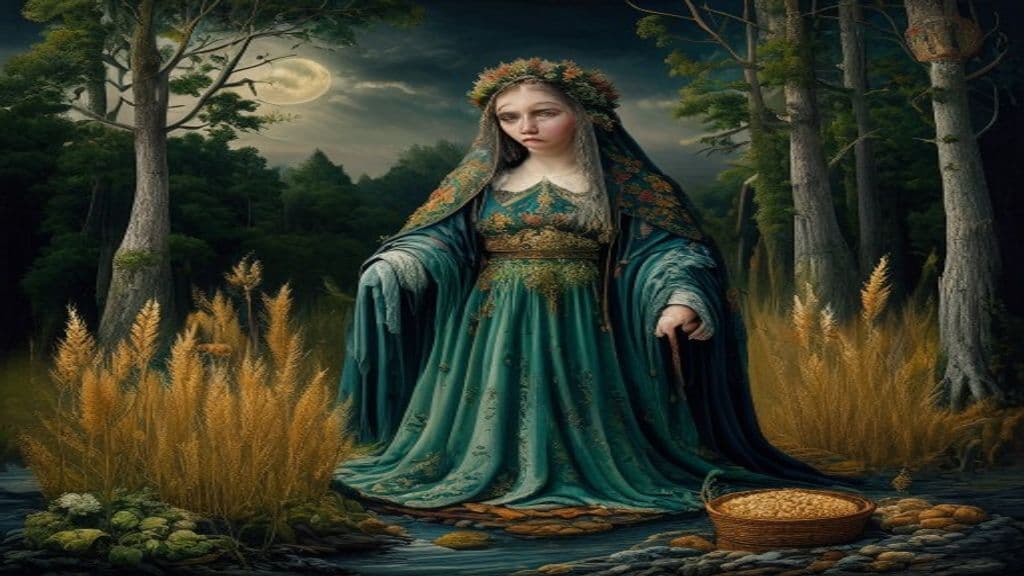
The sampled sources do not preserve a single unified cosmogonic origin tale for boginki. Rather, they are presented by folklorists and comparative accounts as long-standing elements of Slavic popular religion: numerous local, female personifications of wild nature that emerge from an animistic worldview in which particular natural places are inhabited by intelligences. One modern description records that the Polish word literally means 'minor goddess,' and scholarly overviews group boginki with other female tutelary spirits of water and wild places, indicating they belong to an indigenous layer of local spirits and place-bound supernatural agents rather than to a single authored mythic origin.
The provided materials give no consistent, detailed visual description specific to boginki. Sources repeatedly identify them as female and associate them with particular habitats—forest, field, mountain, inland and sea waters—but do not provide fixed traits of dress, color, stature, or distinguishing features. Because they are catalogued alongside rusalki, vily, and navki in comparative accounts, some of their imagined qualities in regional storytelling may overlap with those categories, but explicit, source-attested appearances for boginki themselves are not preserved in the excerpts supplied.
Sources characterize boginki principally by role and disposition rather than by a catalogue of named supernatural powers. They are personifications of wild forces connected to particular landscapes and thus are implicated in influencing those domains (for example, guardianship of grain is explicitly attested as a topical category in regional tale indices). They are described as ambivalent—either neutral/beneficent or hostile—and one fragmentary source passage indicates a motif in which boginki 'often attack women during childbirth, replacing the newborns' (the quotation is incomplete in the source material). Beyond such motifs and their general association with affecting natural places and human fortunes, the excerpts do not enumerate further specific abilities.
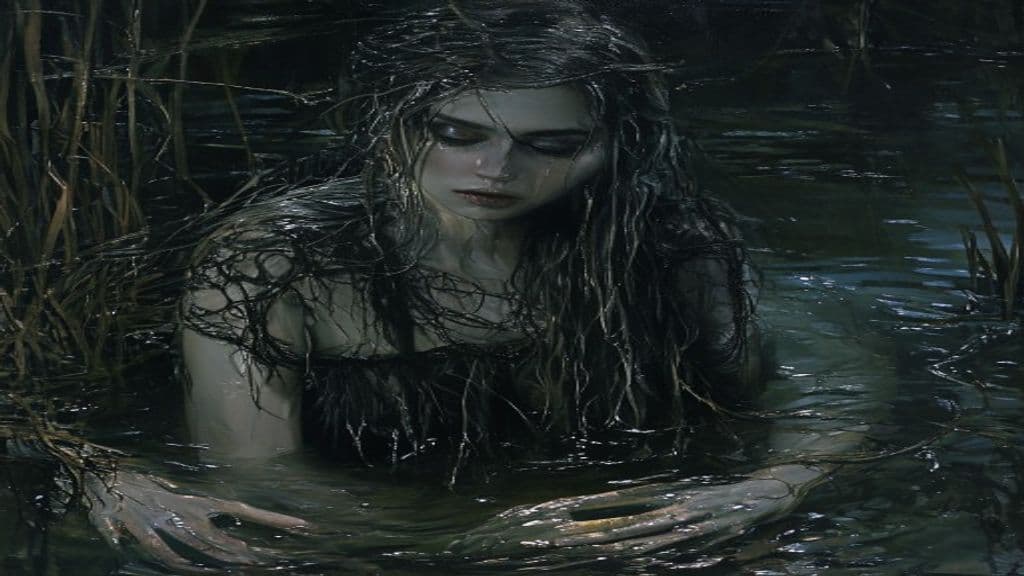
Rusalka
Water spirits in Slavic folklore — the spirits of young women who died by drowning or suicide, bound to rivers and lakes. Beautiful and dangerous, they can bewitch men to their deaths.
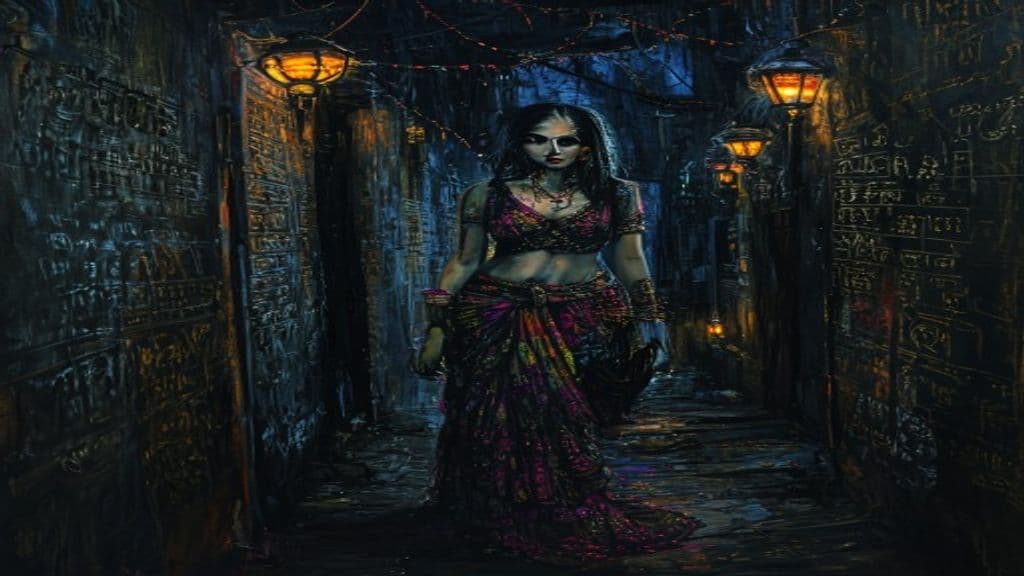
Stree
A vengeful female spirit from Chanderi who abducts men during festival nights. Warded off by the inscription 'O Stree, kal aana' — her legend, still practised on walls across Madhya Pradesh, inspired the 2018 Bollywood horror-comedy.
Strzyga
A malefic night-being in Polish and Silesian folk belief associated with certain anomalous births and with revenant activity after death. Traditions portray the strzyga variously as a vampiric, blood-drinking revenant that flies at night (often imagined as an owl), or alternatively as an omen that heralds imminent death; communities employed a mix of popular and Christian measures to prevent or neutralize suspected strzygi.
Boeotus (son of Poseidon)
Boeotus is a mythic eponymous ancestor in Greek tradition credited with giving his name to the region and people of Boeotia. He appears in genealogical accounts as a son of Poseidon (often with Arne) or in variant traditions as son of Itonus and the nymph Melanippe, functioning chiefly as a founding ancestor rather than an active cultic or supernatural agent.
Boethoos
Boethoos (also Boethous/Boethos) is a minor named figure in Greek mythological genealogy, attested as a Lacedaemonian son of Argeios (son of Pelops) and Hegesandra (daughter of King Amyclas of Sparta). He appears only as a genealogical descendant within Peloponnesian heroic lineages in the supplied sources.
Bogatyr
A bogatyr is the stock heroic figure of East Slavic (primarily Russian and Ukrainian) epic-poetic tradition (bylinas): an elite, exceptional warrior associated with the princely court (notably the Kievan court of Vladimir in many tales) who defends the land and people. Bogatyrs are literary/folk-epic archetypes rather than a class of supernatural beings, though some individual figures are mythic or giant-like.
Bogeyman
A folkloric, non‑canonical monster figure invoked across cultures as a disciplinary device to frighten children into compliant behaviour; presented in sources as a flexible category rather than a single, systematized being and often used figuratively as a personification of terror.
Boggart
A polyvalent supernatural being in north‑west English and adjacent dialect traditions, the boggart can be a household spirit attached to a family or dwelling or a localized landscape spirit tied to a particular place. Accounts vary widely by locality, recording mischievous, malicious, and sometimes frightening behaviours rather than a single fixed form.
Boginka
A Slavic/Polish female nature-spirit category: personifications of wild natural forces (forests, fields, mountains, fresh and sea waters) that appear in folklore as ambivalent beings—often hostile toward humans, especially pregnant women and infants, but also recalled in some sources with neutral or protective aspects.
Bogle
A Northumbrian, Cumbrian and Scots folkloric being reputed to perplex and frighten humans. Bogles are a polyvalent category in northern-British tradition, applied to scarecrows, household troublemakers and other uncanny creatures whose chief orientation is mischief rather than systematic harm.
Boitatá
Boitatá is a supernatural guardian creature from Brazilian folklore, originating in Tupi–Guarani tradition and preserved in wider Brazilian popular tradition. Commonly rendered as a fiery serpent that protects forests and fields by punishing people who burn, cut, or otherwise destroy nature, the legend also appears in brief variants that liken it to a will-o'-the-wisp or (less commonly) a bull-like creature.
Bolas
Bolas are a physical throwing weapon consisting of weights connected by cords, used historically and traditionally to entangle the legs of animals (and occasionally humans) at a distance. They appear in multiple regional traditions—notably in southern South America among Tehuelche and gauchos, in Mapuche and Inca military contexts, and in Inuit bird-hunting practice—under a variety of local names and constructions.
Bolbe
In Ancient Greek mythology Bolbe (Βόλβη) is a localized lake goddess or nymph identified with the Macedonian lake of the same name (modern Lake Volvi). She is described as beautiful and is attested as mother of freshwater nymphs (Limnades) and, in one source, as mother of Olynthus by Heracles.
Bolg
The supplied sources do not document Bolg as a traditional supernatural being. Available references identify 'Bolg' primarily as a proper name in modern popular culture (a Middle-earth character in J. R. R. Tolkien's fiction) and as an ordinary lexical item in other contexts (e.g., Irish 'bolg' meaning 'belly'). No ethnographic or folkloric description of a supernatural entity named Bolg is present in the provided materials.
Community Record
- [1]Slavic water spirits (Wikipedia article referencing Slavic paganism and female tutelary spirits). "In Slavic paganism there are a variety of female tutelary spirits associated with water. They have been compared to the Greek Nymphs, and they may be either white (beneficent) or black (maleficent). They may be called Navki, Rusalki, and Vily."wiki
- [2]Die Volkssagen Ostpreussens (table of contents / index on Archive.org). Work lists among its categories 'boginki ziemi i opiekujące się zbożem' and groups boginki with other spirit/ghost/demonic motifs common in regional folktales.folk
- [3]Boginka (Wikipedia entry). "In Polish pagan mythology, boginki (singular: boginka) are female spirits or demons of wild nature: forest, field, mountains, water (both of land and sea), often a personification of forces of the nature. The word literally means 'minor goddess' in Polish."wiki
- [4]Slavic mythology from Poland (Lamus Dworski blog summary drawing on folkloric sources). Summarizes boginki as female personifications of wild forces and notes ambivalent or hostile behavior, including a fragmentary citation that boginki '[often attack women during childbirth, replacing the newborns]'.other