
The sources do not preserve a narrative origin tale for Borysthenis. Instead the name functions in two genealogical registers: in one, Borysthenis is listed among a small group of Muses who are daughters of Apollo (a localized triad alongside Apollonis and Cephisso); in the other, the name is used as an epithet for the Scythian earth-and-water goddess Api, explained as meaning she was 'called Borysthenis because she was the daughter of the god of the Borysthenēs river (now the Dnipro).' These attestations present Borysthenis primarily as a filial or relational theonym rather than as the subject of preserved birth myths.
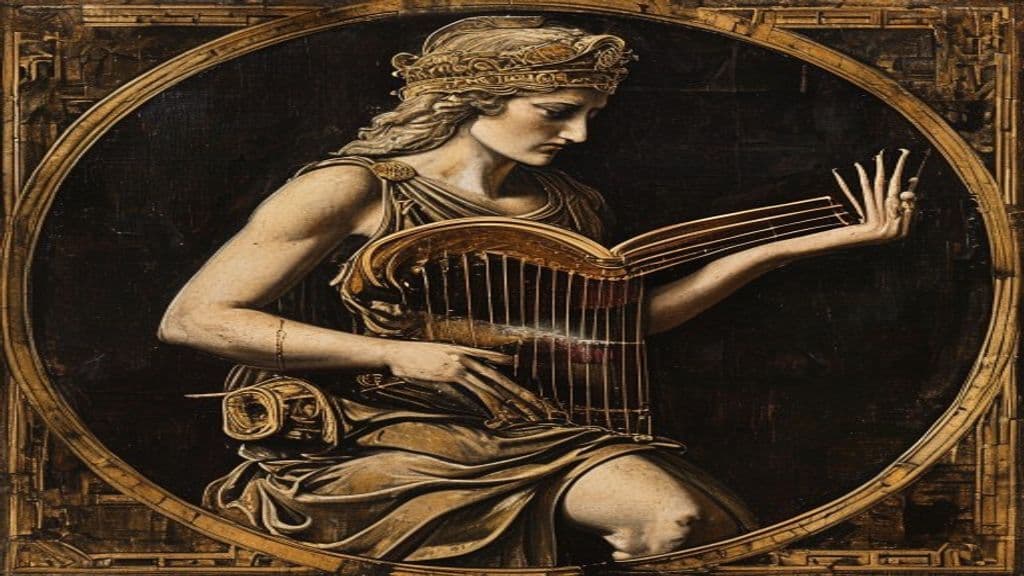
No physical description or iconography for Borysthenis is provided in the cited materials. The sources offer no details on form, attire, or symbols. By implication only—drawn from the two cultural frames in which the name appears—a Muse-type Borysthenis would fit the broader Greek repertory of inspirational female divinities associated with arts and ritual performance, while an Api-Borysthenis would belong to the iconographic expectations for river or earth-and-water goddesses in local northern Black Sea/Scythian contexts. These implications are not attested for Borysthenis herself in the provided texts and should not be read as direct evidence of her appearance.
The sources supply no explicit list of powers, deeds, or behaviors for Borysthenis. Functionally, the name indicates roles by association: as a Muse in the Apollo-derived triad she is implicated in the cultural category of inspirational or cultic divine figures tied to poetic and ritual creativity; as an epithet of Api the name links the goddess to earth-and-water domains and to the Borysthenēs river. Beyond these relational and categorical implications, the provided material does not record specific abilities or mythic actions.
Community Record
- [1]Borysthenis — Wikipedia. Wikipedia, 'Borysthenis' (summary lines cited in research notes)wiki
- [2]Borysthenis — Wikidata. Wikidata entry noting 'one of the Muses worshiped at Delphi, daughters of Apollo'other
- [3]Tractvs Borysthenis Vulgo Dniepr et Niepr dicti (1662) — archive. Early modern cartographic title using the classical river-name Borysthenis / Borysthenēs (identifying the classical referent of the Dnipro)other
- [4]Tractus Borysthenis vulgo Dniepr et Niepr Dicti, à Bovzin (1662) — archive. Atlas title showing continued use of the classical name Borysthenēs for the river now called Dnipro/Dnieperother