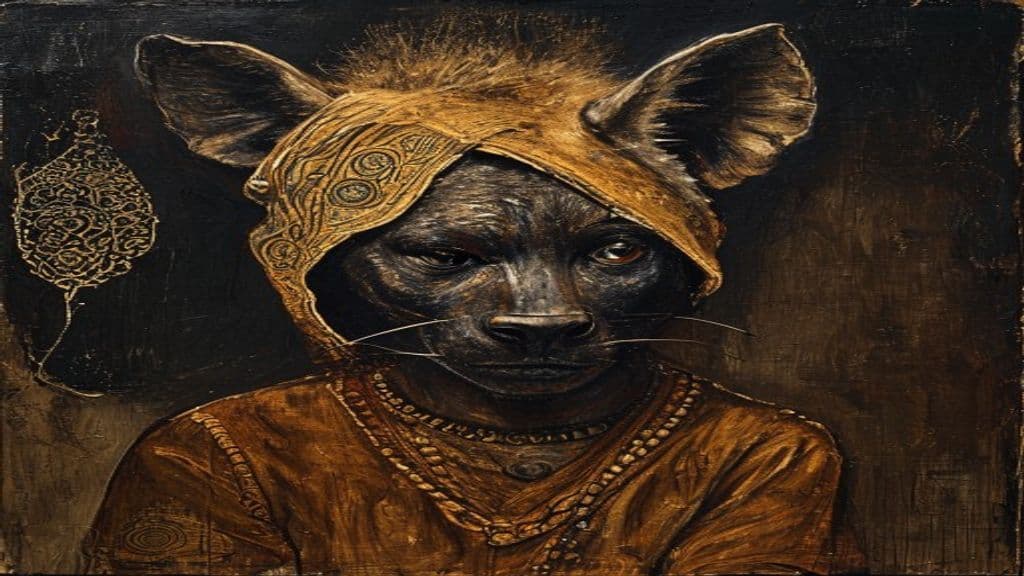
Buda is not presented as a single mythic founder figure but as a transmissible, socially-located power: a named capacity tied to envy and to particular social groups and occupations. Sources describe buda as a power held and wielded by those in a different social group (for example Beta Israel or metalworkers) and link its acquisition to lineage and artisan knowledge in folkloric interpretation; scholarly commentary frames this as a cultural diagnosis whereby specialized craft skill or social marginality is construed as deriving from an ambiguous or malign source. Geographically the concept is centred in Ethiopia and Eritrea and is also reported in related regional contexts (Sudan, Tanzania, and among Berber groups in Morocco).
The primary physical manifestation described in the sources is transformation into a hyena; buda-bearers are said to change into hyenas and to attack while concealing their human identity. The sources do not provide a standardized visual description of the human form of a buda-bearer beyond social and occupational markers—accusations commonly target members of Beta Israel or certain artisan/caste groups such as metalworkers (sometimes labelled with terms like tabib in related contexts).
Buda is credited with two linked harmful capacities: to inflict the effects commonly called the 'evil eye'—causing illness, misfortune, or other harm through envious gaze or magical influence—and to shapeshift into a hyena to attack victims covertly. Sources report that bearers are sometimes described as 'empowered by evil spirit' and that folkloric explanations connect the power's transmission to paternal lineage or artisanal origins; the literature treats buda as a real force that can be countered by religious and magical measures.
Weaknesses
- ritualExorcism invoked in the name of Jesus by an ordained Ethiopian Orthodox priest
- ritualProtective amulets/talismans (kitab) prepared by a debtera
- mantraInvocation of God's name (Christian context)
Wards
- otherKitab (amulet or talisman made by a debtera)
- mantraInvoking God's name
- ritualSeeking ordained priest intervention and exorcism in church settings
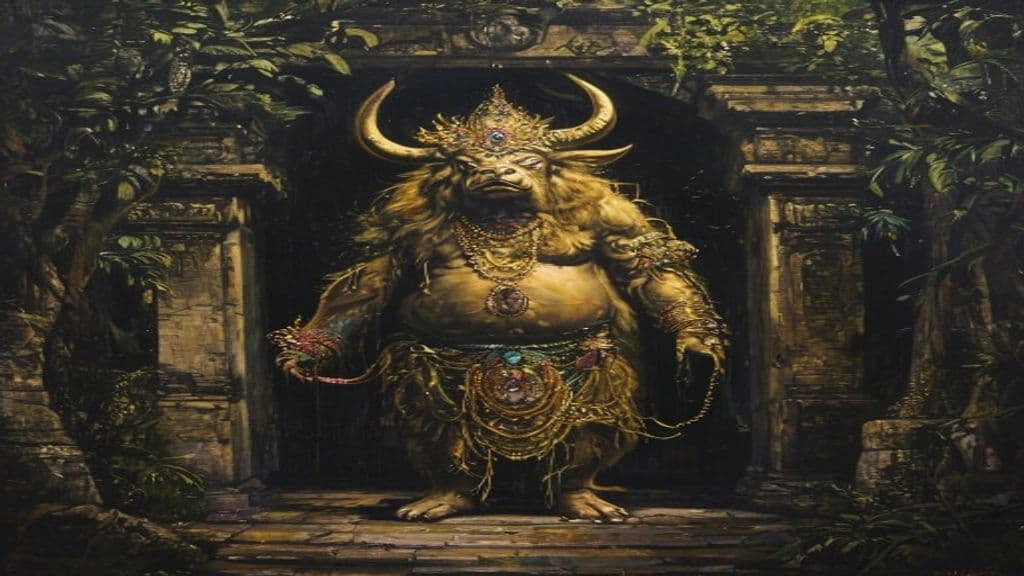
Yaksha
Nature spirits of Hindu, Buddhist, and Jain cosmology — guardians of forests, treasures, and wilderness. Ambivalent beings, capable of great benevolence to the respectful and terrible harm to the greedy.

Kappa
A water-dwelling imp of Japanese folklore with a bowl of water on its head. Mischievous but bound by strict codes of politeness; dangerous near rivers.

Ghoul
A grave-haunting demon of pre-Islamic Arab and Islamic folklore that feeds on the flesh of the dead and may eat the living. Can impersonate the dead to lure victims.
Community Record
- [1]Buda (folklore) — Wikipedia. Wikipedia, 'Buda (folklore)'wiki
- [2]Wikidata entry for Buda. Wikidata: Q2905079other
- [3]Summary of exorcism practices (Amsalu Geleta, as cited). Quoted summary of Amsalu Geleta on Ethiopian Orthodox exorcism practices as reported in the Wikipedia articlewiki