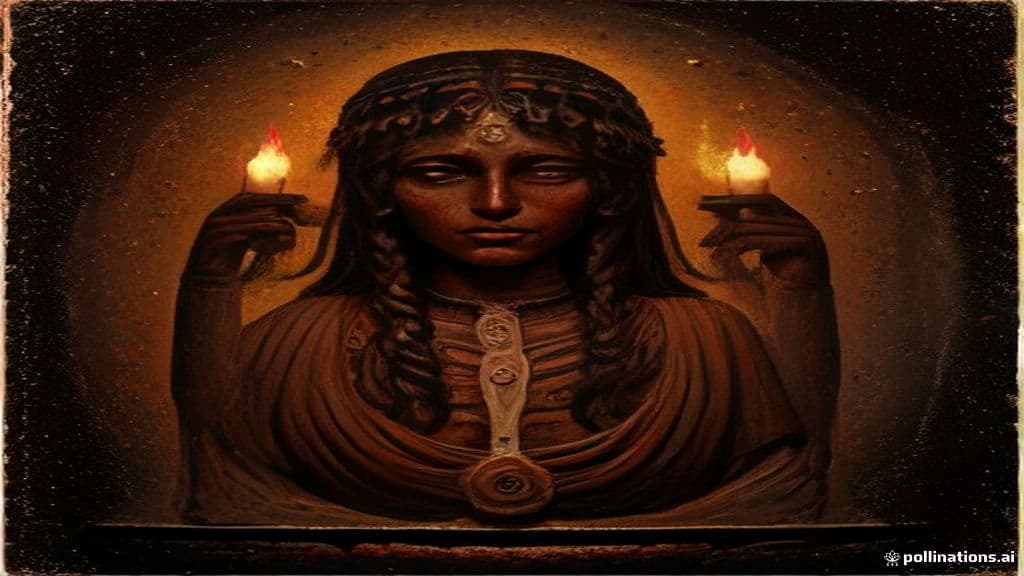
Surviving references to Caca are late and fragmentary; modern compendia treat her as probably an older, indigenous Roman goddess of the hearth whose local cult persisted in Rome and was later reinterpreted or subsumed by the state cult of Vesta. Some secondary summaries present her in a family relation with the monstrous figure Cacus, but the primary evidence in the provided material emphasizes her status as a recipient of sacrifices at a sacellum in Rome and reports from later tradition that her cult was succeeded or replaced by Vesta.
No ancient descriptions or iconographic evidence of Caca's appearance are provided in the supplied sources. The surviving testimony is limited to brief cultic references (shrine and sacrifices) preserved in later summaries, and therefore physical depiction or typical iconography cannot be reconstructed from the available material.
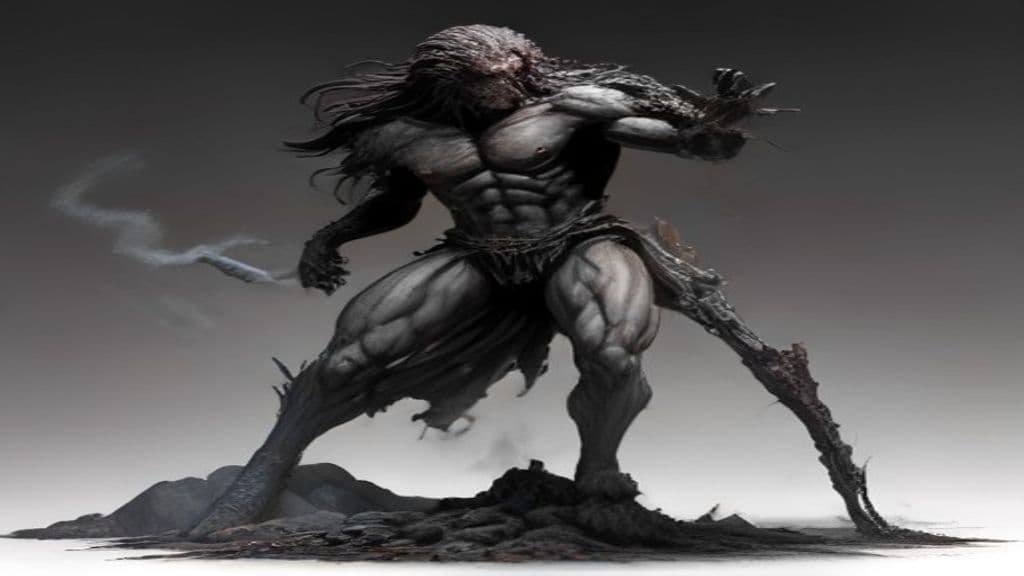
The sources do not record specific supernatural powers, mythic deeds, or characteristic behaviors for Caca. Attestations focus on her cultic function as a goddess of the hearth who received sacrifices at a shrine, and later reference works infer a hearth-domain association through the Vestals and the reported succession by Vesta. Narrative activity (beyond suggested family association with Cacus in some modern summaries) is not documented in the provided corpus.
Community Record
- [1]Caca (mythology) — Wikipedia. Wikipedia contributors, 'Caca (mythology),' Wikipedia, The Free Encyclopedia.wiki
- [2]Caca — Wikipedia disambiguation. Wikipedia contributors, 'Caca,' Wikipedia, The Free Encyclopedia (disambiguation).wiki
- [3]CACA - the Roman Goddess of the Hearth (Godchecker). Godchecker entry for Caca, 'CACA - the Roman Goddess of the Hearth.'other
- [4]Encyclo entry: Caca. Encyclo, 'Caca - 3 definitions.'other
- [5]List of Roman deities - NovaRoma. NovaRoma, 'List of Roman deities.'other
- [6]Roman Goddesses - C (Low Ch'en Australia list). Roman Goddesses listing, 'C' entries (includes Caca).other