In the assembled references Carystus is placed within Greek genealogical tradition as a son of the centaur Chiron and the nymph Chariclo. He is presented primarily as the eponymous ancestor of the polis of Carystus on the south coast of Euboea; modern reference summaries state explicitly that the town 'took the name from him.' He is named in modern dictionaries and encyclopedic entries that compile fragmentary classical attestations and local topographical tradition.
No classical or iconographic description of Carystus is supplied in the provided sources. The surviving material treats him mainly in genealogical and local-identifying registers (names and relationships) rather than in narrative passages that describe bodily form, attributes, or cult imagery; therefore his physical appearance is undocumented in the available notes.
The provided sources do not record specific powers, deeds, or characteristic behaviors for Carystus. Modern summaries sometimes label him a 'rustic demi-god' or 'rustic god' in reference works, but the supplied material offers no primary evidence of cultic functions, miracles, patronages, or ritual actions. His role in the extant record is genealogical and eponymic rather than narratively or ritually detailed.
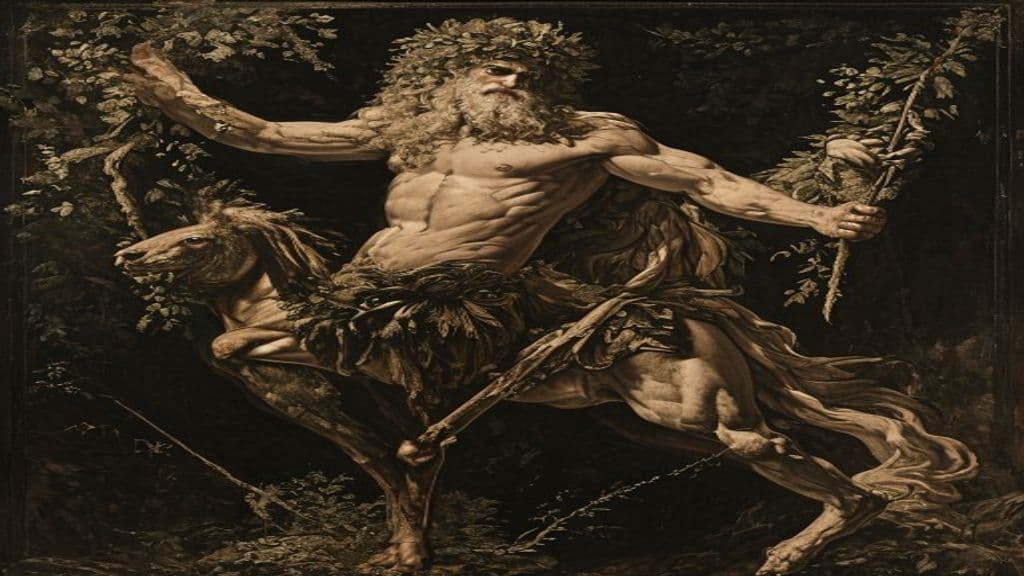
Chiron
Chiron (Ancient Greek: Χείρων, Kheírōn) is a unique centaur of Greek myth, famed as a cultured tutor, healer, and oracle who taught skills such as medicine, music, archery, hunting, and prophecy to culture-heroes. Associated with Mount Pelion in Thessaly, he is presented as wise and civilized in contrast to other, wilder centaurs.

Chariclo
Chariclo is a name assigned to one or two nymph figures in Ancient Greek myth. In surviving sources she appears either as the wife of the centaur Chiron and member of a Chironian household (nurse of Achilles in some scholia) or as a devotee/attendant of Athena who is the mother of the seer Tiresias; both roles place her among domestic, caregiving, and intercessory minor divine figures rather than as an independent cultic deity.
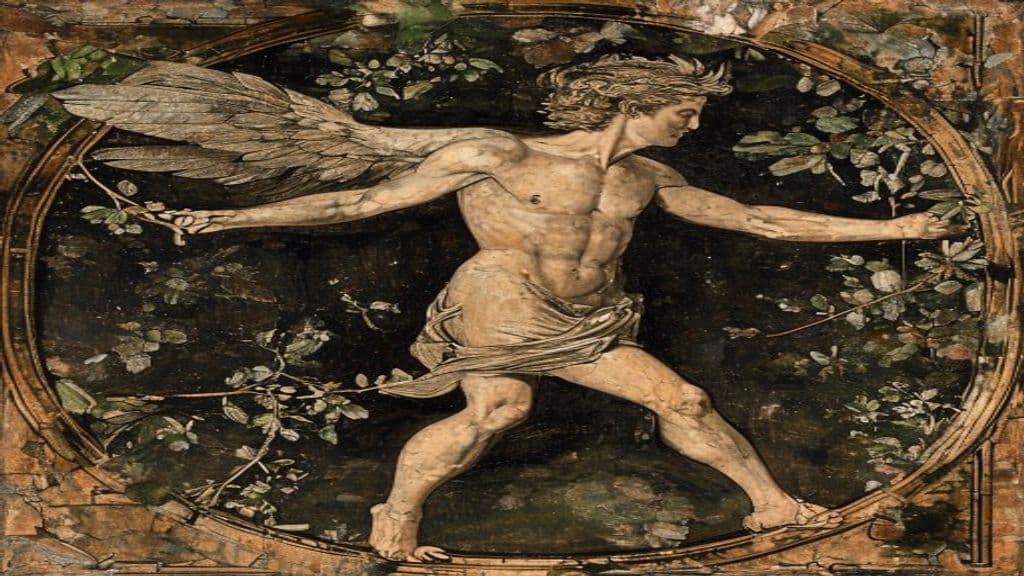
Aristaeus
Aristaeus (Ancient Greek: Ἀρισταῖος) is a mythic culture-hero and minor godlike figure in Greek tradition, honored as the patron and transmitter of rural arts (notably beekeeping, dairying, olive cultivation, and viticulture). He functions as a liminal figure between mortal heroes and divinities, appearing in local cults across the Greek world and in literary narratives that explain the origin and restoration of pastoral practices.
Community Record
- [1]Carystus (mythology) — Wikipedia. Wikipedia, 'Carystus (mythology)'wiki
- [2]CARYSTUS (Karystos) - Greek Rustic Demi-God of Euboea. Theoi.com, summary entry (citing classical dictionaries)other
- [3]Carystus | Facts, Information, and Mythology. Pantheon.org entry on Carystusother
- [4]Antonini Liberalis; Rerum naturalium scriptores Graeci minores (archives). Archival collections of minor Greek mythographers and related fragments (referenced in assembled research notes)literary