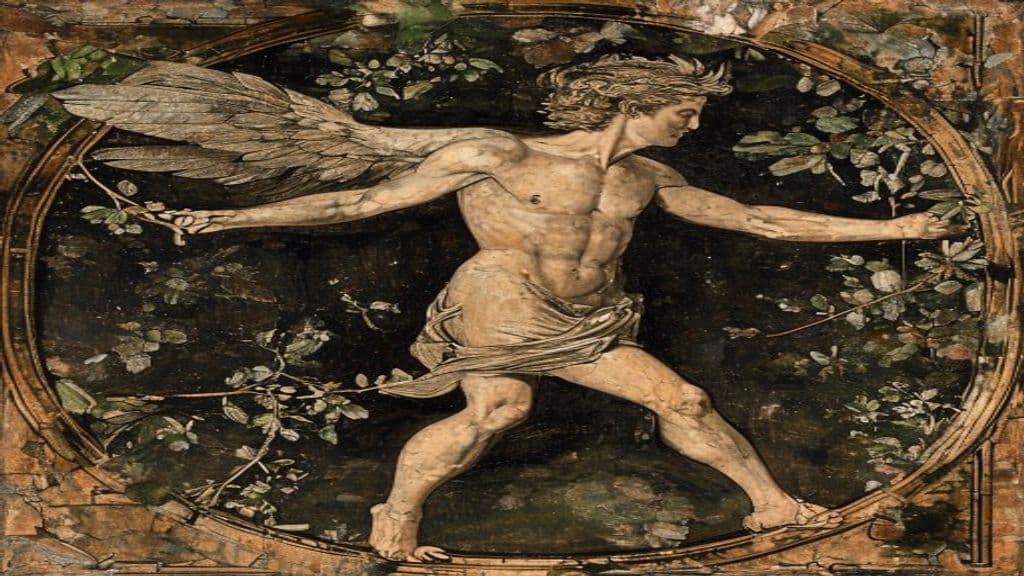
Aristaeus is presented in surviving sources as a culture-hero and cult-title rather than a simple personal name (the epithet Aristaios means "the best"). Genealogically he is described as son of Apollo and the nymph Cyrene in some accounts; he is nurtured by nymphs and in some traditions raised on nectar and ambrosia and accorded immortal status by the earth (Pindar and later summaries). Multiple authors and local cults present Aristaeus as having received specialized instruction from gods and semi-divine teachers (e.g., Chiron, the Muses, and various Olympians in different traditions) and then transmitting those arts to human communities.
The source offers only limited physical description: Aristaeus is described as 'one of the Giants,' implying giant stature, and the only specific iconographic attestation cited is an Attic black‑figure dinos (Lydos, Akropolis 607) depicting him fighting Hephaestus. No detailed anthropomorphic features are supplied in the text. In the aftermath of the Gigantomachy the tradition records that he was transformed into the 'Etnaean dung beetle,' a very large beetle named for Mount Etna; the account connects this insect form with local reports of unusually large beetles on Etna and with the proverbial exaggeration 'as huge as Aetna.'
Aristaeus' primary role is as patron, teacher, and sanctifier of a wide range of rural and domestic arts. Tradition credits him with introducing and overseeing beekeeping and the maintenance of apiaries (including rites for restoring bees), dairying and cheese-making, olive cultivation, viticulture and mead/wine production, shepherding and animal husbandry, and numerous household and craft arts (milling, weaving, rope- and basket-making, working with wood, clay, metal, etc.). He interacts with gods, nymphs, and prophetic figures to gain and transmit technical knowledge. In literary narrative (Virgil's Georgics as reported in summaries) he also undergoes misfortune — the loss of his bees as a consequence of the nymphs' vengeance — and is instructed by Proteus in a sacrificial prescription that miraculously restores new swarms, showing his cultic association with rites of propitiation and agricultural renewal.
Weaknesses
- conditionsuffers ritually-mediated losses (e.g., loss of bee swarms as narrated in Virgil)
Wards
- rituallocal cult offerings / sacrificial honours
Apollo
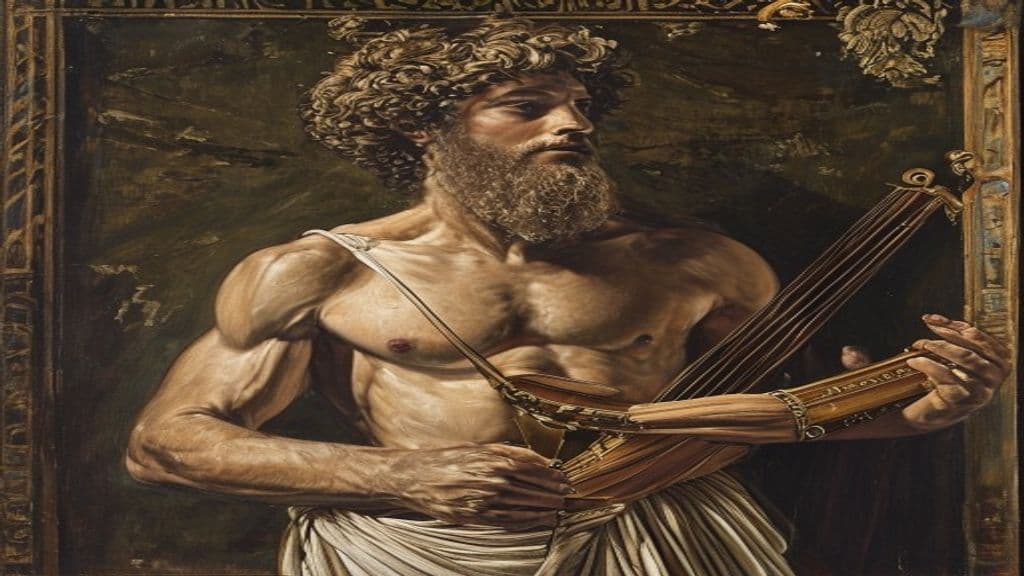
Olympian deity of ancient Greek religion associated with prophecy, healing, music, archery, purification, and civic order. Principal patron of the Delphic oracle, protector of youth and flocks, and ambivalently both healer and bringer of plague.

Dionysus
Dionysus (Ancient Greek: Διόνυσος) is a major ancient Greek deity associated with wine and winemaking, vegetation and fertility, festivity and theatre, ritual ecstasy and possession, and liminal links with death and the underworld. He is an epiphany-god who travels between worlds, whose cult includes ecstatic rites and mystery initiation.
Community Record
- [1]Aristaeus — Wikipedia. Wikipedia: 'Aristaeus' article summarizing Pindar, Diodorus Siculus, Virgil, and other attestations.wiki
- [2]Aristaeus — Wikidata. Wikidata entry for Aristaeus (metadata reference).other
- [3]Archive: The new history of Valentine and Orson (1725) — metadata. Archive metadata consulted in the research notes (no additional primary mythic detail extracted).other
- [4]General archive items cited in research notes. Archive resource listed in research notes (no further primary-text material used beyond metadata).other
- [5]Aristaeus (giant) — Wikipedia. Wikipedia contributors. 'Aristaeus (giant).' Wikipedia, The Free Encyclopedia. https://en.wikipedia.org/wiki/Aristaeus_(giant)wiki