
Accounts vary: in some traditions both twins are mortal sons of Tyndareus of Sparta; in others Pollux (Polydeuces) is divine as son of Zeus while Castor is mortal, producing a mixed mortal/divine pair. Ancient variants include an egg-birth motif via Leda. In homeric and other sources the twins’ parentage and fates differ, but a common theme is their fraternal bond culminating in Pollux petitioning Zeus to share his immortality so they might remain together; as a result they are transformed into the constellation Gemini.
As mortal/heroic figures sources describe them as exceptional horsemen and athletes: Castor is famed as a 'horse-breaker' and Pollux (Polydeuces) as a boxer. Iconography on Hellenistic and Roman material shows them mounted on horseback, often carrying long spears (for example Eukratides I coinage) and represented in domestic/temple contexts (e.g., imagery in the Casa dei Dioscuri at Pompeii). Celestially they are represented as the twin stars of the constellation Gemini.
They act as helpers of mankind and patrons of travellers, sailors, horsemen and athletes. Sailors invoked them to seek favourable winds and ancient sources associate their protection with phenomena like St. Elmo's fire (sources say sailors invoked them and associated them with that luminous phenomenon). They are depicted as skilled horsemen, hunters and boxers, participants in heroic enterprises (Argonauts, Calydonian Boar hunt) and as capable of forceful intervention in family and martial conflicts (abductions and revenge episodes). In mythic narrative Pollux is recorded petitioning Zeus to share immortality with Castor, a request that results in their shared stellar immortality.
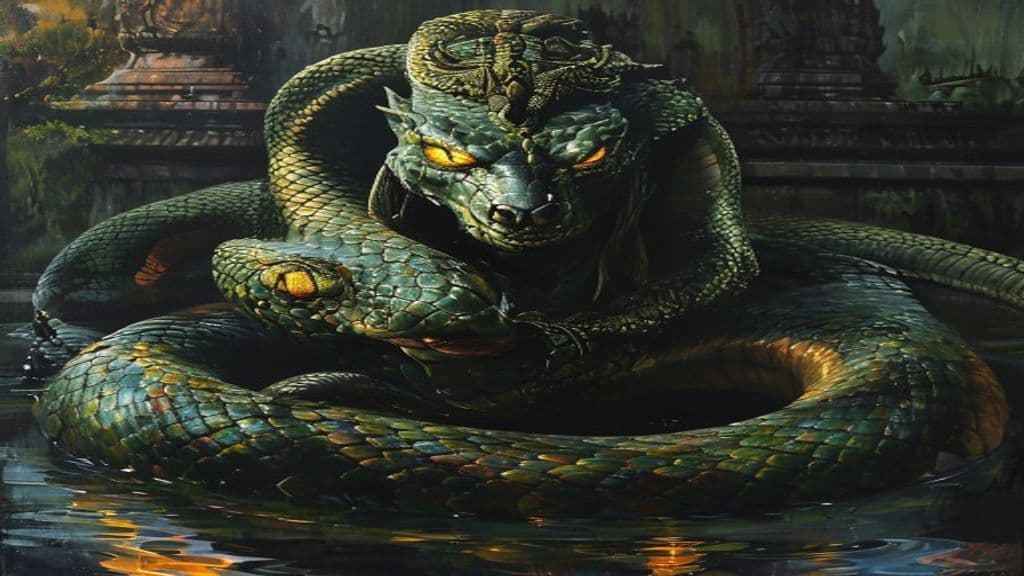
Naga
Divine serpent beings of Hindu, Buddhist, and Jain cosmology — powerful guardians of water, earth, and underground treasures. Revered as deities in South and Southeast Asia.
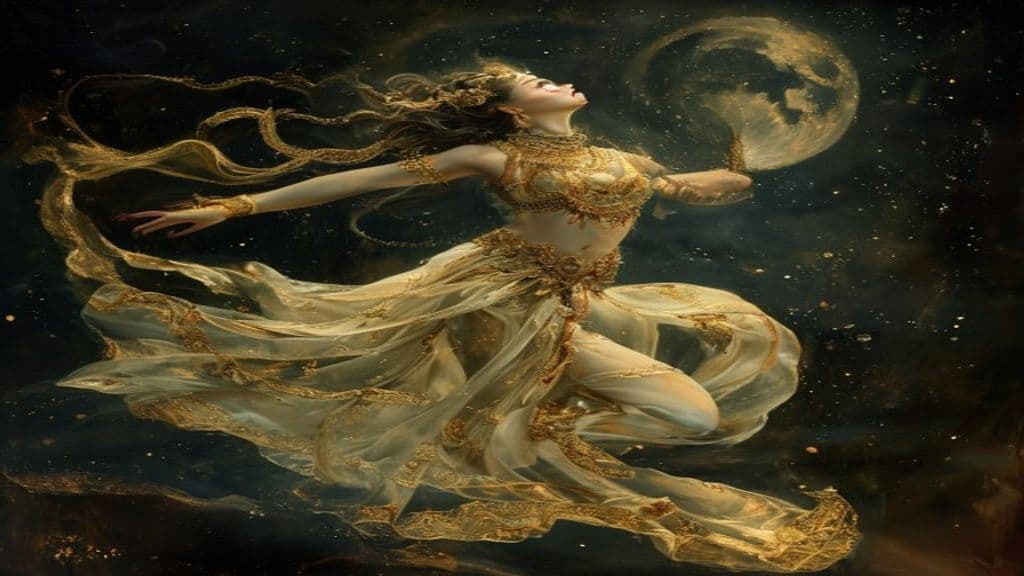
Apsara
Celestial dancers and water nymphs of Hindu cosmology — beautiful semi-divine beings who dance at the court of Indra and, by his command, descend to earth to distract sages from excessive asceticism.
Community Record
- [1]Castor and Pollux - Wikipedia. Wikipedia, 'Castor and Pollux'wiki
- [2]Castor and Pollux - Wikidata. Wikidata entry Q190103other
- [3]Faces of Ancient Rome: Pompeii - Casa dei Dioscuri (Archive video). Archive: Casa dei Dioscuri Pompeii imageryother
- [4]Coin of Eukratides I showing Castor and Pollux (Archive). Archive: coin reverse depicting Castor and Pollux on horsebackother