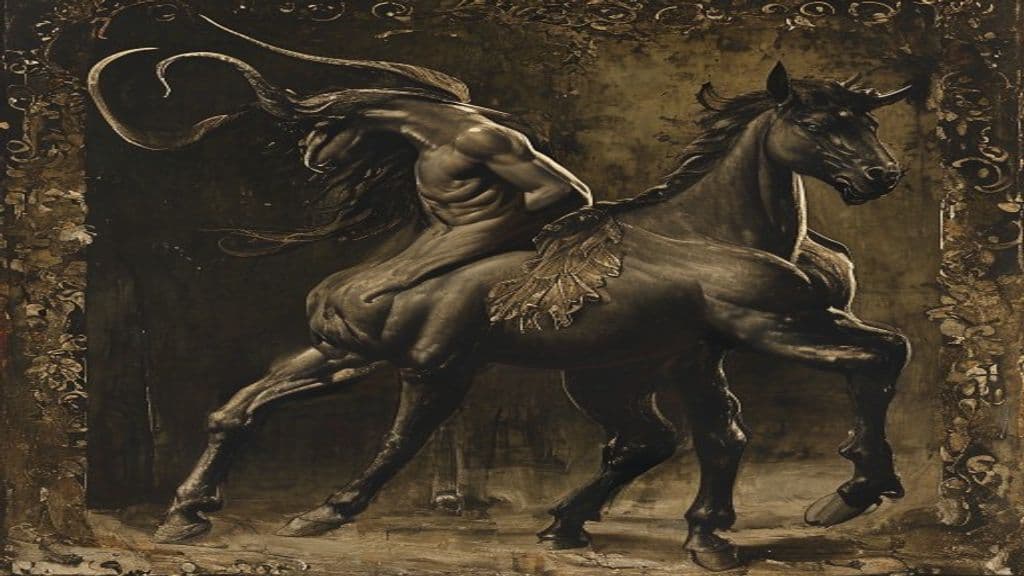
Multiple genealogical accounts exist in Greek tradition. In one branch centaurs are called Ixionidae (sons of Ixion), tied to the myth of Ixion and the cloud Nephele. Another account derives them from Centaurus, a deformed man who mated with mares, producing the horse-bodied race; this same tradition links Centaurus and Lapithes as eponymous ancestors of the Centaurs and the Lapiths respectively. Regional variants include a Cyprian line said in one source to descend from Zeus and Lamian Pheres (rustic river daimones) who in some tales are transformed into ox-horned centaurs by Hera. These competing genealogies are reported as alternative mythic origins rather than a single definitive history.
The standard depiction is a hybrid with the upper torso, head, and arms of a human grafted onto the body and four legs of a horse. Variants in later or regional sources include horned forms (e.g., 'ox-horned' Cyprian centaurs in Nonnus) and occasional later-attested female centauroid figures (centaurides or centauresses) visible in Roman-period poetry and mosaics.
Centaurs are chiefly portrayed as physically strong, horselike in movement, virile, and prone to drunkenness, sexual aggression, and violent disorder; mythic narratives attribute feats such as lifting or hurling large rocks and engaging in pitched combat. They appear as tribal groups rather than solitary spirits. A notable exception is Chiron, a named centaur who functions as a cultured teacher and healer, indicating that the category in myth can include both savage and civilised figures. Sources also record centaurs accompanying deities or heroes in narrative contexts.
Weaknesses
- conditionvulnerability to organised armed human opposition (as shown in mythic battles such as the Centauromachy)
- conditionsocial containment by heroic intervention and human institutions (heroes and community defense drive them off in narrative accounts)
Wards
- othernone attested
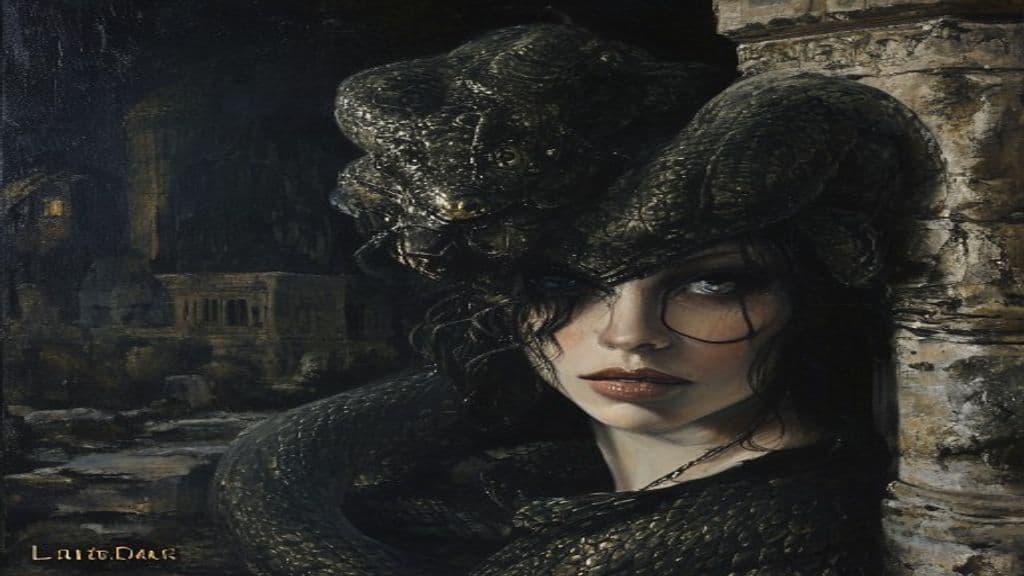
Lamia
A child-devouring demon of Greek mythology — once a queen of Libya and lover of Zeus, driven mad by Hera's destruction of her children and transformed into a monstrous hunter of other women's children.
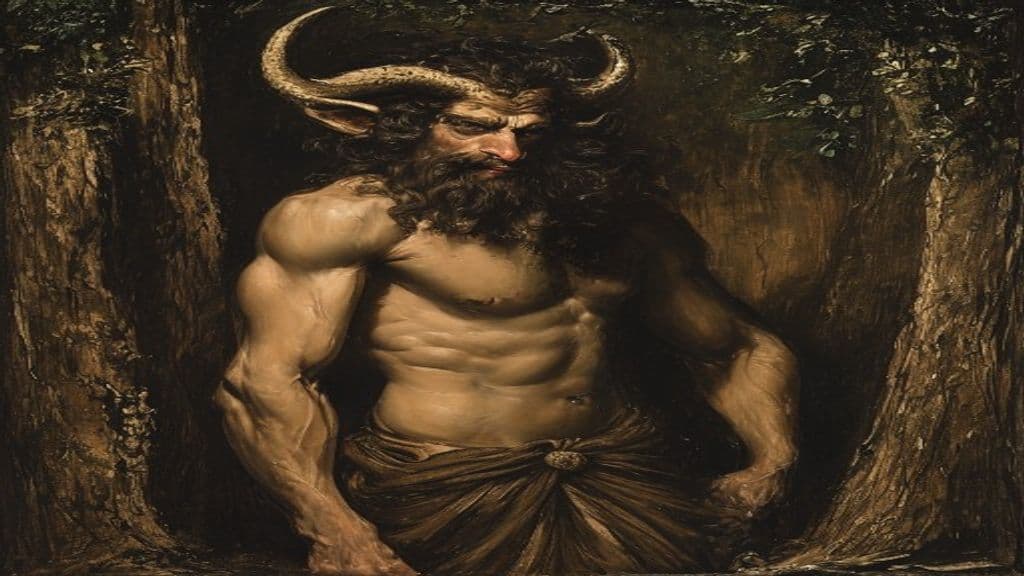
Satyr
In ancient Greek tradition a satyr (σάτυρος, sátyros) is a male nature spirit of woodlands, mountains, and pastures who accompanies Dionysus (and is later identified with Pan/fauns). Satyrs embody ribaldry, music, dance, and unrestrained sexuality and appear collectively (as a chorus) in the satyr play as well as individually in mythic episodes (e.g., Marsyas, Silenus).
Community Record
- [1]Centaur — Wikipedia. Wikipedia contributors. "Centaur." Wikipedia, The Free Encyclopedia.wiki
- [2]Centaurus — Wikidata. Wikidata entry Q8844 (Centaurus).wiki