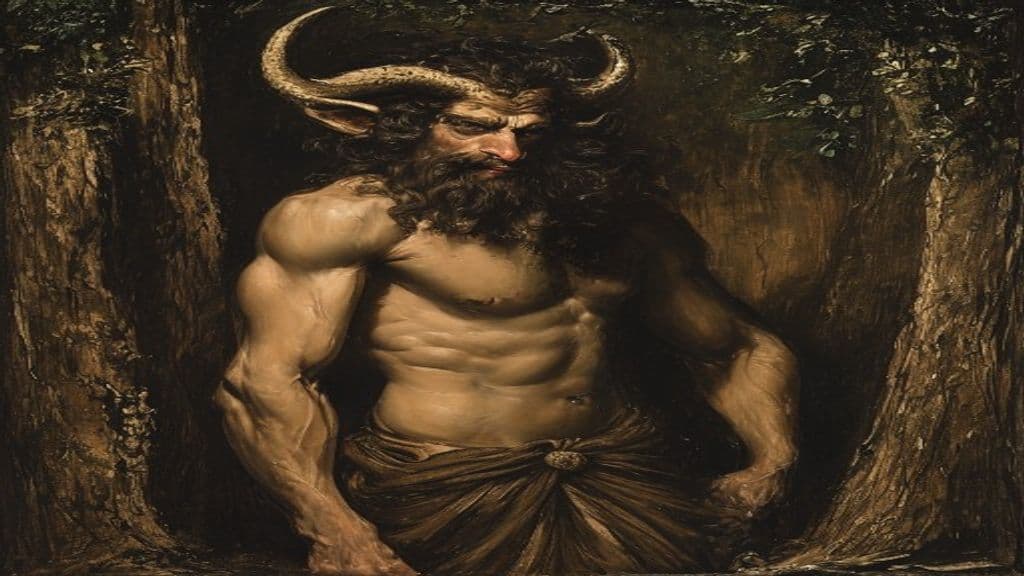
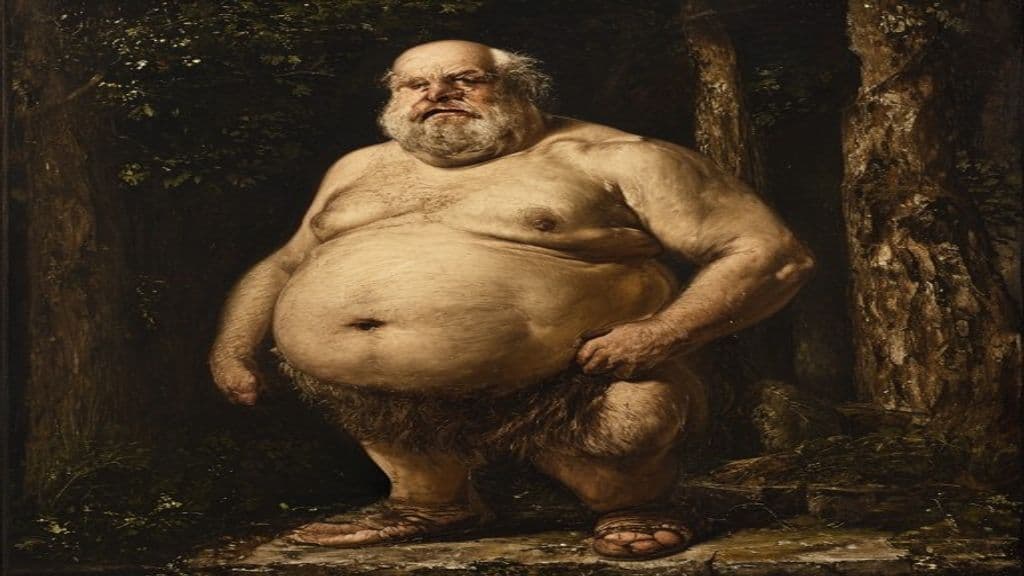
Classical sources do not provide a single cosmogonic origin narrative for satyrs in the manner of major gods; rather, they appear as a class of male nature-spirits associated with Dionysus' retinue and rustic life. Individual figures (for example Silenus, tutor of Dionysus, and the satyr Marsyas) are named in myth and dramatic tradition, while the category itself is treated as part of the populated wild — neither god nor human but an attendant, companion, and embodiment of natural appetites and revelry (Wikidata; Wikipedia).
Ancient Greek descriptions and iconography portray satyrs as male figures with some equine features (ears and a tail resembling a horse; early art sometimes shows horse-like legs), mane-like hair, often bestial or snub-nosed faces, and a persistent exaggerated sexual organ; they are usually shown naked in artistic representations. Over time, particularly through Roman identification with fauns and association with Pan, satyrs acquired goat-like traits (horns and goat-legs) in later imagery (Wikipedia).
Provided sources attribute to satyrs behavioral capacities rather than explicit magical powers: pronounced lust and sexual aggression (attempting to seduce or rape nymphs and mortal women), a love of wine, music, and dancing, propensity for mischief and obscene comedy, and service as companions/attendants of Dionysus. Individual satyrs can sometimes provide useful knowledge if captured or coaxed (the silenos motif); mythic narratives (e.g., Marsyas' musical challenge to Apollo) show they may act boldly toward gods and suffer divine punishment. The sources supplied do not record a catalogue of specific supernatural powers (no explicit magical abilities are attested in those summaries) (Wikipedia; Wikidata).
Community Record
- [1]Satyr — Wikipedia. Wikipedia, 'Satyr' article (accessed sources provided in research notes)wiki
- [2]satyr — Wikidata. Wikidata concise entry for 'satyr'other
- [3]The mystery of mony-catching or the character of an importunate- dunn, ... 1678 (archive). Early-modern English text referenced in source list (not used for ritual material beyond noting early English usage contexts)other