
The chasse-galerie arose in French-Canadian storytelling as a syncretic legend: European Wild Hunt–type tales about a cursed nocturnal hunter or procession (a French antecedent about a noble condemned to fly the skies for refusing Mass) combined with First Nations stories of an animate or flying canoe after contact in North America. In Canadian variants the flying canoe becomes the vehicle by which voyageurs and lumbermen attempt rapid travel after making a pact with a malign supernatural being (often rendered as the Devil or Lucifer in later tellings).
The central supernatural appearance is a birch-bark (or bark) canoe that becomes airborne and is navigated through the night sky. Story variants emphasize panoramic visual scenes seen during flight (frozen rivers, villages, church steeples, distant lights such as Montreal). Some versions depict the men themselves steering the canoe after the pact; other variants describe the Devil or a malign pilot intervening or attempting to steer.
Primary ability is flight: the canoe carries its occupants long distances through the night sky—some tellings describe very long journeys (one popular variant cites '100 leagues' as an example). Operation depends on a pact with a malign supernatural agent that grants the flight while imposing contractual prohibitions: do not utter God's name or blaspheme, do not touch the cross atop any church steeple while passing, remain sober, and return by the agreed time (often before morning). Violation of these conditions risks the loss of the travellers' souls; intoxication and swearing are recurring causes of endangered outcomes. Agency varies by variant: sometimes the Devil pilots or sabotages the return, in other tellings the men row the canoe themselves under the contract's constraints.
Weaknesses
- conditionBreaking pact taboos (uttering God's name / blasphemy)
- conditionTouching the cross atop a church steeple while passing
- substanceIntoxication (drinking alcohol) — leads to loss of self-control and risk of breaking prohibitions
- conditionFailure to return by the agreed time (e.g., before morning) — risk of soul-loss
Wards
- conditionObserve the pact prohibitions (do not blaspheme or utter God's name)
- conditionAvoid touching church crosses while passing
- conditionRemain sober during the voyage (promise not to drink)
- conditionReturn by the agreed time (timeliness)
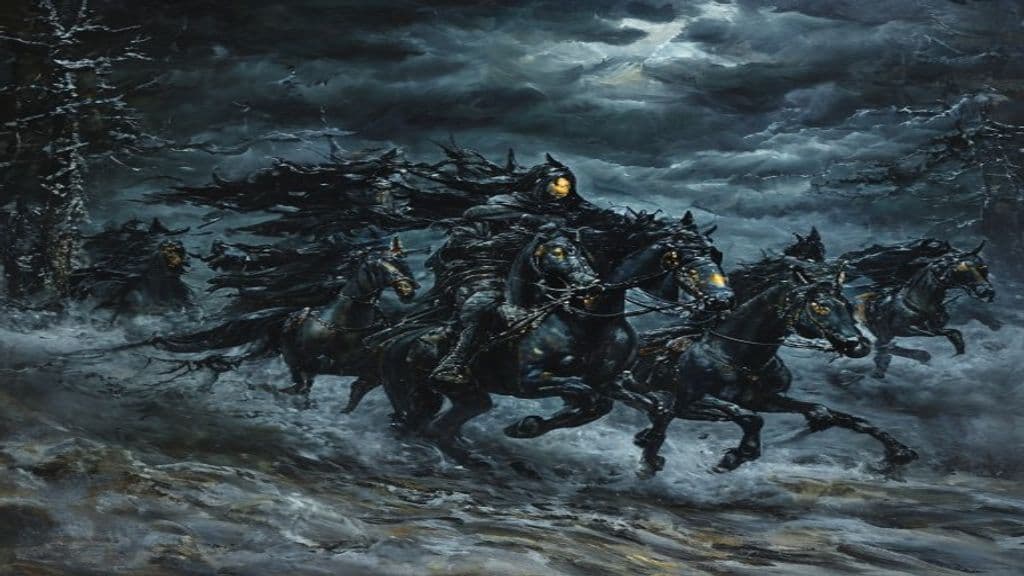
Wild Hunt
A fearsome spectral cavalcade of the dead sweeping through the winter sky — those who see it risk being carried off or killed, and its passage foretells war, plague, or catastrophe.
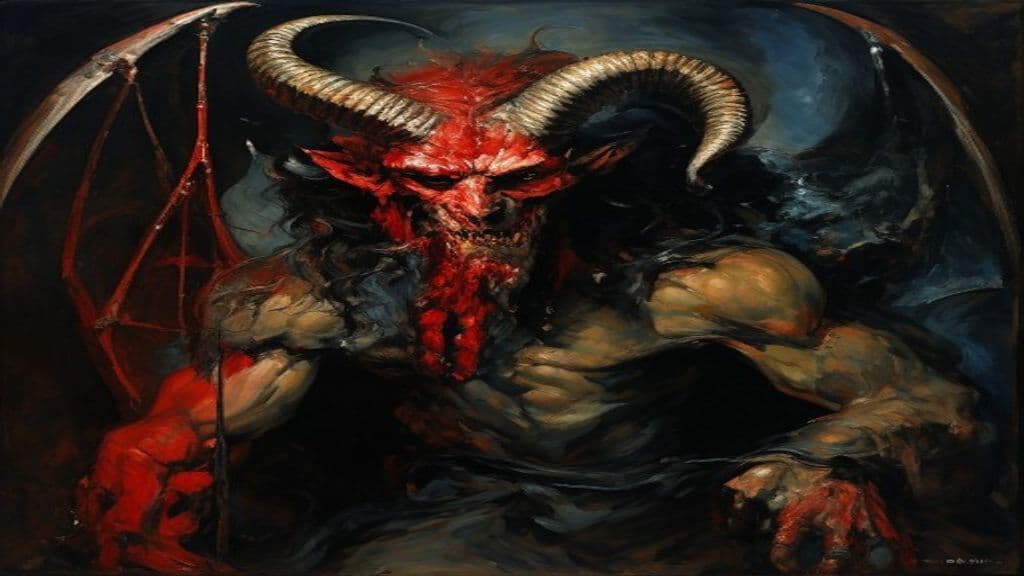
Devil
A cross-cultural mythic personification of evil and hostile forces, used in religious, literary, and popular contexts to explain temptation, moral corruption, disease, death, and misfortune. Its exact cosmological status varies by tradition, ranging from an independent principle of evil to a created being that became evil or a symbolic embodiment of human wickedness.
Community Record
- [1]Chasse-galerie. Wikipedia, 'Chasse-galerie' article (summary of common variants and origins).wiki
- [2]Chasse-galerie (Wikidata). Wikidata entry for Chasse-galerie (identifier and linked data).other
- [3]La liberté (2005-07-13). Archive of La liberté (2005-07-13) — contextual material in the supplied research set.other
- [4]The Flying Canoe (collection). Archive copy of 'The Flying Canoe' collection — narrative variants and translations referenced in the research notes.folk