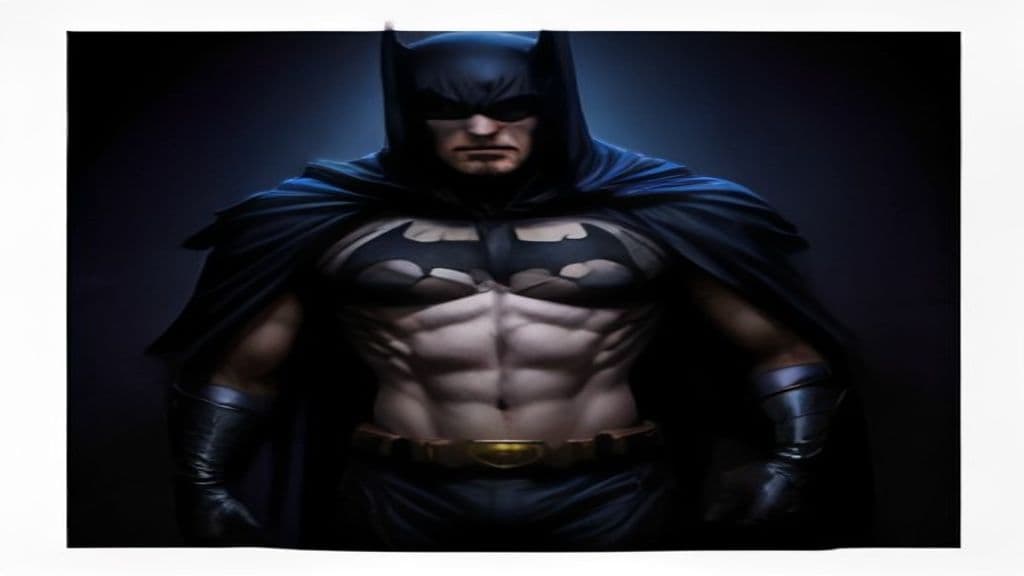
Created by Gardner Fox and Carmine Infantino, Cluemaster first appeared in Detective Comics #351 (May 1966). A failed game-show host, Arthur Brown turned to crime and developed a compulsion to leave clues about his offenses (explicitly not in riddle form, differentiating him from the Riddler). Across continuity he has organized individual schemes (e.g., mall heist), attempted to discover Batman's identity, and been a member of villain teams such as the Injustice League and Justice League Antarctica. In Detective Comics #647 he is depicted as having reformed and been released from Blackgate Penitentiary after an apparent cure of his clue-compulsion; subsequent narratives show oscillation between reformation and relapse (including volunteering with a government-sanctioned Suicide Squad in exchange for a pardon and participation in New 52-era antagonisms like Forever Evil). His criminal career is narratively entangled with his daughter Stephanie Brown, whose vigilantism (Spoiler, later Batgirl) is motivated by his actions.
Sources give only intermittent, non-uniform physical description. As a human antagonist he has appeared in various comic-era costumes and portrayals; one storyline has him shot many times through the chest, surviving with extensive scarring and recuperating in a hospital for about a year. Media adaptations present differing visuals: an animated-season depiction in The Batman recasts him as a weak 'Riddler clone,' and live-action portrayals include Batwoman (Arrowverse) and Gotham Knights, indicating varied costume and design across adaptations rather than a single canonical look.
Cluemaster possesses no supernatural powers in the documented sources. His defining 'ability' is behavioral: a compulsion or habit to leave clues about his crimes (distinguished from riddling), which guides his modus operandi. He is an organizer and participant in criminal operations, capable of planning heists and violent acts (including a reported suffocation homicide in one storyline), and functions as a recurring ally of other minor villains in teams such as the Injustice League. Narrative arcs emphasize criminal skill, persistence, and occasional strategic choices (e.g., volunteering for Suicide Squad missions) rather than superhuman capacities.
Weaknesses
- conditionnon-supernatural human vulnerability (injury, incarceration, hospitalization)
- conditionpsychological compulsion to leave clues
Wards
- otherIncarceration / law enforcement containment
- otherSuperhero intervention (Batman, Robin, Spoiler/Batgirl)
- otherMedical care and rehabilitation efforts
Clock King
A recurring DC Comics costumed criminal identity adopted by multiple individuals who adopt a clock/time motif. Manifestations range from a non-superpowered master planner and gadgeteer to versions who exploit time-themed resources and brainwashing operations in specific storylines.
Clonia
Clonia (Ancient Greek Κλονιη, Kloniê) is a Naiad — a freshwater nymph — associated with the spring or fountain of the town of Hyria in Boeotia. Mythographic sources present her primarily as the consort of the local founder-figure Hyrieus and as mother of Nycteus and Lycus, anchoring local genealogical and topographical identity.
Clonius
Clonius (Ancient Greek: Κλονίος, Kloníos) is a personal name used for several mortal characters in Greek and Roman epic narratives. Bearers of the name appear as a Boeotian Achaean captain in the Trojan War, as an illegitimate son of Priam, as companions of Aeneas killed in Italy, and as a defender of Thebes in the war of the Seven against Thebes.
Clootie Well
A Celtic tradition where individuals leave offerings of cloth or ribbons at holy wells, believed to possess healing properties. (Note: 1. Remove "Power tier: Ancient" as it contradicts the description of abilities (no classical powers) and origin story (not deity-level). 2. Add "Origin story: Based on ancient custom of leaving votive)
Clotenus
Clotenus is a legendary/pseudohistorical king of the Britons attested in Geoffrey of Monmouth's tradition and in later medieval compilations of British king‑lists. He appears as a named ruler in succession lists (dated to 209 BC in Geoffrey's chronology) and occasionally as a regional king (e.g., described as 'king of Cornwall' in one later compilation).
Clothru
Clothru is a figure from medieval Irish legendary history, presented in the sources as a royal woman who, by sexual relations with close kin, ensures dynastic succession. She is linked to the island Inis Cloithrinn (Inchcleraun) in County Longford and appears in cycles concerning the High Kings and the violent death of Medb.
Clurichaun
A solitary Irish fairy-like household and cellar spirit associated with drinking places (breweries, pubs, wine cellars). He is a heavy drinker and smoker, a mischievous trickster who can also act as a protective domestic spirit for a household that tolerates him; accounts are primarily from 19th-century collectors and later summaries.
Clymene (mother of Phaethon)
Clymene (Greek Κλυμένη, Klymenê, "famous woman") is a named figure in Greek mythic genealogies. The name is borne by several distinct mythic women; the label here denotes the Clymene attested as mother of Phaethon and closely related genealogical figures rather than an autonomous supernatural class.
Clymenus
Clymenus (Ancient Greek Κλύμενος, Klúmenos, lit. "famous, infamous") is a recurring personal name in Greek myth applied to multiple mortal figures — kings, princes, an Argonaut, and a suitor — and in one minor late attestation appears as a title or epithet of Hades. The name functions primarily within genealogical, foundation, and local heroic narratives rather than as a single coherent supernatural being.
Clysonymus
Clysonymus (Ancient Greek: Κλυσώνυμος) is a mortal youth in Greek mythic tradition, identified as the son of Amphidamas of Opuntus and known primarily as a childhood companion of Patroclus; he is recorded as having been accidentally killed by Patroclus during an argument over a game of dice.
Clyte
Clyte is attested across the supplied materials primarily as a proper name and literary persona rather than a single, coherent supernatural being: appearances include poetic/mythic characters in literature, a historical personal name (born Clyte Cosper), online usernames/handles, and an alias reported in criminal/news contexts. No ritual lore or consistent folkloric powers or protections are documented in the provided sources.
Clytemnestra
Clytemnestra is a mortal queen of Mycenae in Greek epic and tragic drama, best known for her role in the murder of her husband Agamemnon and for precipitating the cycle of familial vengeance that follows. She appears across Homer and the tragedians (Aeschylus, Sophocles, Euripides) as a politically capable, scheming royal whose actions raise questions of justice, revenge, and social order.
Community Record
- [1]Cluemaster - Wikipedia. Wikipedia - Cluemasterwiki
- [2]Cluemaster - Wikidata. Wikidata entry for Cluemasterother
- [3]The Batman "Q&A" Saturday Morning Glory episode summary. Archive.org — The Batman 'Q&A' summaryother
- [4]Starling Tribune - Special Edition - DC Comics REBIRTH Review (podcast archive). Archive.org podcast discussing DC media portrayalsother