In Zapotec mythic accounts preserved in iconography and colonial summaries, Cocijo is presented as a primary creative being. Sources report that Cocijo "made the sun, moon, stars, seasons, land, mountains, rivers, plants and animals, and day and night by exhaling and creating everything from his breath," placing the rain‑and‑lightning deity at the apex of the sacred order as both a maker of cosmological elements and the controller of meteorological processes. This creative role is presented in the literature as part of Cocijo's identity rather than as a detailed narrative sequence; the available sources emphasize his generative function and centrality to Zapotec worldviews.
Archaeological and iconographic evidence represents Cocijo with a zoomorphic face combining earth‑jaguar and sky‑serpent elements. Typical features include a wide, blunt snout and a long forked serpentine tongue; artists encoded cosmological motifs into the face (for example, eyebrows interpreted as the heavens, lower eyelids as clouds, and the forked tongue as a bolt of lightning). Cocijo frequently appears wearing a headdress bearing a Zapotec glyph (often described as a Zapotec "C") associated with water imagery; at Late Classic Lambityeco stucco busts show Cocijo holding a jar pouring water in one hand and bolts of lightning in the other. These motifs link jaguar and serpent fertility symbolism with storm imagery in Zapotec material culture.
Cocijo controls rainfall, thunder and lightning and is central to agricultural fertility in Zapotec religion. Ritual sources and iconography present the deity as the force who brings rain and thus secures the fertility of land and crops. Cocijo was propitiated through ritual actions including bloodletting and, historically, offerings that included human sacrifice — the sources state that Cocijo "frequently received human sacrifice, mostly in the form of children but also, less frequently, adults" — as payments for rain. In Postclassic calendrical practice the 260‑day year was divided into four 65‑day periods named "cocijos," a naming that implies multiple directional manifestations of Cocijo linked to ritual observance and the cardinal directions.
Weaknesses
None recorded.
Wards
- ritualpropitiation, bloodletting and offerings

Tláloc
Tláloc (Classical Nahuatl: Tláloc) is the Aztec god of rain, water, and earthly fertility, venerated as a giver of life and sustenance and feared for his power over destructive weather such as hail, thunder, and lightning. He is closely associated with mountaintop shrines (notably Cerro Tláloc), caves, springs, and ritual implements and was a central focus of offerings and impersonatory ritual in central Mexican religious practice.
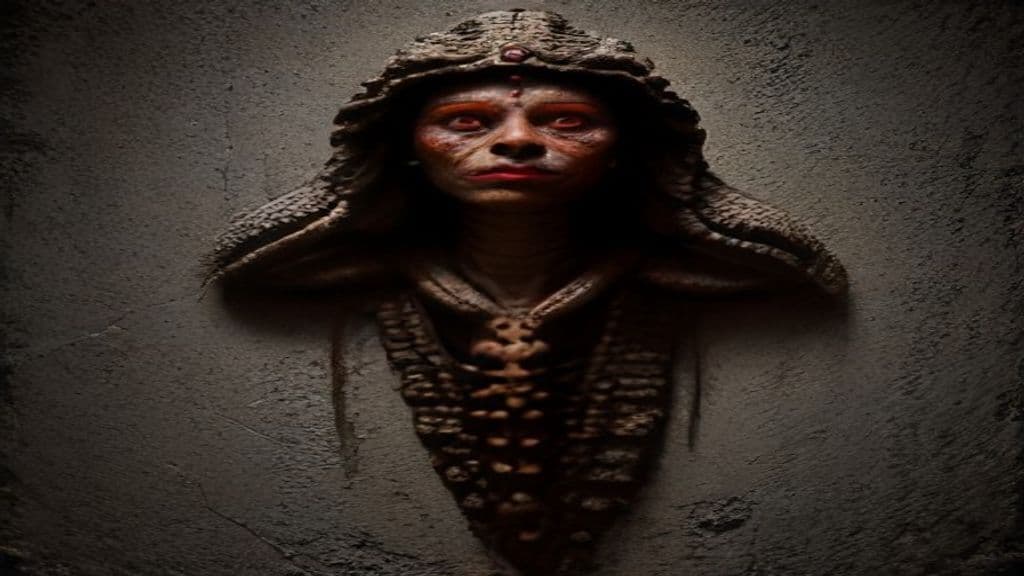
Chaac
Chaac is the Maya god of rain, thunder, and lightning, a central agricultural deity who produces storms by striking clouds with a lightning axe. He appears as both a singular figure and as multiple directional Chaacs, is associated with subterranean waters (cenotes and caves), and is the focus of communal rain-request rituals and specialist rainmaker practices.
Community Record
- [1]Cocijo — Wikipedia. Wikipedia contributors, 'Cocijo,' Wikipedia, The Free Encyclopedia.wiki
- [2]Cocijo — Wikidata. Wikidata entry Q2572689, 'Cocijo'.other
- [3]INDIGENOUS GODS AND INDIGENOUS GODDESSES. Archive compilation listing Cocijo among indigenous deities.other
- [4]DIOSES INDIGENAS Y DIOSAS INDIGENAS. Archive compilation listing Cocijo among indigenous deities (Spanish).other