Two distinct mythic personages named Coresus appear in the received tradition. In one strand Coresus is an autochthon credited (with Ephesus son of Cayster) as founder of the sanctuary of the Ephesian Artemis; this tradition is discussed by Pausanias in the context of competing foundation accounts that also invoke Amazons. In a separate narrative (also recorded by Pausanias and summarized in modern references) Coresus is a priest of Dionysus at Calydon who falls in love with Callirhoë; when she rejects him he prays to Dionysus and the god afflicts the city with a lethal, intoxication-like madness. The community consults the oracle at Dodona, which prescribes propitiation by human sacrifice (Callirhoë or a consenting substitute); tasked to perform the rite, Coresus cannot kill Callirhoë and instead kills himself, after which Callirhoë kills herself in remorse.
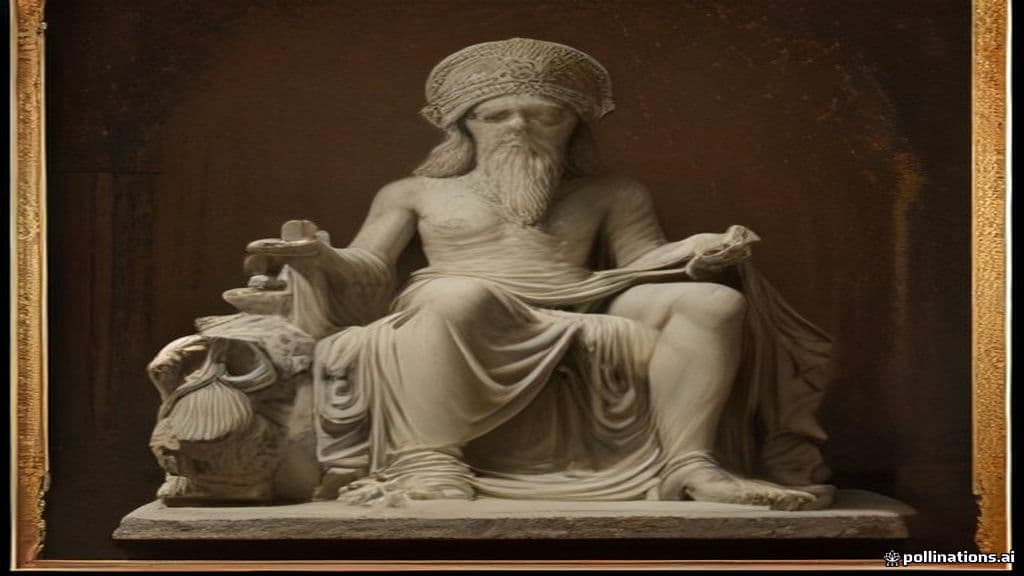
Ancient sources preserved in the provided material give no physical description of Coresus. Pausanias' summaries record only his social roles (autochthon / priest) and actions. Later artistic receptions (not primary evidence)—notably 18th-century paintings and drawings by Jean-Honoré Fragonard—depict the Calydonian priest in imagined sacerdotal garb at an altar during the moment of self-sacrifice; these are modern visual interpretations rather than ancient descriptive accounts.
As presented in the sources, Coresus possesses no supernatural powers of his own; he is a mortal actor whose petition to Dionysus precipitates a divine effect. In the Calydon episode his behaviors include passionate obsession (love for Callirhoë), invocation of Dionysus leading to a god-sent madness in the populace, and ultimately willingness to fulfil the oracle's demand through self-sacrifice when he cannot bring himself to slay the beloved. The narrative role foregrounds his function as intermediary between human emotion, ritual obligation, and divine retribution rather than as an independent supernatural agent.
Weaknesses
- conditionmortality / human vulnerability
- othercompassion and inability to slay the beloved (psychological limitation described in sources)
Wards
- ritualpropitiation of Dionysus (as prescribed by the oracle at Dodona)

Community Record
- [1]Coresus (Wikipedia). Wikipedia article 'Coresus' summarizing Pausanias on Coresus as founder and the Calydon priestwiki
- [2]Coresus Sacrificing Himself to Save Callirhoe (Wikipedia). Wikipedia page on Fragonard's painting and the Calydon episode, summarizing Pausaniaswiki
- [3]Coresus (Wikidata). Wikidata entry linked to modern summaries of ancient sourceswiki
- [4]Fragonard’s Coresus Sacrificing Himself to Save Callirhoe – Lines and Colors. Art-historical discussion of modern visual receptions; not a primary ancient sourceother
- [5]Fragonard’s drawing for The Sacrifice of Coresus – Lines and Colors. Art-historical commentary on Fragonard's preparatory drawings for the Coresus sceneother