In Bram Stoker's novel, Dracula is presented as a centuries‑old Transylvanian nobleman—a voivode claimed to be a Székely descendant of Attila—who has become an undead predator. Stoker frames him as possessing a lineage and a history of martial prestige, combined with studies of occult arts (the Scholomance) and alchemical knowledge. Later adaptations (not canonical to Stoker) elaborate or transform this origin into cyclical resurrection myths (e.g., Castlevania's centennial Dark Lord motif).
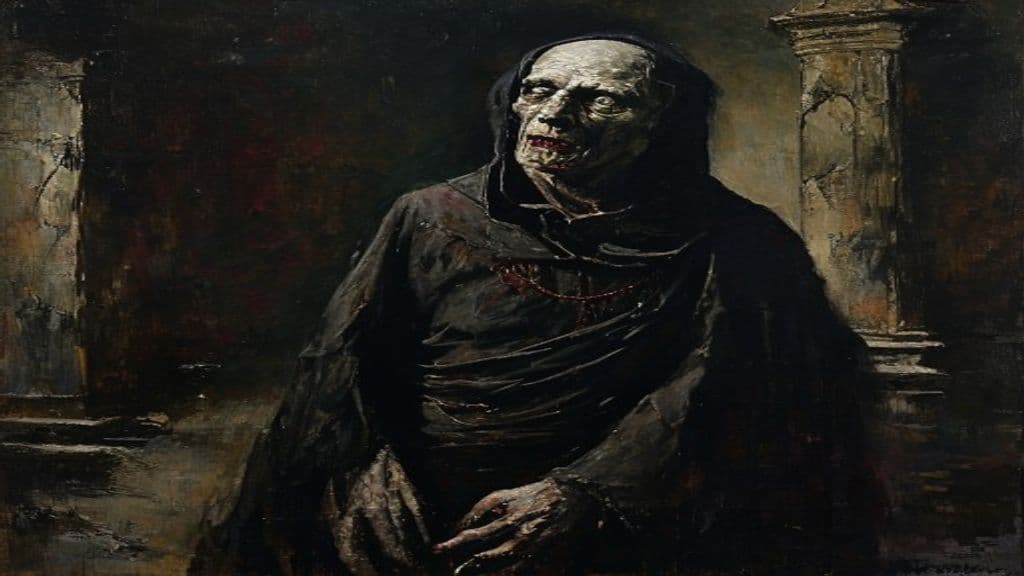
Stoker's depiction emphasizes a deceptively genteel, aristocratic appearance: handsome, charismatic, and well‑educated with the bearing of an ancient nobleman who inhabits a decaying Carpathian castle. The novel contrasts this cultured veneer with Eastern European folkloric vampires' corpse‑like repulsiveness; the supplied sources do not prioritise later visual tropes (prominent fangs, caped silhouette) unless adopted in subsequent adaptations.
Supported by the novel's account, Dracula is undead, capable of creating other vampires by biting them and drinking their blood, and endowed with deep knowledge of the 'black arts' (Scholomance study), alchemy, and magic. He is able to exert influence at a distance and to relocate or send his power from his Transylvanian stronghold to London. Adaptations expand his powers (e.g., cyclical resurrection, augmented dark magic), but such expanded traits are explicitly attributable to those adaptations rather than to Stoker's original text.
Weaknesses
- conditionlimited vulnerability to sunlight (Stoker describes weakening in daylight rather than immediate destruction)
- conditioninability to enter a private residence without invitation (canonical in Stoker)
- symbolreligious symbols and sacramentals (crucifixes, communion wafers/host have aversive effect in Stoker's account)
- ritualphysical destruction by stake or decapitation (methods used in the novel to destroy vampires)
Wards
- substancegarlic (used in Stoker's narrative by characters such as Mina/Harker as a protective measure)
- symbolcrucifix / sacramental bread (host/wafer) (employed by protagonists in Stoker as aversive/defensive items)
- conditionrefusal of invitation (keeping doors closed/uninvited status functions as a barrier in the novel)
Community Record
- [1]Count Dracula — Wikipedia. Wikipedia article 'Count Dracula' (summary and quotes from Bram Stoker's novel)wiki
- [2]Count Dracula — Wikidata. Wikidata item for Count Dracula (entity summary)other
- [3]Castlevania (40th Anniversary Mobile Port) — Archive.org. Castlevania blurb: 'Once every century, the prayers of those with evil in their hearts shall resurrect the Dark Lord Dracula.'other
- [4]Disney's 'Dracula' starring Mickey Mouse (and Friends Read-Along Classics) — Archive.org. Archive listing indicating children's adaptation and cultural reach of the Dracula figure (catalog entry)other
- [5]Pizza Party — Archive.org (contextual listing). Archive listing included in research notes to indicate peripheral cultural references; not a source of primary lore.other