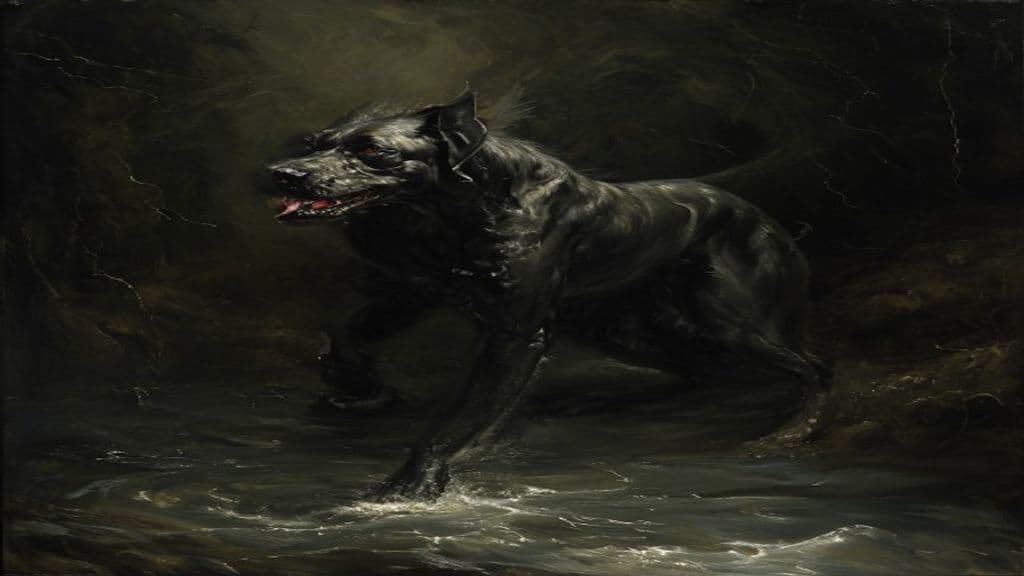
Crinisus is a god in Roman mythology associated with the Sicilian river Crinisus. According to myth, he fathered Acestes while in the form of a dog.
Crinisus takes on the form of a dog in myth.
Crinisus has the ability to transform into a dog.
Aborigines (mythology)
A mytho-historical label used in Roman and general reference sources to denote the oldest inhabitants of a region (specifically central Italy in the cited Roman context). The term functions as an identity/category for original human populations rather than as a characterized supernatural being in the provided sources.
Aeneads
A collective term in Roman myth for the friends, family, and companions of the Trojan hero Aeneas who fled Troy and wandered before settling in Italy; treated as a retinue and ancestral cohort rather than independent supernatural beings.
Ages of Man (Roman tradition)
In the Roman tradition, the Ages of Man are a series of stages or periods in human existence, representing growth and development. (Note: * Power tier: Remove "Minor Spirit" as it implies a level of agency or power that doesn't align with the description in the draft article. * Abilities: Clarify or remove the phrase "in the classical s)
Carmenta
Roman goddess of prophecy, worshipped for her abilities to gaze backwards and forwards in time. (Note: * Power tier should be Primordial, not Ancient (Ancient is typically reserved for deities on a cosmic level, while Primordial would fit better with Carmenta's role as an ancient Roman goddess). * Appe)
Cornucopia (Roman Tradition)
In Roman tradition, the Cornucopia is a symbol of abundance and nourishment, often depicted as a horn-shaped container overflowing with produce. (Note: 1. Power tier should be Primordial does not seem correct as Cornucopia is described as a symbol, not an entity with cosmic powers. 2. Origin story should mention Roman tradition or clarify that it ori)
Dioscuri (Castor and Pollux)
The Dioscuri, commonly rendered Castor and Pollux (Dioskouroi in Greek), are the twin half-brothers of Greek and Roman mythology who function as a paired mythic duo in classical literature and later cultural memory. They appear throughout ancient sources and have been reused as a durable cultural emblem of twinship, partnership, and martial or civic guardianship in art, monuments, and modern institutions.
Ficus Ruminalis
In ancient Roman mythology, the Ficus Ruminalis is a wild fig tree associated with mythological events and protected by deities. (Note: * Power tier should be adjusted from Ancient to Lesser (due to lack of deity-level powers or abilities) * Origin story should be rephrased to clarify the Ficus Ruminalis is not an entity in itself, bu)
Golden Bough (Aeneid)
The Golden Bough is a supernatural object in Roman mythology that facilitates Aeneas's passage into the Underworld, requiring his divine favor. (Note: 1. Power tier: Primordial - This appears too high given the description of the Golden Bough facilitating Aeneas's passage into the Underworld with divine favor, but not having any further cosmic or cr)
Greek and Roman Mythological Figures
A collection of gods, goddesses, and mythological figures from ancient Greek and Roman mythology. (Note: - Power tier: Incorrectly classified as Primordial (cosmic). Greek gods are typically considered deities-level (Ancient). - Abilities: While they do possess supernatural abilities, the specific claims)
Harpy
In Greek and Roman myth, a harpy is a hybrid bird-human creature and personification of storm-winds that acts as an agent of divine punishment — snatching food, fouling victuals, and carrying off or tormenting wrongdoers, sometimes delivering them to chthonic justice.
Heroides (Roman tradition)
A collection of epistolary poems by Ovid presenting letters from mythological heroines to their lovers. (Note: - Power tier: Change to "Ancient" (they are literary creations by Ovid, not cosmic entities) - Appearance: Clarify that they exist solely as written words on paper in the collection of poems, but also)
Janus
Janus (Latin: Iānus) is the ancient Roman god who presides over beginnings, passages, thresholds, and temporal transitions. He is a liminal deity invoked at the start of rituals and is symbolically associated with gates, doorways, duality, and the ordering of time.
Community Record
- [1]Wikipediawiki