Daedalion is described in classical tradition as a son of Hesperos/Phosphorus and the brother of Ceyx. His daughter Chione was killed (by Artemis in the account preserved in Roman poetic retellings), and in overwhelming grief Daedalion attempted suicide — first trying to cast himself onto his daughter's funeral pyre and later running at great speed to the summit of Mount Parnassus and leaping. Apollo took pity on him and transformed him into a hawk before he struck the ground. The tale is preserved primarily in Ovid's Metamorphoses as transmitted in later summaries.
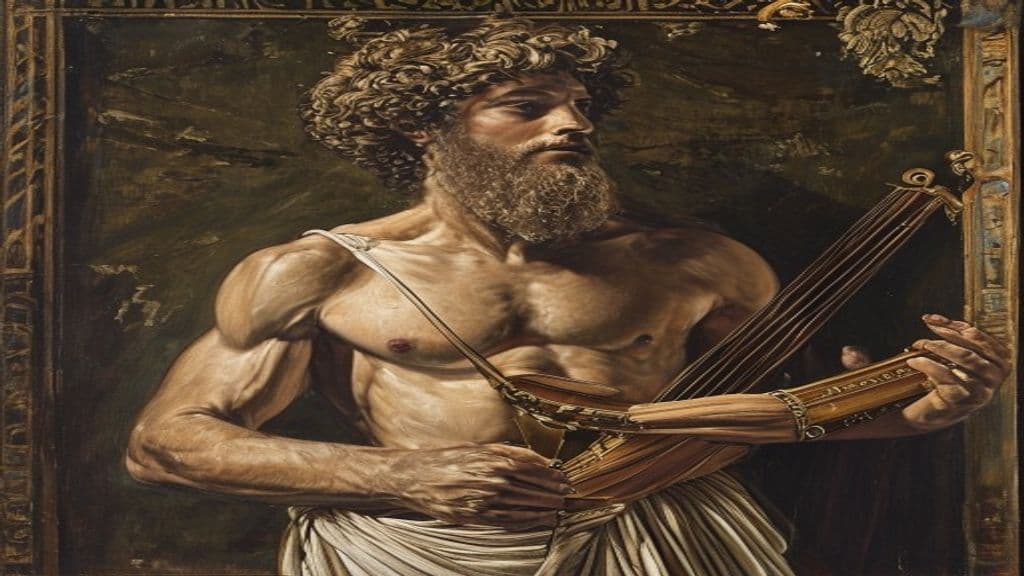
As a human Daedalion is characterized in surviving summaries as 'a great warrior, full of courage and vigour' but also capable of harshness and a relish for the cruelty of war; no detailed physical description is supplied in the surviving accounts. After transformation he becomes a hawk; classical sources do not supply precise plumage details but attribute to the bird notable strength and predatory behavior.
In human form Daedalion is portrayed as a vigorous, courageous warrior; narratively he attempts self-immolation, runs with 'impossible speed' across fields and forests, climbs Mount Parnassus, and leaps. As a hawk — the form granted by Apollo — he is said to possess great strength and a propensity for hunting other birds. These avian traits are presented etiologically as continuations of his human courage and rage following his daughter's death. The metamorphosis itself is an act of divine agency (Apollo's pity and transformation).
Weaknesses
- conditionmortal limitations prior to metamorphosis
Wards
None recorded.
Community Record
- [1]Daedalion - Wikipedia. Wikipedia, entry 'Daedalion'wiki
- [2]Daedalion - Wikidata. Wikidata entry Q901224other
- [3]Ovid: Metamorphoses (recording/archive). Ovid, Metamorphoses — episode of Daedalion as preserved in the Latin epic and its translations/summariesliterary