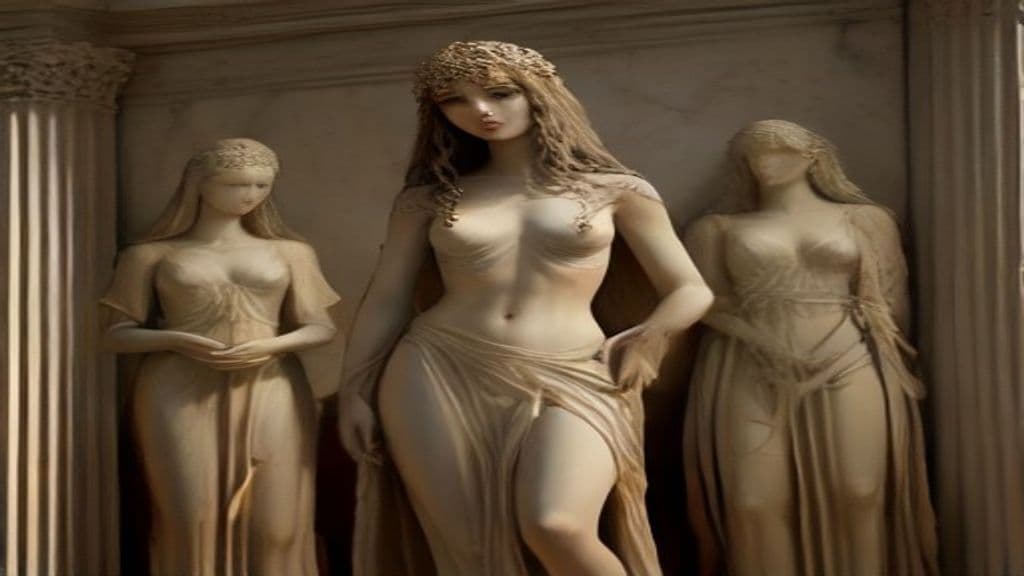
The Danaïdes are presented in Greek genealogical myth as the fifty daughters of Danaus (a king of Libya), descended within the family network of Belus and connected in some accounts to Io and to Poseidon through lineage. In the most common narrative, Danaus' brother Aegyptus offers his fifty sons as husbands; Danaus orders his daughters to kill their husbands on the wedding night and they comply except for Hypermnestra, who spares her husband. Ancient authors and mythographers (summarized in modern reference works) record variations in maternal attributions and lists of names, and place the episode in foundational/mythic time followed by the daughters' posthumous punishment in Hades.
Ancient sources treat the Danaïdes as human princesses (a named collective) rather than as a distinctive supernatural species; no consistent physical description is provided in the cited material. They are depicted as mortal women in literary accounts and later visual and performative arts (for example in paintings and operatic treatments), while ancient catalogues preserve lists of their names (attested variably by authors such as Apollodorus and Hyginus as reflected in modern summaries).
The Danaïdes have no inherent supernatural powers in the cited sources; their notable actions are narrative roles: following Danaus's command they murdered their husbands on the wedding night (all but Hypermnestra) and brought proof to their father. As posthumous figures they are described in tradition as condemned to an eternal, symbolic punishment—carrying water in a sieve or perforated vessel in Hades—an emblematic futile labor. Individual daughters feature in other mythic episodes: Amymone's encounter with Poseidon, which results in a spring at Lerna; and traditions that attribute temple-foundation or cultic associations to the group (e.g., links to a temple of Athena Lindia at Rhodes).
Weaknesses
- conditionmortal status and subjection to fate/divine decree
Wards
None recorded.
Abderus
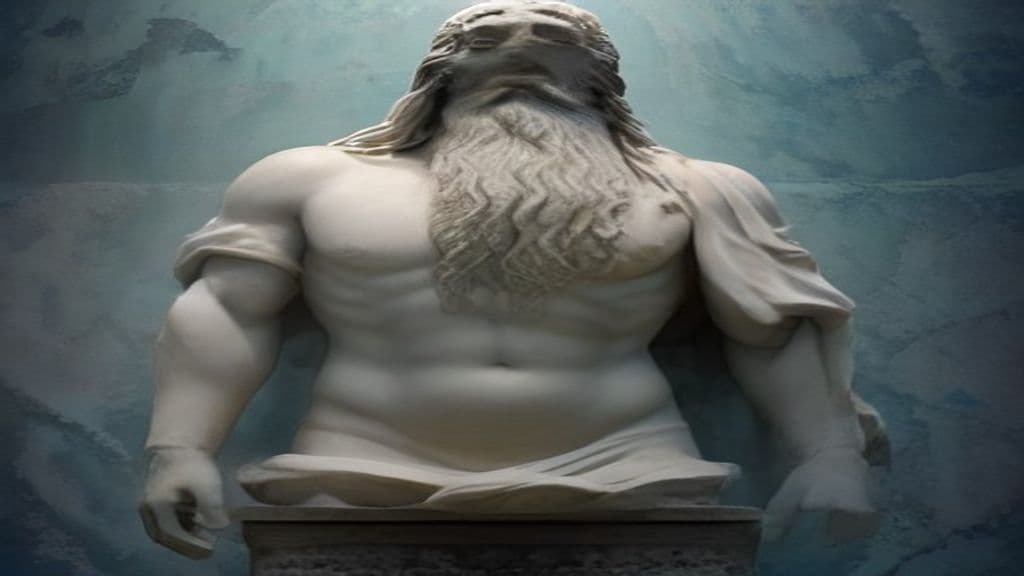
Abderus (Ancient Greek: Ἄβδηρος, romanized Ábdēros) is a mortal heroic figure in Greek myth closely associated with Heracles, remembered as the youth left in charge of the Mares of Diomedes who was killed by them. He functions as an eponymous local/divine-hero ancestor for the city of Abdera and received funerary commemoration and athletic agones at his tomb.
Acamas
Acamas (Ancient Greek: Ἀκάμας) is a personal name recurrent in ancient Greek narrative traditions applied to multiple human characters (warriors, princes, suitors), once to a Cyclops, and once as a hound's name. Rather than a single supernatural entity, bearers of the name appear episodically across the Trojan War, Theseid, and Theban cycles as mortal actors whose deeds intersect with gods and fate.
Acarnan
Acarnan (Ancient Greek: Ἀκαρνάν) is an anthroponym attested in Greek mythic and epic tradition as the name of at least two distinct mortal figures: a son of Alcmaeon and Callirrhoe, and a human suitor of Penelope from Dulichium. The lexical form also appears adjectivally/ethnically (Acarnanian), linking the word to the region Acarnania; etymologically the name is reported as derived from a Greek fish-name (akarnan).
Acastus
Acastus is a mortal heroic figure of ancient Greek tradition: son of Pelias who became king of Iolcus, an Argonaut who sailed with Jason, and an actor in the post-Argonautic cycle involving Medea, Peleus, and the aftermath of Pelias’s death. He is attested as performing civic and ritual actions (burying Pelias, instituting funeral games, purifying Peleus) and as a participant in vendetta episodes that end in violent reprisals.
Acmon
Acmon (Ancient Greek: Ἄκμων, 'anvil') is a polyvalent personal name in Greek myth borne by several distinct minor figures — a Dactyl (artisan), a Phrygian eponymous king, a mischievous woodland creature, companions in epic cycles (one companion of Diomedes transformed into a bird; an Aenead), and in some brief traditions an alleged father of Uranus. The name therefore functions across artisanal, topographical, trickster, and metamorphosis motifs rather than denoting a single unified supernatural species.
Acrisius
Acrisius (Ancient Greek: Ἀκρίσιος, Akrisios) is a mythic-historical king of Argos in Greek tradition whose narrative is defined by an oracular prophecy foretelling his death by his daughter's son. He is portrayed as a mortal ruler entangled with dynastic rivalry, oracular authority, and the eventual accidental fulfillment of fate.
Aeacidae
The Aeacidae are a dynastic lineage in Greek myth and historiography descended from the hero Aeacus, son of Zeus and the nymph Aegina. The name functions as a patronymic designation for those 'of Aeacus' and is used to claim genealogical legitimacy and political prestige in regions such as Aegina and Molossian Epirus.
Aegipan
Aegipan (Αἰγίπαν / Αἰγίπανος) is an ancient Greek mythological figure associated with goat attributes and with the sea‑goat imagery of the constellation Capricornus. He appears in classical myth as a semi‑divine helper (notably in the Typhon episode) and, in later natural‑history and medieval bestiary reception, the name is applied to satyr‑like or ape‑like wild men in distant lands.
Aegisthus
Aegisthus (Greek Αἴγισθος, Aigisthos) is a mortal member of the House of Atreus in Greek myth who, born of incestuous circumstances and raised by shepherds and a goat, participates in dynastic murder and usurpation — notably the slaying of Atreus in some accounts and the conspiracy (with Clytemnestra) that results in Agamemnon's death — and is later killed by Orestes, an episode that figures in narratives about inherited guilt, vengeance, and the transition from private retribution to public justice.
Aepytus
Aepytus (Ancient Greek: Αἴπυτος, Aíputos/Aípytos, lit. 'steep, high, lofty') is a personal name in Greek myth borne by several legendary kings tied to Arcadian and Heraclid genealogies. The figures named Aepytus function as ancestral/dynastic nodes in literary genealogies and later literary receptions rather than as supernatural beings.
Aeson
Aeson (Ancient Greek: Αἴσων) is a legendary mortal king of Iolcus in Thessaly in Greek myth, best known as the father of the hero Jason. His fate—imprisonment by his half-brother Pelias and either suicide or a miraculous restoration performed by Medea—provides the dynastic and moral background for the Argonautic cycle.
Aethalides
Aethalides is a personal name borne by two distinct figures in ancient Greek myth: one listed among the Argonauts as a son of Hermes and Eupolemeia, and another named among the Tyrrhenian sailors who attempted to deceive Dionysus and was transformed into a dolphin. The sources treat Aethalides as named human mythic personages appearing in separate narrative contexts rather than as a class of supernatural being.
Community Record
- [1]Danaïdes — Wikipedia article (summary of classical sources). Wikipedia contributors, 'Danaïdes,' Wikipedia, The Free Encyclopedia.wiki
- [2]Danaides - in ancient sources @ attalus.org (compilation of ancient references). Attalus — compilation of ancient source references for the Danaidesother
- [3]Les Danaïdes — Wikipedia (cultural/operatic aftermath). Wikipedia contributors, 'Les Danaïdes,' Wikipedia, The Free Encyclopedia.wiki
- [4]Échos De France Volume 2 (archival reference for cultural reception). Archive: Échos De France, Volume 2 (cited for cultural afterlife references)other
- [5]Ropes of Sand; Asses; And the Danaides (archive/journal item). Archive journal item discussing the Danaides in literary contextother
- [6]The Danaides - John Singer Sargent (artistic depiction reference). Online gallery entry for John Singer Sargent's painting 'The Danaides' (illustrative of later visual treatments).other
- [7]Conspectus and related modern commentary (cultural references). Modern commentary referencing Danaid motifs in comparative contextsother
- [8]Encyclopedia of Greek Mythology: Danaides (summary entry). Mythweb encyclopedia entry on the Danaides (summary of traditional material).other