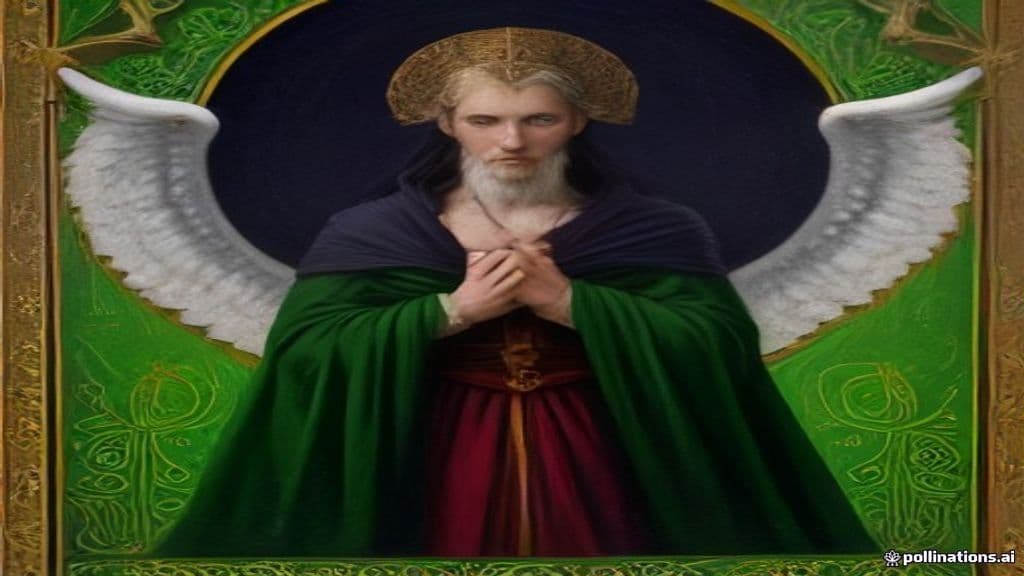
In medieval Irish genealogical sources Danand (also spelled Donann) is presented as a daughter of Delbáeth (son of Ogma) and the mother of Brian, Iuchar, and Iucharba by Delbáeth. Medieval compilations such as the Lebor Gabála Érenn and related narrative texts use her name and the names of her sons to account etiologically for the tribal-name Tuatha Dé Danand. Later scribal and scholarly treatments sometimes conflate or relate Danand to other maternal or sovereignty figures such as Danu and Anu/Anann, but several sources caution that Danand is a distinct name in the genealogical record.
The surviving medieval texts and the supplied sources do not provide a physical description, iconography, or standardized appearance for Danand. No primary-text details concerning shape, dress, animal form, or other visual attributes are attested in the provided material; later associations with other mother-goddesses have sometimes produced indirect or conflated imagery, but the genealogical sources themselves remain silent on appearance.
Primary attestations of Danand in the provided material emphasise a genealogical and eponymous role (mother of Brian, Iuchar, and Iucharba) rather than active supernatural functions. The supplied sources do not attribute specific powers, offices, magical acts, or cultic functions to Danand. Although related figures in the broader Irish corpus (e.g., Anu/Anann, Danu, the Morrigan) bear sovereignty, fertility, or martial associations, those attributes are not explicitly recorded for Danand in the cited medieval genealogical texts — later conflations sometimes transfer attributes, but original attestations remain chiefly etiological.
Community Record
- [1]Danand. Wikipedia, 'Danand' (accessed via provided notes)wiki
- [2]Danu (Irish goddess). Wikipedia, 'Danu (Irish goddess)' (discussion noting Danand as closest figure in Irish texts)wiki
- [3]The Battle of Ventry. The Battle of Ventry (medieval text containing the phrase 'Tuatha De Danand')literary
- [4]The four jewels of the Tuatha Dé Danann. Medieval material on the Tuatha Dé Danand (Lebor Gabála Érenn and related textual tradition)literary
- [5]Part 1 of The Metrical Dindshenchas. Metrical Dindshenchas (references to Tuatha De Danand in manuscript tradition)literary
- [6]Anu / Anann commentary. Discussion of Anu/Anann and notes on later conflation with Danandother