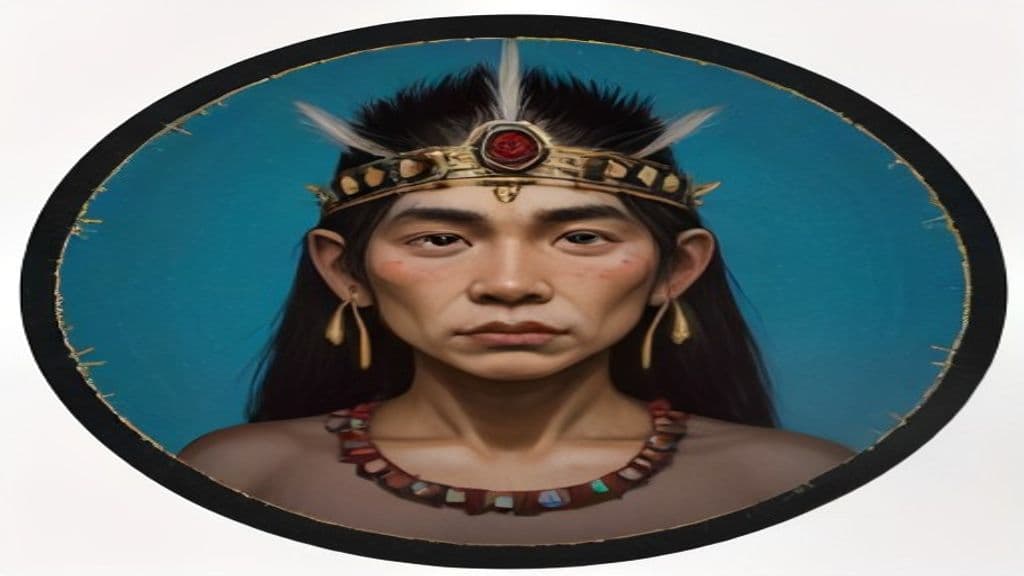
According to local oral tradition, Datu Daya was the ruler of the first settlers in northern Cebu. Under his leadership new settlers cleared forests and within a few years established a progressive community. The settlement was repeatedly attacked by Muslim Moro raiders until the community constructed a bantayan (watchtower) to defend the town. The place-name Kandaya (kang Daya — 'Daya's place' in Cebuano) preserves his association with the locality and the town later became known as Daanbantayan.
The available sources present Datu Daya as a legendary human ruler and tribal chief; they do not provide physical description, iconography, or accounts of an apparition. He is referenced in narrative terms as a lord and leader rather than in terms of specific bodily features.
Sources attribute to Datu Daya the role and actions of a community leader: leading settlers in land clearance, the establishment of a progressive settlement, and organizing or inspiring defensive measures (the construction of a bantayan/watchtower). The texts note that "for his glory, Datu Daya was idolized," indicating veneration and commemorative honor in the town rather than any described supernatural powers.
Daruka
Supernatural charioteer in the Hindu tradition, associated with Arjuna in the Mahabharat. (Note: * Summary: Replace "Supernatural charioteer" with "Charioteer" since there's no evidence of supernatural abilities. * Power tier: Lower to Greater, as Daruka's abilities are not on the same level as d)
Daseatas
Daseatas is a mythic Arcadian prince attested in ancient genealogical lists as one of the many sons of King Lycaon and is reputed as the eponymous founder of the Arcadian city called Dasea. He is known only from brief classical attestations summarized in modern reference works (notably Pausanias and Dionysius of Halicarnassus as cited in modern summaries).
Dasharatha
Dasharatha is the king of Kosala and ruler of Ayodhya in the Ramayana tradition, father of Rama, Bharata, Lakshmana, and Shatrughna. His life in the epic ties royal duty, Vedic ritual (notably the Puthrakamesti yagnam), oath-keeping, and karmic consequence together, culminating in Rama's exile and Dasharatha's death from grief.
Dashavatara
Dashavatara (Sanskrit: daśāvatāra) names a canonical set of ten principal incarnations of the Hindu god Vishnu, each a full descent (avatara) taken to restore cosmic order (dharma) at moments of great disorder. The list and order of the ten vary by Purānic and sectarian traditions; the concept functions across mythology, temple cult, and devotional practice.
Datsue-ba
A supernatural old-woman ogress figure in Japanese Buddhist underworld imagery who sits by the Sanzu River and strips the deceased of their garments (or, in some accounts, their skin) as part of post-mortem judgement. She functions as a liminal, procedural agent within Ten Kings / Six Realms iconography rather than as a creator or cosmic force.
Dattatreya
Dattatreya is a Hindu divine figure venerated as a paradigmatic sannyasi (renunciant), a lord of yoga, and a composite incarnation of the Trimurti (Brahma, Vishnu, Shiva). He functions both as an object of devotion and as an archetypal guru whose life and attributed texts inform monastic and yogic lineages, especially in regional traditions across the Deccan and the Himalaya.
Datuk Keramat
Datuk Keramat denotes a class of locally venerated shrine-presences—respected ancestral or saintly figures associated with keramat (sacred graves/shrines)—forming a syncretic cult in parts of Malaysia and Singapore. Shrines are typically yellow, often sited under trees or at junctions, and receive offerings (food, joss sticks, paper money) from Malay and Chinese devotees seeking protection, wealth, or favors.
Daughter of the Moon Goddess (Xingyin)
A literary protagonist reimagining of the daughter of Chang'e in Sue Lynn Tan's novel Daughter of the Moon Goddess. Within the book's cosmology she is the child of the Moon Goddess Chang'e and the archer Houyi, raised on the moon and later hidden within the Celestial Court where her coming-of-age magic draws courtly attention.
Daughters of Danaus
A collective of fifty royal daughters of Danaus in Greek mythology who flee forced marriages and, save one (Hypermnestra), obey their father's command to kill their husbands; later mythic tradition depicts them as condemned to an eternal, futile labor of carrying water in sieves or perforated vessels.
Daulis
Daulis is a local Naiad nymph of a well or fountain associated with the town of Daulis/Daulia in central Greece. She is attested in secondary classical reference works as a daughter of the river-god Kephisos (Cephisus) and as the eponymous figure after whom the town is said to be named.
Daunus
Daunus is attested in the provided sources as a named, eponymous regional ruler invoked in Latin poetic geography (not as a developed supernatural being). Most directly cited in Horace's Odes (III.30), the name marks the Daunians and parts of Apulia — especially the Aufidus/Ofanto river region — as a literary-place reference and emblem of local identity.
David
David is presented in the supplied sources primarily as a personal name whose principal referent is the biblical King David (Biblical Hebrew: דָּוִד, Dāwīḏ, 'beloved one'), a historical‑literary human leader of ancient Israel famed as a shepherd, harpist, warrior, and the second king of a united Israel. Other occurrences of the name in the materials are secular biographical usages for various modern individuals; no source treats David as a supernatural or folkloric being.
Community Record
- [1]Datu Daya — Wikipedia. Wikipedia, "Datu Daya"wiki
- [2]Datu Daya — Wikidata. Wikidata entry Q5227775 (label: "Filipino tribal chief")wiki
- [3]Daanbantayan — Wikipedia (place context). Wikipedia, "Daanbantayan" (place-name and local history referencing Kandaya/Haladaya)wiki
- [4]Archive image/text referencing Datu Daya. Archive.org item cited in research notes referencing local material on Datu Dayaother