
Dashavatara is a theological category within Vaisnava and Purānic literature: when adharma (cosmic disorder) rises beyond tolerance, Vishnu 'descends in the form of an avatar to restore cosmic order.' The term literally means 'ten incarnations' and groups ten principal, 'complete' descents of Vishnu recorded in various Purānas and later devotional texts; specific lists and emphases differ across sects and regions, and the idea appears in temple dedication and narrative cycles in early medieval to later contexts.
Appearance varies by individual avatara. Sources describe Matsya as a great fish with a horn, Kurma as a tortoise or a human figure with a tortoise body (iconography sometimes showing four arms bearing Shankha and Chakra and displaying Varada and Abhaya mudras, crowned with a kirita-mukuta), Varaha as a boar who lifts the earth between his tusks, and Narasimha as an anthropomorphic half-man/half-lion with a human body and lion head and claws. Other avatars (Vamana, Parashurama, Rama, Krishna/Balarama/Buddha variants, Kalki) are narrated mainly in their human or specific-form episodes rather than by a single fixed pictorial type in the provided sources.
Each avatara is a deliberate divine descent with the purpose of restoring dharma in a particular crisis. Individual actions recorded in narrative sources include Matsya warning Manu and saving creatures from a deluge; Kurma supporting Mount Mandara during the Samudra Manthana; Varaha defeating the asura Hiranyaksha and rescuing the earth (Bhumi); Narasimha protecting the devotee Prahlada by slaying Hiranyakashipu; Vamana acting in the Bali episode as a dwarf reclaiming cosmic order; and Mohini (attested in some scriptures and temple narratives) enchanting beings to secure amrita for the devas. Abilities emphasized are form-changing, miraculous intervention, combat against cosmic threats, and authority over divine goods (e.g., amrita).
Weaknesses
- otherNo mortal weaknesses attested in provided sources
Wards
- mantraRecitation/meditation on the ten names (Garuda Purana Saroddhara)
- ritualTemple veneration and use of consecrated materials (e.g., water from deity images)
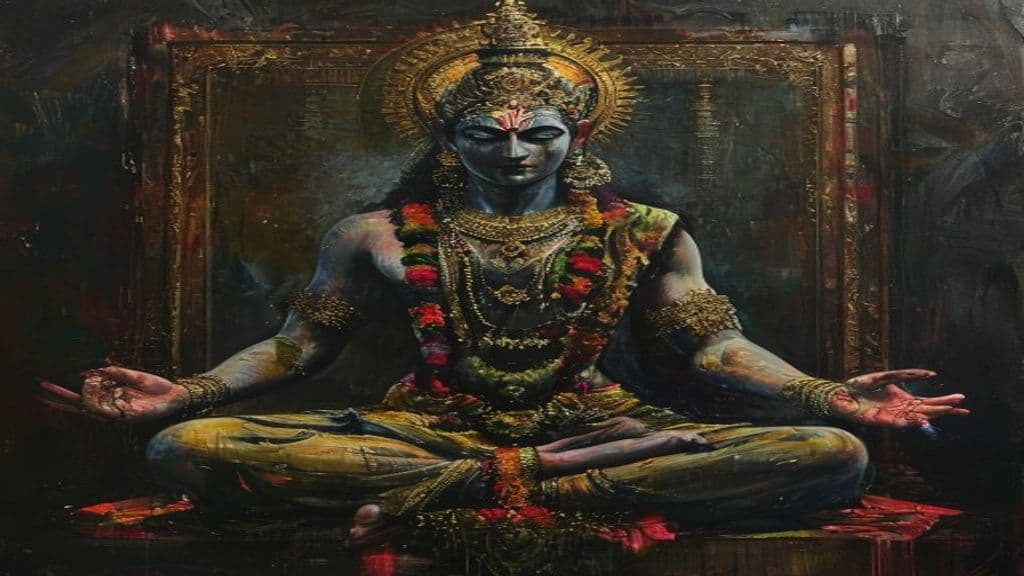
Vamana
Avatar of Vishnu in Buddhist tradition, representing a physical manifestation or descent into the world. (Note: - Summary: The article should clarify that Vamana is an avatar of Vishnu primarily in Hindu tradition (not Buddhist), representing a divine descent into the world. - Power tier: Based on the source ma)

Parashurama
Parashurama is the sixth avatara of the god Vishnu in Hindu tradition: an axe-bearing warrior-sage who appears to correct systemic wrongdoing (especially abusive Kshatriya power), later performs Vedic rites and retires to ascetic practice. He is counted among the Chiranjivi (immortals) and is said to reappear as the guru of the future avatara Kalki.
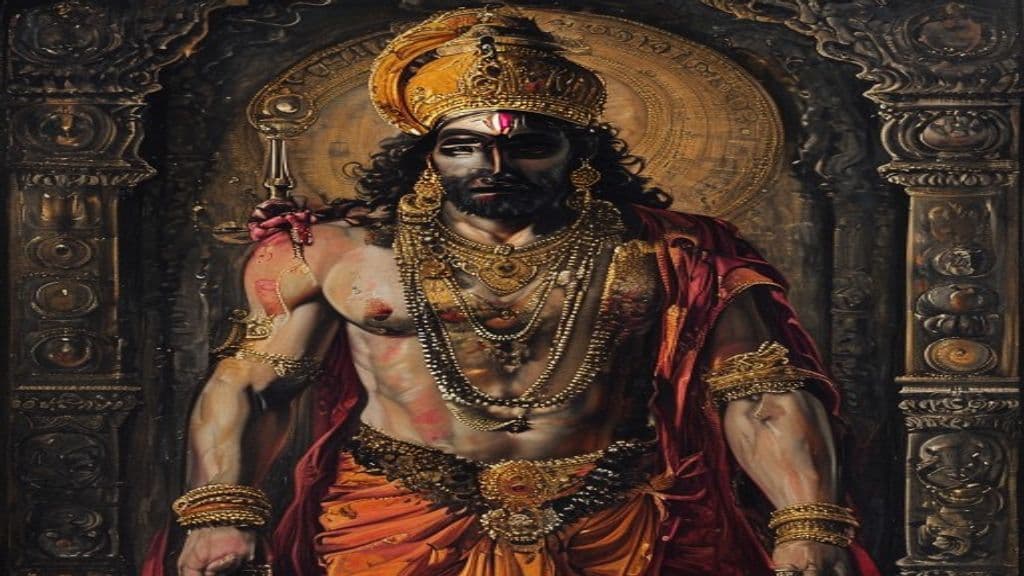
Rāma
Rāma is a major divine-hero in Hindu tradition, worshipped as the seventh avatar of Viṣṇu and the central protagonist of the Ramayana. He is portrayed both as the ideal man (maryāda puruṣottama) and, in Rama-centric sects, as the Supreme Being; his life-story (birth in Ayodhyā, 14-year exile, Sītā's abduction, and the defeat of Rāvaṇa) functions as a primary exemplar of dharma.
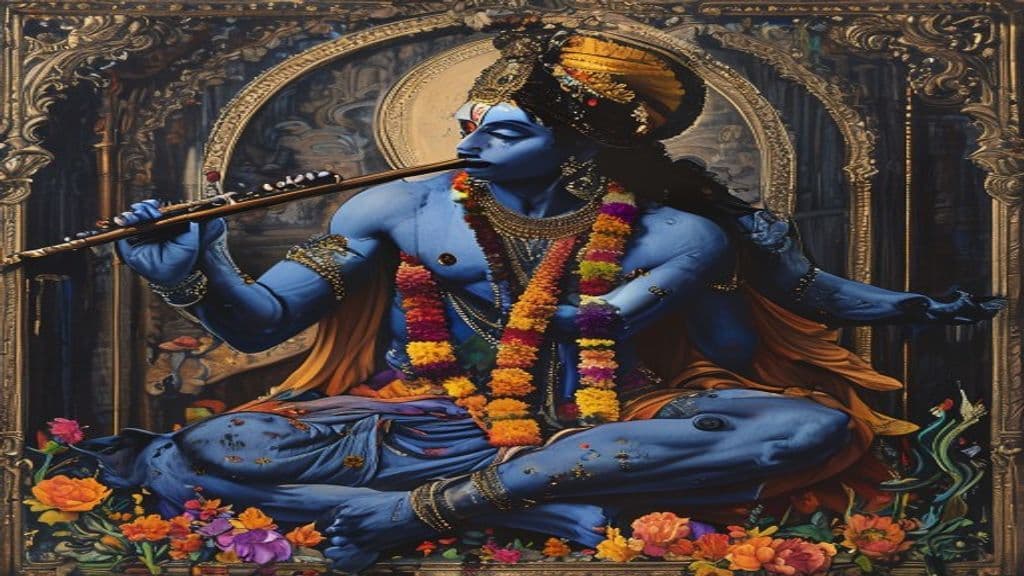
Krishna
Krishna (Sanskrit: Kṛṣṇa) is a major Hindu deity presented in the supplied sources both as the eighth avatāra of Vishnu and, in many traditions, as the Supreme Being (Svayam Bhagavān). He appears in a range of roles—child, cowherd, lover, charioteer, teacher and divine hero—and his life episodes (Krishna-līlā) are central to bhakti devotion, performance arts, and pilgrimage traditions.
Achyuta
Achyuta (Sanskrit: अच्युत, acyuta) is primarily an epithet/theonym in Vaishnava Hindu tradition applied to Vishnu and Krishna, signifying the divine quality of being 'not fallen' — immutable, infallible, and imperishable. It functions as a devotional name in scripture, liturgy, and Pancharatra lists of divine emanations rather than as an autonomous folkloric spirit.
Adi (asura)
Adi is attested in modern reference works as the name of an Asura who 'appears in the Matsya Purāṇa.' Beyond this single-line citation in secondary sources, no descriptive material about the figure is provided in the supplied research notes.
Adi Shakti
Adi Shakti (also Adi Parashakti, Mahadevi, Adya Shakti) is the primordial feminine power in Hindu/Shakta theology, regarded as the ultimate reality (Para Brahman) and the source from which all goddesses and gods manifest. She is both an impersonal cosmic principle (Mulaprakriti) and a focus of devotional invocation in temples, mantras, and pilgrimage sites such as Shakti Peethas.
Adi Vinayaka
Adi Vinayaka (Ādi Vināyaka; also called Nara Mukha Vinayaka) is a named iconographic and devotional form of the Hindu god Ganesha portraying the deity with a human head, described in sources as the form before the episode of decapitation by Shiva. It is rarely worshipped and appears in a small number of South Indian shrines and in devotional/musical repertoires.
Aditi
Aditi is a major Vedic goddess in Hindu tradition who personifies the boundless, infinite cosmic principle and functions as the maternal matrix from which many celestial deities (the Ādityas and other groups) are born. In the Vedic hymns she is invoked as a protective liberator who guards petitioners, provides wealth and safety, and frees devotees from hindrances such as sin and sickness.
Agni
Agni is the Vedic personification of fire in Hindu tradition: a sacred, mediating principle that manifests as terrestrial fire, atmospheric lightning, and celestial sun, and that receives and conveys sacrificial offerings. Prominent in the Rigvedic corpus, Agni functions as sanctifier, witness of rites of passage, and a transformational inner principle in later Upanishadic literature.
Ahalya
Ahalya is a mytho-legendary woman of South Asian (primarily Hindu) narrative tradition, described as created by the god Brahma, married to the sage Gautama, seduced (or tricked) by Indra, cursed by her husband, and ultimately redeemed by Rama. Her tale is a locus for themes of creation, desire, curse/penance, and redemption and she is counted among the ritual-mnemonic panchakanya.
Aindri (Indrani / Shachi / Paulomi)
Aindri (commonly rendered in sources as Indrani, also called Shachi or Paulomi) is a Hindu goddess presented as the queen-consort of Indra. She is depicted in the available material as a courtly queen associated with beauty, pride and kindness who also appears in at least one account as an active martial participant in the devas' battles with asuras.
Akshayavata
In Hindu mythology, Akshayavata is a sacred banyan tree and/or lake that symbolizes eternal life. It is mentioned in both Hindu and Jain traditions and associated with the Puranas. (Note: - The power tier should be "Greater" or at least "Ancient", as it is associated with the Puranas, which are considered ancient texts. - No specific physical description is provided, but that doesn't m)
Alakshmi
Alakshmi is an inauspicious female supernatural figure in Hindu tradition, presented as the negation or shadow-counterpart of the prosperity-goddess Lakshmi. She personifies poverty, grief, jealousy and social discord and is managed in domestic ritual and festival practice.
Alamelu
Alamelu (also Alamelu Manga / Alarmel Mangai) is a South Indian devotional name for the goddess Padmavati, identified in sources as an avatar of Lakshmi and the consort of Venkateswara; the name is also used widely as a female personal name and in titles of cultural works in Tamil and Telugu contexts.
Amrita (Buddhist tradition)
In the context of Indian religions, particularly within Hinduism and Buddhism, Amrita is a divine elixir that grants immortality and eternal life. (Note: - Power tier should be Ancient (deity-level), not Primordial. - Origin story appears accurate but lacks specificity on when Amrita was first mentioned in the Rigveda; add more detail. - Abilities are )
Community Record
- [1]Dashavatara (Wikipedia). Wikipedia, 'Dashavatara'wiki
- [2]Sri Jaganmohini Keshava Swamy Temple (Archive). Archive: Sri Jaganmohini Keshava Swamy Temple (Ryali account)other
- [3]BK 0995 - Dashavatara of Satpanthis and Imamshahis (Archive index). Archive index referencing Satpanthi/Imamshahi materials on Dashavataraother
- [4]Second Avatar of Vishnu - Kurma (The Tortoise) (Archive). Archive: Kurma iconography descriptionother
- [5]Dashavatara Temple, Deogarh (Wikipedia). Wikipedia: Dashavatara Temple at Deogarh (early temple evidence)wiki
- [6]Dashavatara and Gautama Buddha (Boloji). Discussion of variant lists including Buddha/Balaramaother
- [7]Why is Mohini not one of the Dashavatara of lord Vishnu? (Hinduism StackExchange). Community discussion noting Mohini's occasional but nonstandard inclusionother
- [8]Was evolution ever discussed prior to Darwin? (HSM StackExchange). Source cited in notes about modern interpretive overlays linking Dashavatara order to evolutionother