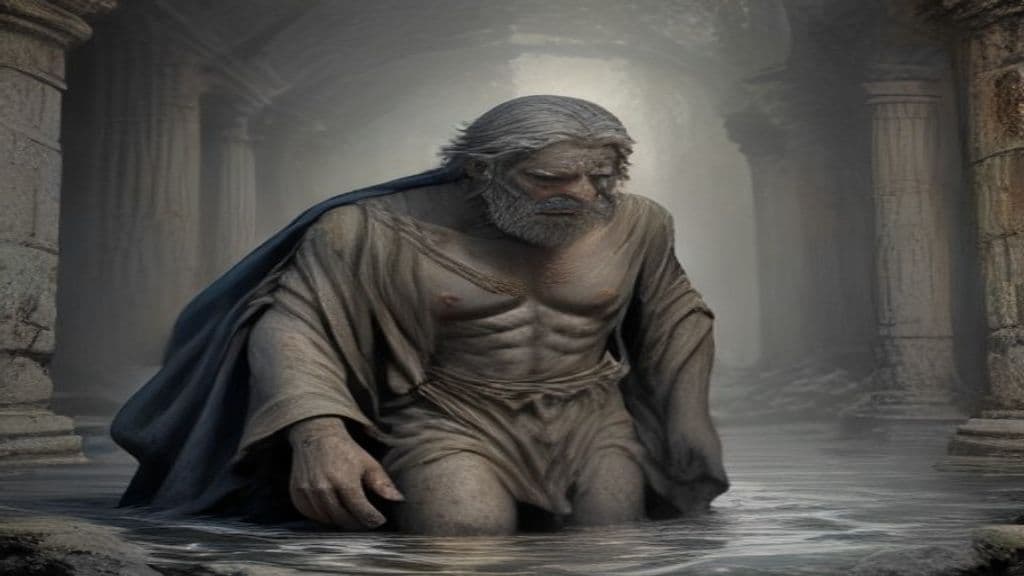
In the canonical mythic account Deucalion is a son of Prometheus who is warned by his father of Zeus's plan to send a cataclysmic flood to destroy impious humanity. Obeying that warning he builds and provisions a chest (ark) and survives the flood with his wife Pyrrha. After the waters abate he consults the oracle of Themis and follows its enigmatic instruction to "cover your head and throw the bones of your mother behind your shoulder," which he and Pyrrha interpret as casting stones (the "bones" of Gaia). The stones Deucalion throws become men and those Pyrrha throws become women, thus repopulating humankind. Variant local traditions give different landing-sites, parentage details, and later roles for Deucalion, and some accounts omit the flood entirely and portray him as a regional king or commander.
Extant texts give no elaborate physical description; Deucalion is normally characterized by role, genealogy, and age rather than specific features. In one account he is described as aged eighty-two at the time of the flood, and classical summaries present him in kingly and founder imagery—first ruler who "founded cities and reared temples to the immortal gods"—rather than as a vividly described physical presence.
Deucalion possesses no innate supernatural powers in the sources; his notable capacities are foreknowledge received via his father Prometheus, practical skill in building and provisioning a chest to survive the flood, and ritual-compliant obedience by interpreting and carrying out the oracle of Themis. He functions as a civic founder and ancestral progenitor, credited with founding cities and erecting temples in post-deluge traditions. Accounts vary: some traditions emphasize his ark-survival and anthropogonic stone-throwing, while others present him primarily as a regional king or commander without the deluge motif.
Prometheus
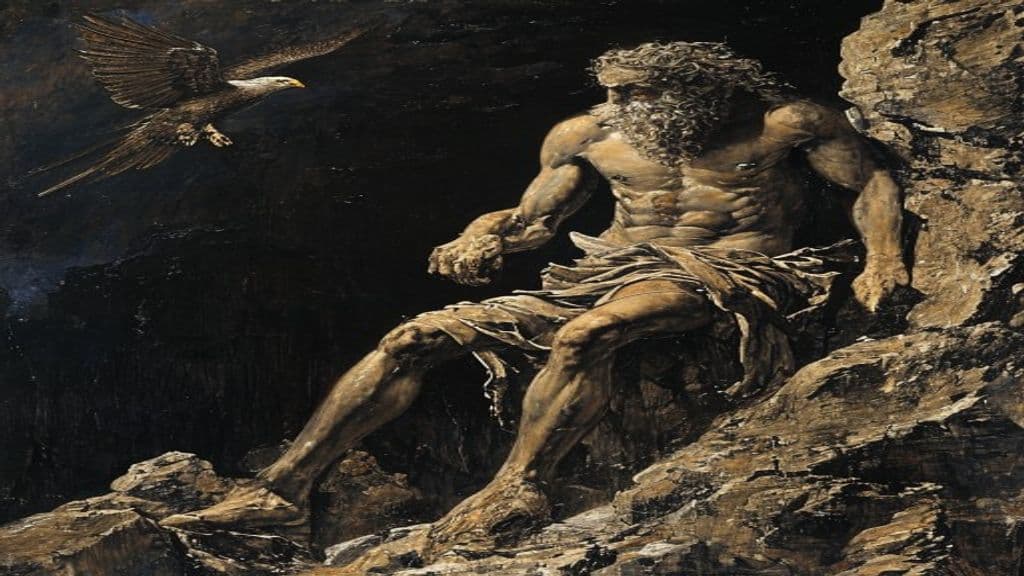
Prometheus is a Titan of ancient Greek myth credited as a benefactor and culture-bringer to humanity, most famously for stealing fire from the Olympian gods and giving it to people. He is portrayed as intelligent and forward-looking (etymologically associated with 'forethought'), and as punished by Zeus for his transgression.
Themis
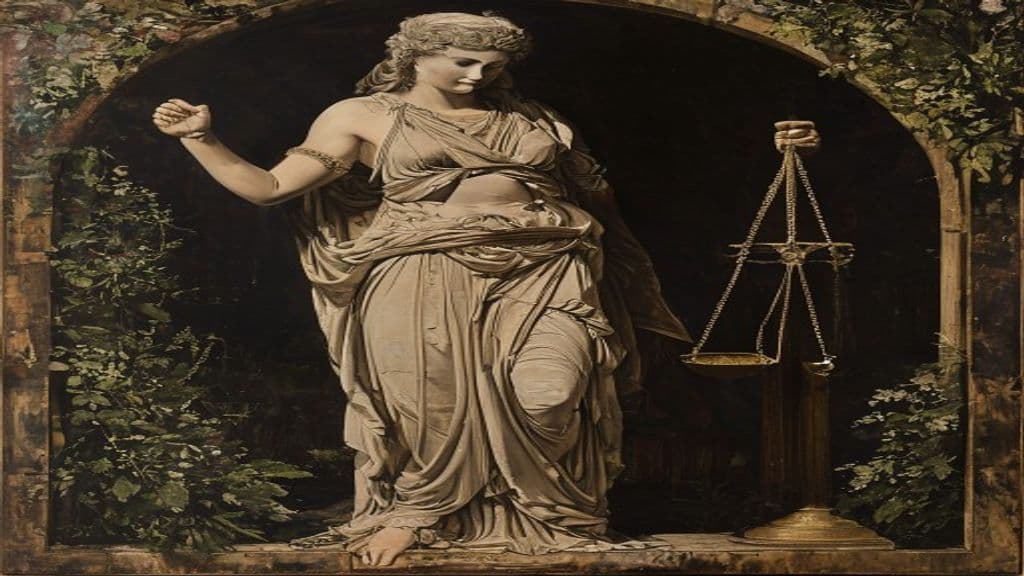
Themis is the ancient Greek Titaness who personifies themis — the divinely instituted ordering of custom, law, and proper procedure. She functions as an oracular figure, a presider over assemblies and oaths, a counselor in divine councils, and a maternal source of personified moral and cosmic forces.
Community Record
- [1]Deucalion — Wikipedia. Wikipedia: article synthesizing ancient accounts (citing Ovid, Apollodorus, Hyginus, and others)wiki
- [2]Argonautica excerpt (as cited in Source 1). "There [in Achaea, i.e. Greece] is a land encircled by lofty mountains... Prometheus... begat goodly Deucalion, who first founded cities and reared temples to the immortal gods, and first ruled over men." (Argonautica citation summarized in Source 1)literary
- [3]Deucalion and Pyrrha — narrative summaries and comparative notes. Summary of classical flood accounts and the oracle-prescription; notes on landing sites and duration of the flood as in Ovid/Apollodorus tradition.other
- [4]Digital Classicist: Deucalion and Pie lemmatizers (reference material). Reference resource noted among supplied materials indicating scholarly treatment of the Deucalion corpus and name-forms.other