Dhuʾl-Khalasa is not preserved as a mythic origin tale in native pre-Islamic texts; rather, its existence and role are reconstructed from Islamic-era reports. Medieval Islamic authors (notably Hisham ibn al-Kalbi in The Book of Idols) and canonical hadith collections (e.g., Sahih al-Bukhari) record Dhuʾl-Khalasa as one of several regional cult-houses—referred to in the sources as the “Southern Kaʿba” (al-kaʿba al-yamaniyya)—that served as focal points of tribal devotion in the Jahiliyya period. These same Islamic sources narrate that, after the rise of Islam, the Prophet ordered the removal of such non-Islamic cult-centres; the extant accounts describe Jarir ibn ʿAbdullah leading an expedition in 10 AH to demolish, burn and dismantle the house of Dhuʾl-Khalasa and to compel those associated with its rites to renounce idolatry.
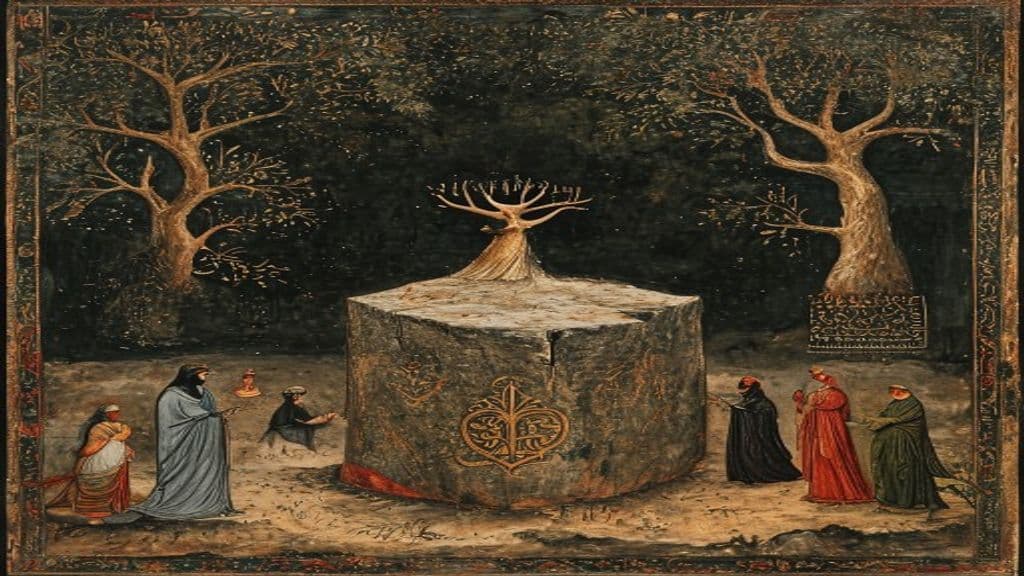
The surviving texts do not preserve an iconographic or material description of any image associated with Dhuʾl-Khalasa. Instead, sources emphasize the existence of “a house” or building standing over Dhul-Khalasa which contained idols and served as the communal shrine for southern tribes. Classical reports are ambiguous about whether “Khalasa” primarily names an idol, the structure, or the worshipper-group; the hadith tradition names it as an idol worshiped by the tribe of Daws, while Ibn al-Kalbi and related accounts describe a building in Yemen that was dismantled (Sahih al-Bukhari; Hisham ibn al-Kalbi). No specific anthropomorphic, zoomorphic or material details of any statue or object survive in the provided excerpts.
Sources attribute to Dhuʾl-Khalasa social-religious functions rather than supernatural feats. It acted as a local axis for communal ritual (women of Daws are reported as circumambulating the shrine), and it served as a site for divination—classical anecdotes record the use of divinatory arrows before the shrine. Some summary statements in later accounts connect the cult to fertility alongside divination, but the supplied materials do not preserve concrete fertility rites or claims. Beyond these ritual and divinatory roles, the supplied sources do not ascribe miraculous powers, autonomous agency, or other supernatural interventions to Dhuʾl-Khalasa.
Weaknesses
- ritualDestruction and compelled repudiation (demolition, burning, breaking of divination tools, forced testimony)
Wards
- ritualState-enforced eradication: demolition of the shrine, burning/dismantling, breaking of divination arrows, and compelling worshippers/diviners to testify 'None has the right to be worshipped except Allah' (accounts of Jarir ibn ʿAbdullah executing the Prophet's order)
Community Record
- [1]Dhu'l-Khalasa — Wikipedia. Wikipedia article 'Dhu'l-Khalasa' (extracts and summaries referencing Sahih al-Bukhari and Hisham ibn al-Kalbi)wiki
- [2]Sahih al-Bukhari (hadith excerpts referenced). Sahih al-Bukhari quoted in secondary summaries: accounts of women of Daws circumambulating Dhul-Khalasa (9:88:232) and Jarir's expedition, burning and dismantling of Dhul-Khalasa and breaking of divination arrows (5:59:643) as cited in the provided materials.literary
- [3]The Book of Idols — Hisham ibn al-Kalbi (summary). Hisham ibn al-Kalbi, The Book of Idols (summarized/quoted in supplied extracts) — account of Dhu'l-Khalasa as a southern shrine and narrative of its demolition.literary
- [4]Wikidata entry Q978802. Wikidata summary entry for Dhu'l-Khalasawiki